15th century
1453: Constantinople fell. Moscow declared itself the heir
What happened — and why
The Fall of Constantinople (29 May 1453)
Mehmed II takes Constantinople after a 53-day siege. The last emperor, Constantine XI, dies in battle. The thousand-year Byzantine Empire ceases to exist.
The philosophical cause
The empire was exhausted: loss of territory, and the Union of Florence (1439) — an attempt to unite with Rome for Western aid — had alienated the Orthodox.
Greek scholars flee to Italy with their manuscripts, giving an impulse to the Italian Renaissance. Moscow begins to call itself the "Third Rome."
Ivan III adopts the double-headed eagle
The Grand Prince of Moscow marries the niece of the last Byzantine emperor. He takes the title "Sovereign of all Rus." The double-headed eagle, the emblem of Byzantium, becomes the emblem of Moscow.
The philosophical cause
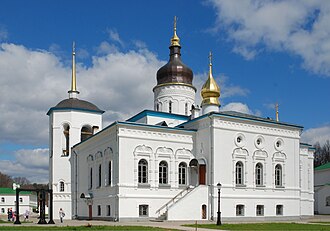
Philotheus of Pskov — Political legitimacy: if the Second Rome has fallen, Moscow is its successor. This is not mere symbolism, it is a claim to a role on the world stage.
The monk Philotheus formulates it: "Moscow is the Third Rome." Ivan the Terrible takes the title "tsar" (from "caesar"). The idea still works today.
Columbus (1492). The printing press (1450s)
Columbus reaches America. Gutenberg invents the printing press. Ptolemy is refuted — the Earth is not the center of the world.
The philosophical cause
Scholasticism had explained a closed world with God at its center. The discoveries shatter that picture.
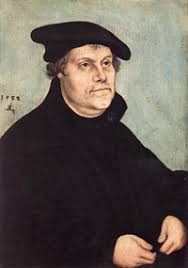
Luther uses the printing press to spread his 95 theses. Without it the Reformation would have been impossible.