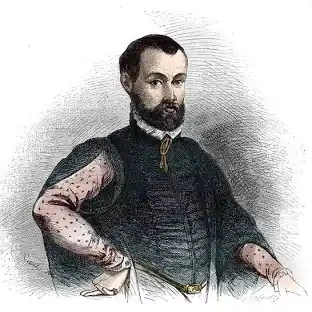
The sixteenth century was a time of great rupture, when the old supports were crumbling and Europe was groping for a new truth. In Florence in those years lived a man who dared to say about power what those before him had preferred to pass over in silence. Niccolò Machiavelli built no abstract systems — he looked at politics with a cold, sober eye and described it as it is, not as the books of the moralists said it ought to be.
His most famous work is a short treatise, "The Prince." It is almost a manual: how a ruler is to seize power and, above all, how to hold it. And here Machiavelli makes the decisive move — he separates politics from morality. In the governing of a state, in his words, there is nothing moral: the ruler's task is to preserve power at any cost, and virtues and vices are judged not in themselves but only by whether they serve that aim or harm it.
From this grows a formula that overturns the whole earlier ideal. Ancient philosophy taught: to be, not to seem — authenticity over appearance, essence over impression. Machiavelli reverses the words: for a ruler it matters more to seem than to be. He need not possess every virtue — he must skillfully display it to his subjects. Power lives not by the truth about itself, but by the image it instills in others.
Machiavelli was close to the House of Medici and in many ways justified the Florentine reality that family had built. And he did so not out of self-interest, not for pay — he genuinely shared his own view of things. In his eyes a man left without the highest good easily becomes a slave to his own desires; and so he described power not as it ought to be, but as the reality of a fallen world, where force, calculation and fortune rule.
And so, in an age when Erasmus of Rotterdam still bound human freedom to the striving toward the good, Machiavelli peered at the other side of that same Renaissance — the bare mechanics of power. By this cold sobriety he opened the way for later theorists of the state; a century on, Thomas Hobbes would arrive at a similar realism — the state as a force that reins men in.
The importance of Machiavelli lies in his being the first to pose, with such candor, a question that has not let thought rest since: can power be moral — or does politics live by its own merciless laws? His "Prince" became a mirror in which every age examines its conscience, and so the conversation with this Florentine leads inevitably to a dispute about man himself — man as Aristotle saw him, and the whole tradition that placed being above appearance.