the green why
the green why · the arc, station by station

The 21 Stations

One drama in twenty-one beats — from the Beginning to the Eschaton. Each station: a question, an image, a piece of music, and a reading.

← back to the arc
The Old Testament Drama
What does it mean to be made in the image of God?
♪ Joseph Haydn"The Creation" (1798)
The same subject, through the eyes of painters ↔
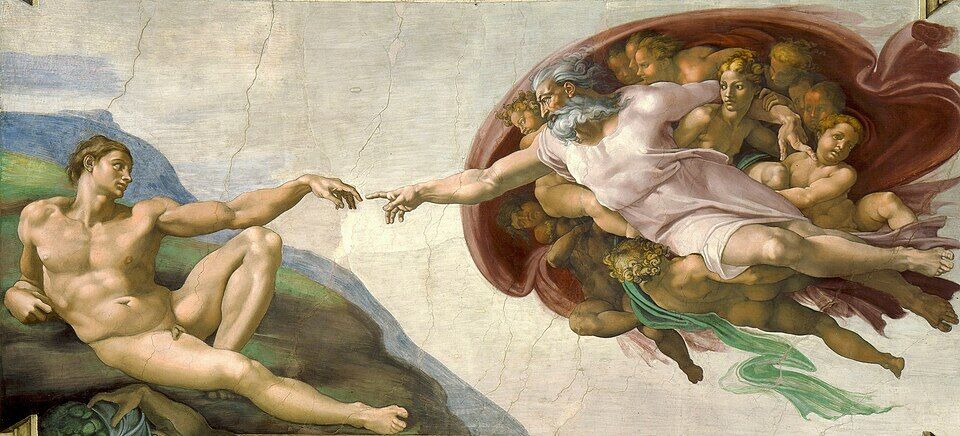
Michelangelo, "The Creation of Adam" (Sistine Chapel, 1512). The Creator's finger almost touches Adam's limp hand — life and freedom passed across a gap that man is free not to close.
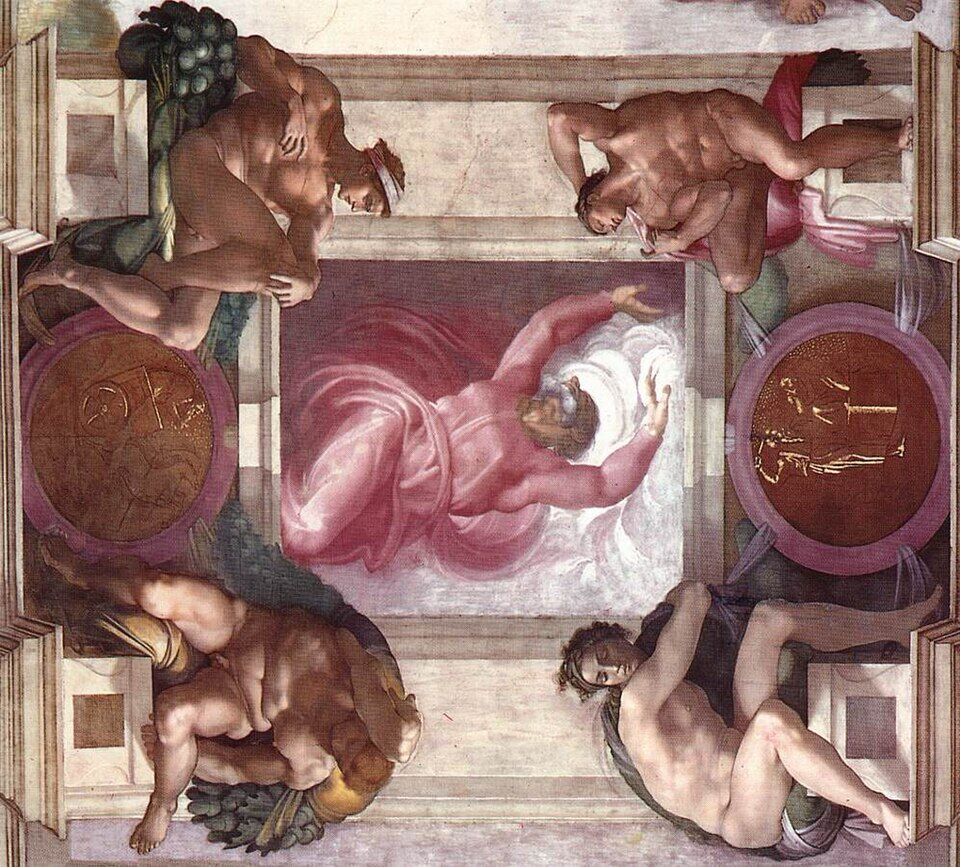
Michelangelo, "The Separation of Light from Darkness" (Sistine Chapel). The very "Let there be light": God in a whirlwind cleaves the chaos — the beginning that will become, in Haydn, the great burst of C major.
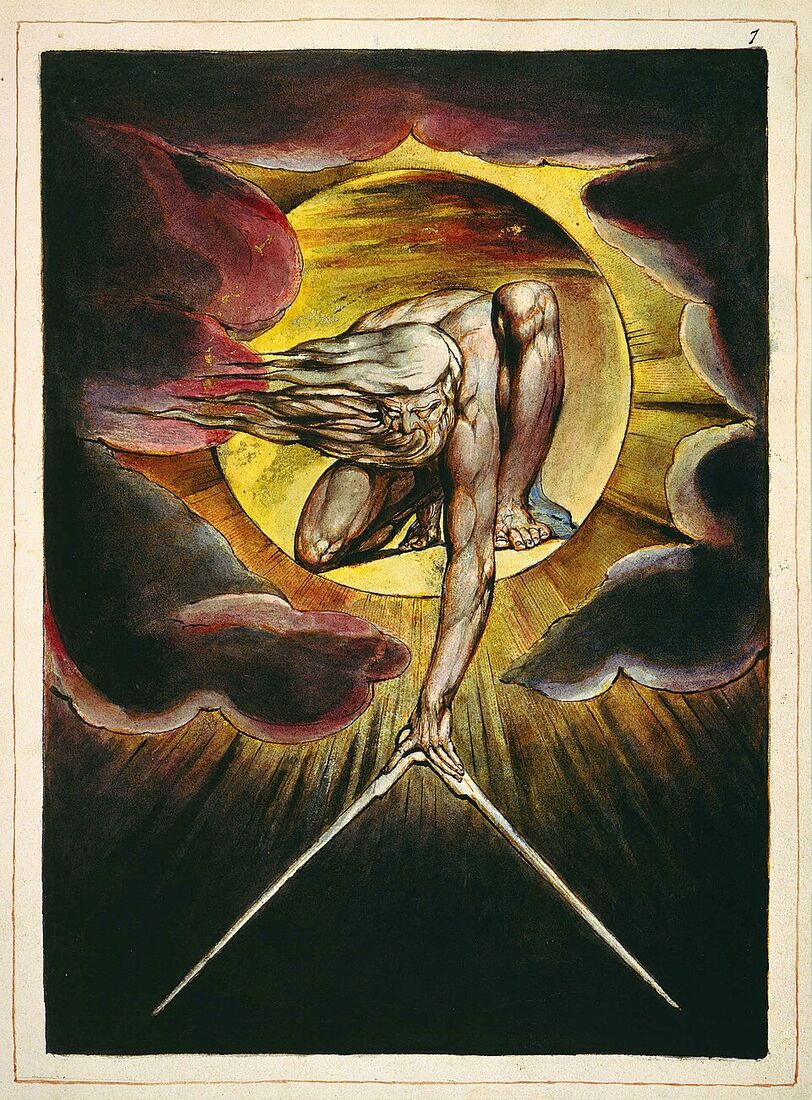
William Blake, "The Ancient of Days" (1794). God the architect draws the world's boundaries with a compass — creation as design and measure, flung out into the void.

Imagine silence — impenetrable, dense, velvet darkness, in which there is as yet no "before" and no "after," no "here" and no "there." There is only God, beyond time and space, infinite and eternal — and nothing else. And into this silence come the words "let there be." God creates the world — but how? …

Read the chapter from the book: “Breath”
2

The Fall

collapse
Where does evil come from?
♪ Modest Mussorgsky"Night on Bald Mountain" (1867)
The same subject, through the eyes of painters ↔
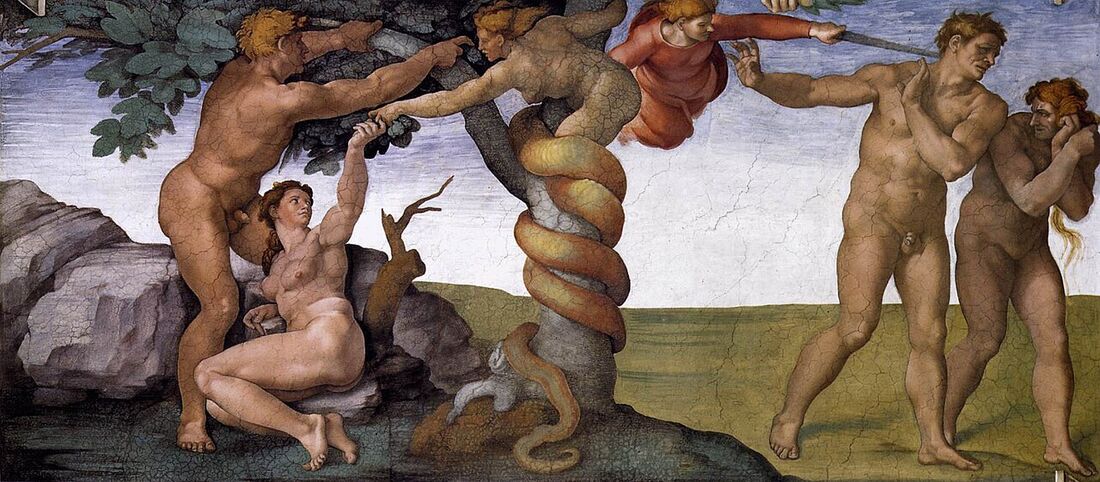
Michelangelo, "The Fall and Expulsion" (Sistine Chapel). A single sweep of the eye — from the tree to the angel's sword: the tasting and the punishment in one fresco.
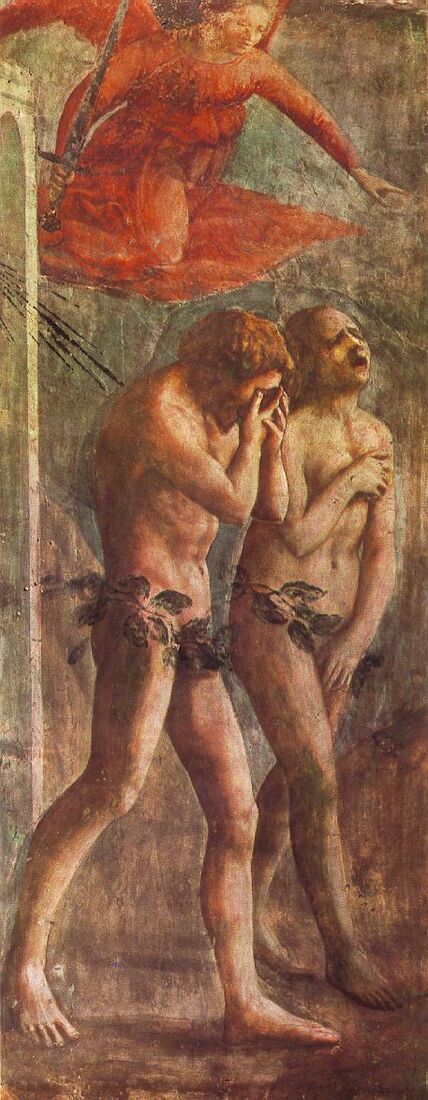
Masaccio, "The Expulsion from the Garden of Eden" (1427). The first true cry of shame and nakedness in painting — faces contorted by grief.

The Garden of Eden is a state of perfect trust. There is no shame, no fear: man and woman are still one whole, each the continuation of the other, and both are naked and are not ashamed. God walks with man in the cool of the day …

What is faith?
♪ Max Bruch"Kol Nidrei" (1880)
The same subject, through the eyes of painters ↔
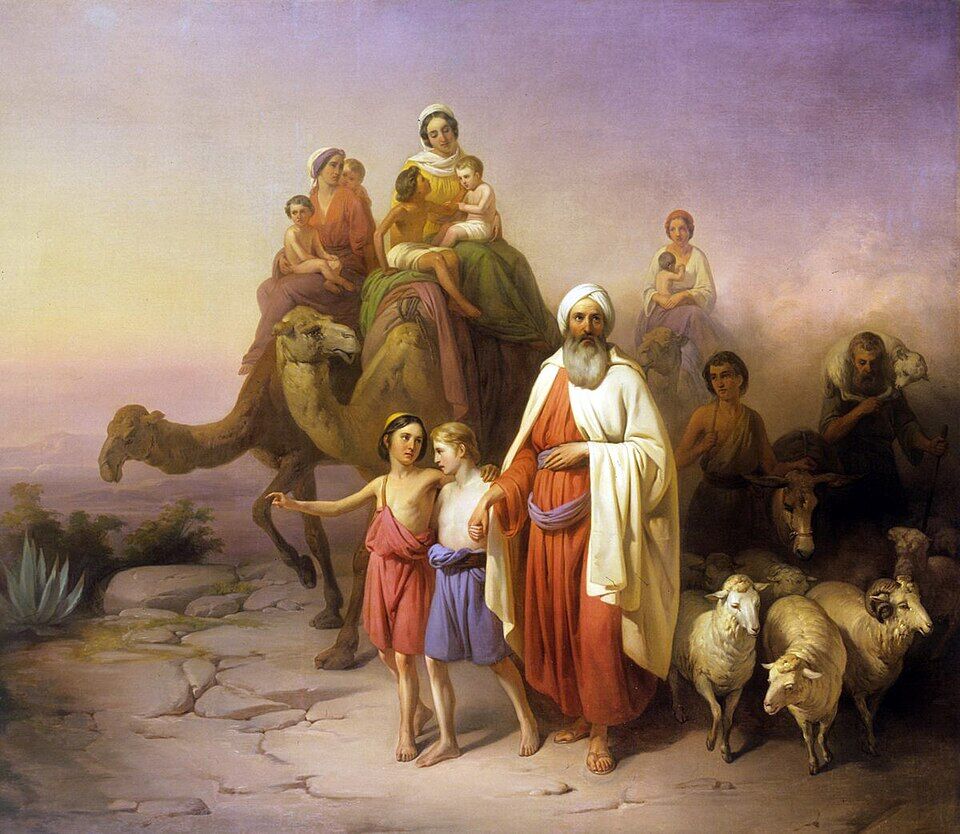
József Molnár, "The Migration of Abraham from Ur" (1850). The caravan sets out into emptiness at the call of a voice heard by no one but the old man at its head — faith as a step taken without a map.
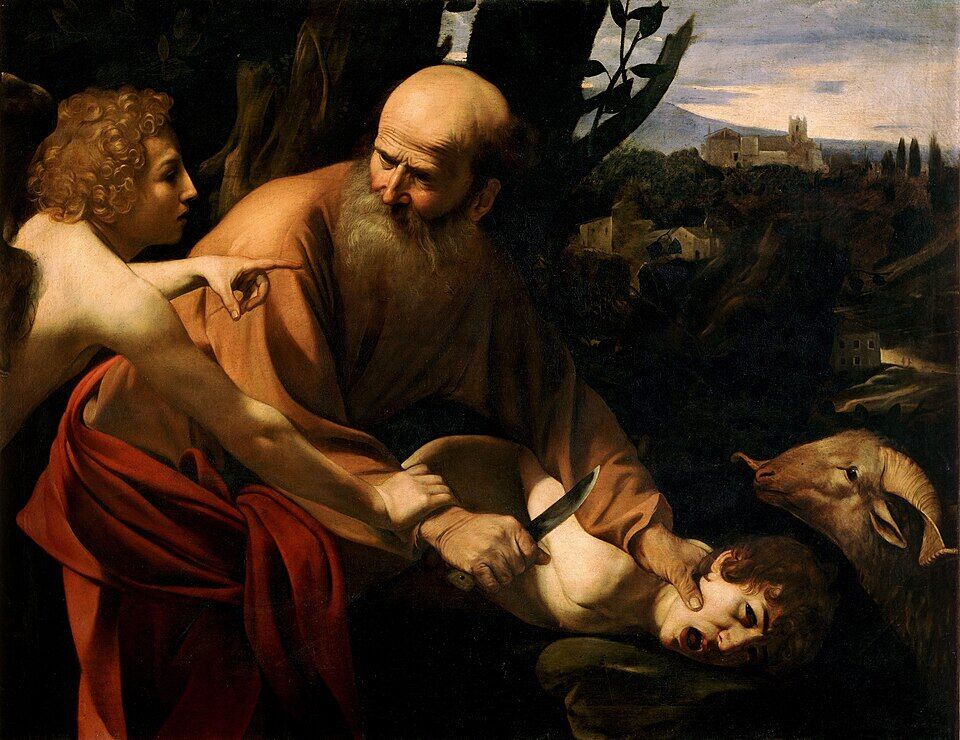
Caravaggio, "The Sacrifice of Isaac" (c. 1603). The knife at the throat, the boy's cry, the angel's finger pointing to the ram — the instant in which the whole ancient world of blood sacrifice collapses.
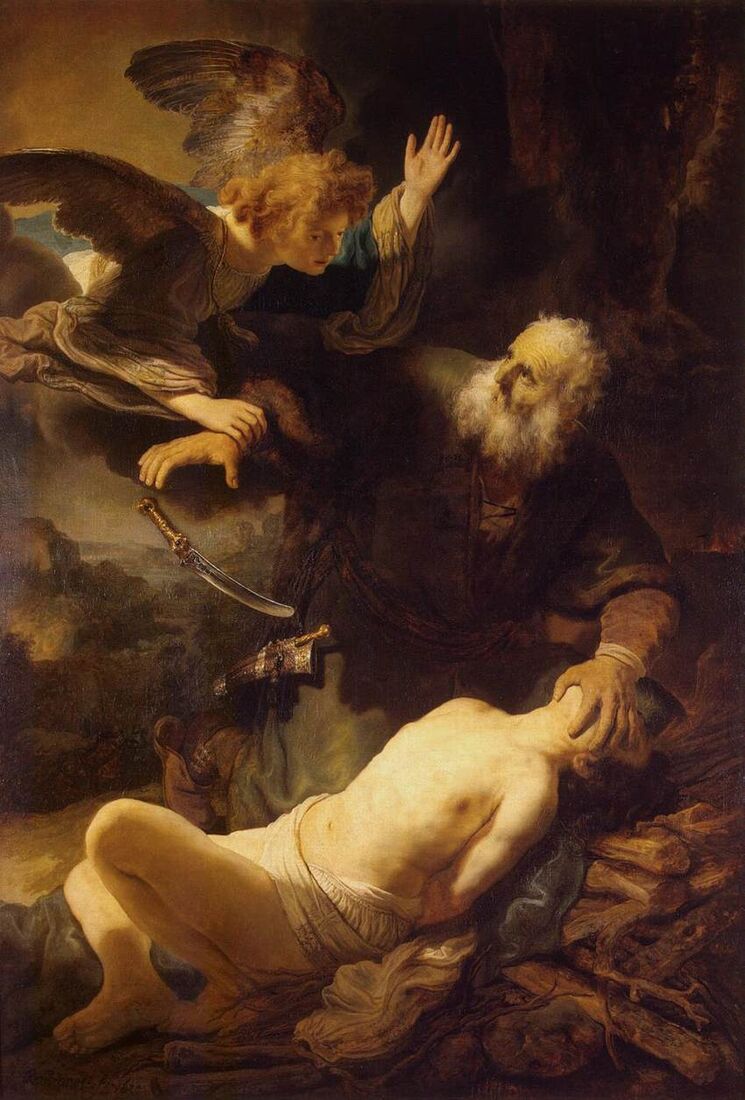
Rembrandt, "The Sacrifice of Abraham" (1635). The angel seizes the hand — the knife still hangs in the air, and Abraham's face is caught between horror and obedience.

The search begins not with a king and not with a philosopher, but with a single old man. Abraham is neither a Jew nor a righteous man from birth: a wealthy Amorite cattle-herder from Ur, an aristocrat, a "prince of God," a man settled and deeply rooted …

Read the chapter from the book: “Abraham”
4
Why are people afraid of freedom?
♪ Spiritual"Go Down, Moses" (rec. Marian Anderson, 1924)
The same subject, through the eyes of painters ↔
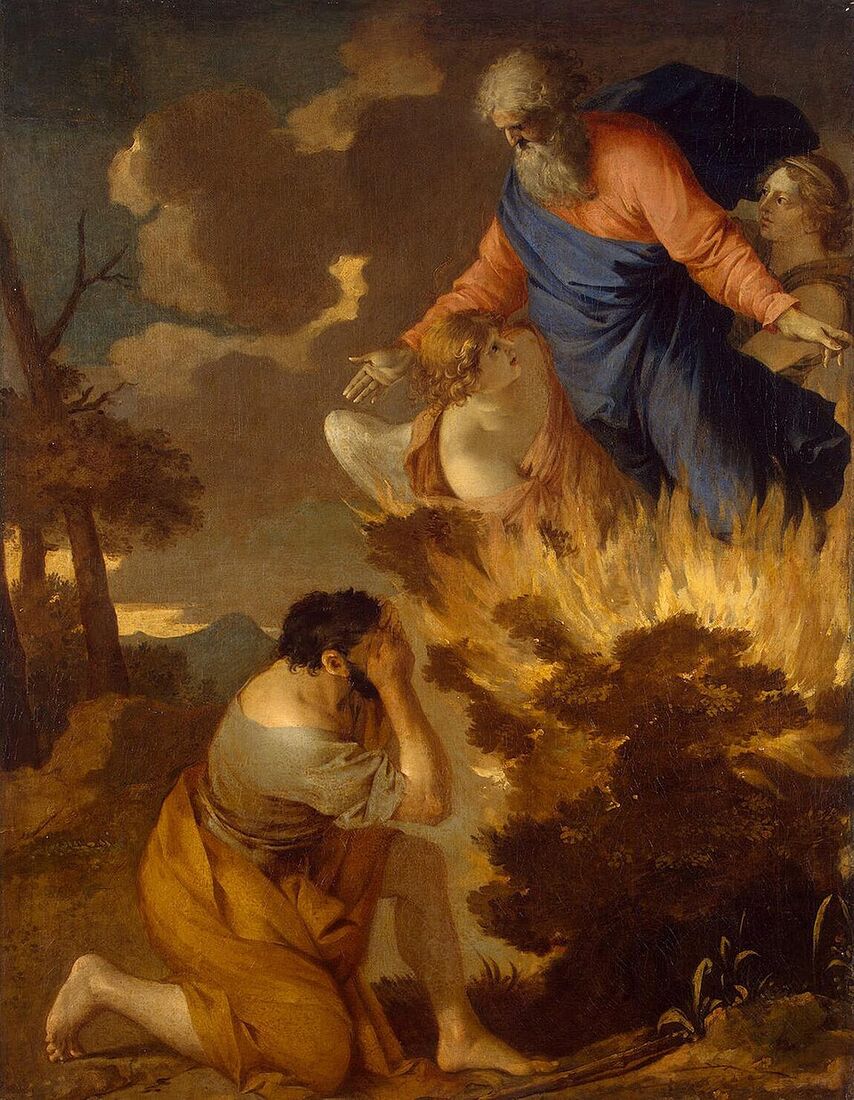
Sébastien Bourdon, "The Burning Bush" (17th century). The old fugitive beside the bush that burns and is not consumed hears the same voice that called Abraham: "Go."
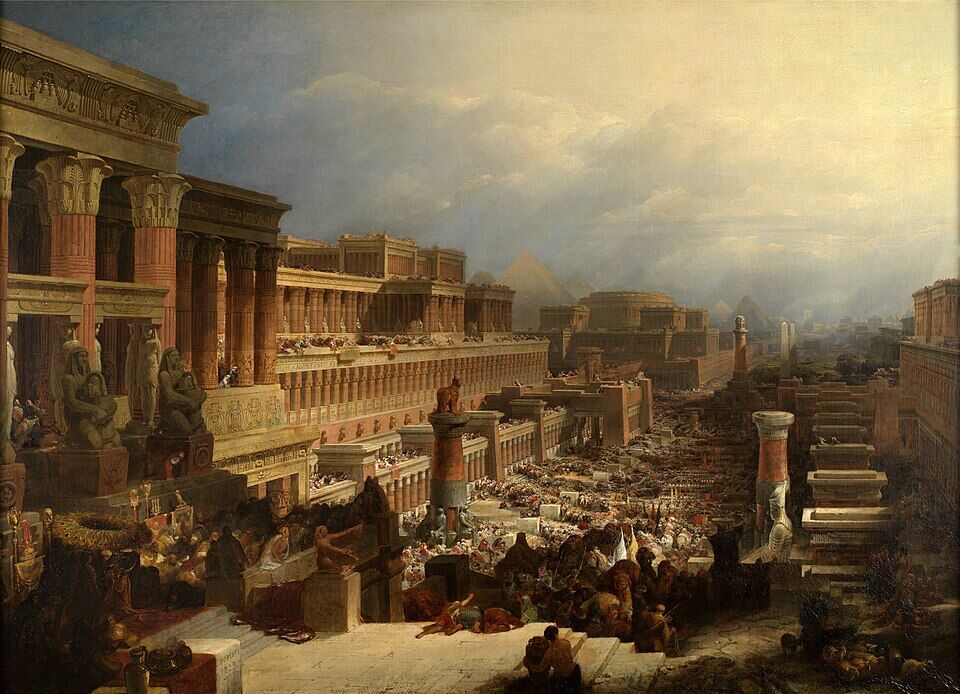
David Roberts, "The Israelites Leaving Egypt" (1828). A countless multitude streams out from beneath the shadow of Egypt's colossi — slavery still at their backs, and freedom already terrifying.
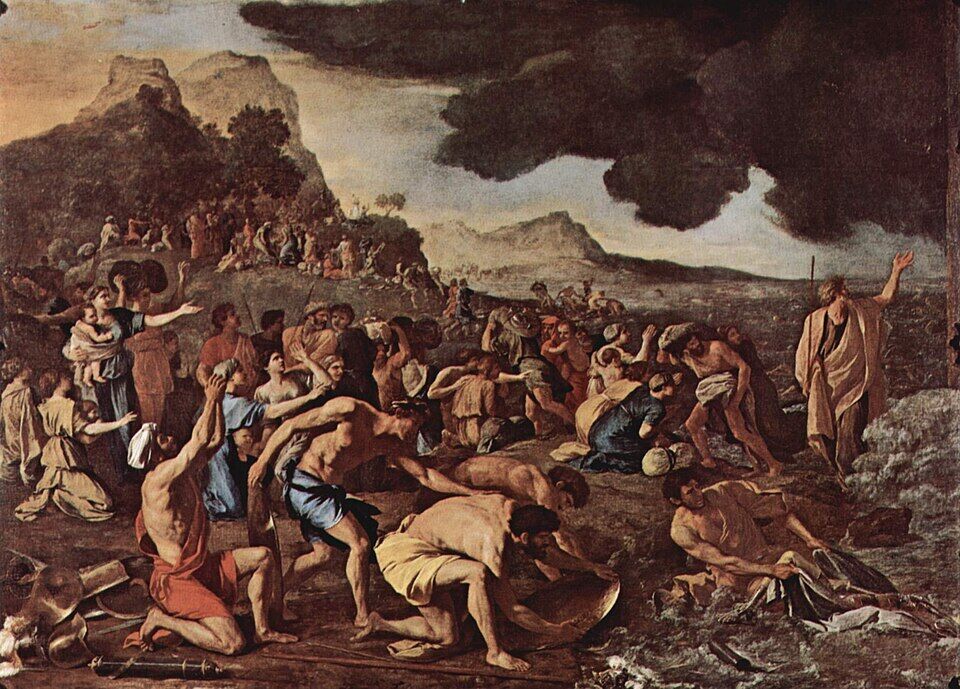
Nicolas Poussin, "The Crossing of the Red Sea." The waters part and close again behind them — the old life of slavery drowns for good.

A people forgets faster than it remembers. A few generations pass, and the descendants of the free patriarchs — the men who trusted the voice and walked out into the unknown — are slaves in Egypt …

5
Where does morality come from?
♪ Johann Sebastian Bach"Wir glauben all an einen Gott" (BWV 680)
The same subject, through the eyes of painters ↔
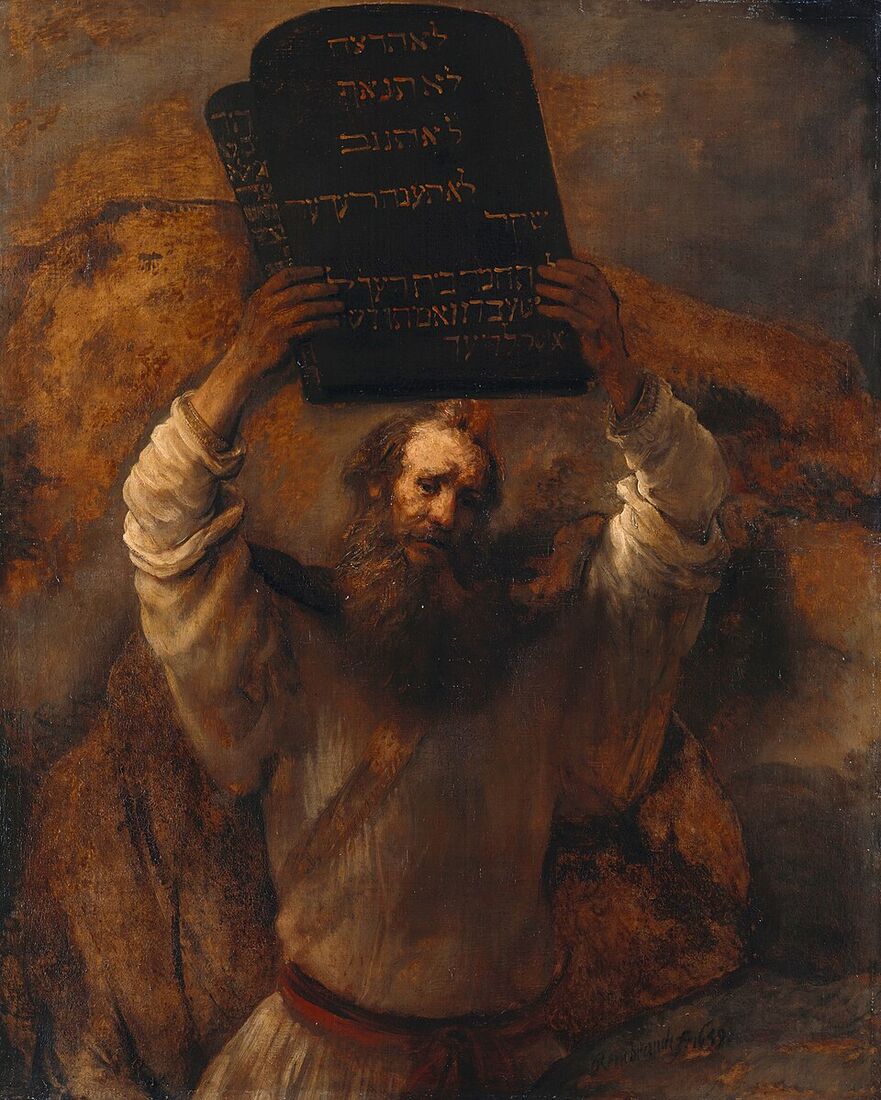
Rembrandt, "Moses with the Tablets of the Law" (1659). Moses lifts the tablets above his head — whether to display the covenant or to shatter it before a people that has fallen away.
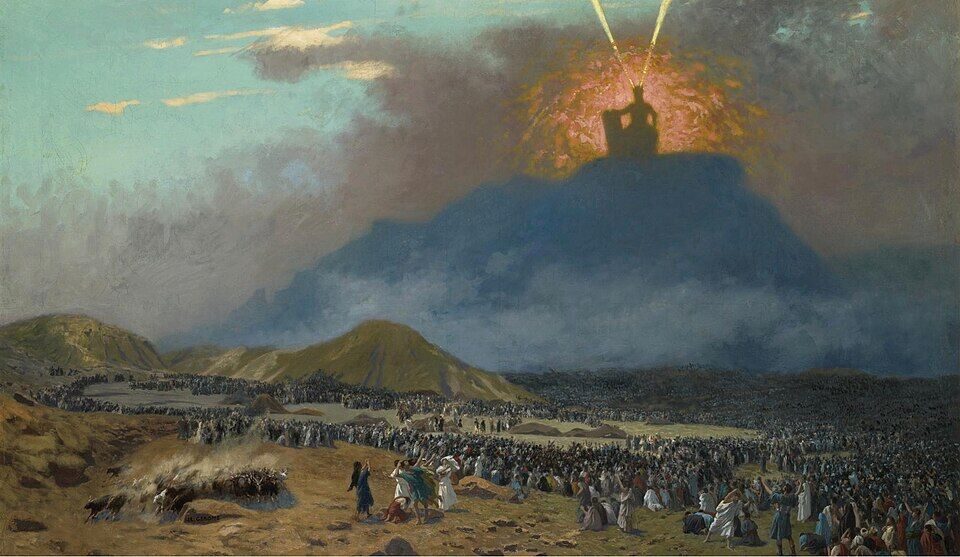
Jean-Léon Gérôme, "Moses on Mount Sinai" (1895–1900). The mountain wrapped in cloud and fire, a tiny Moses in radiance at its summit, and the whole people frozen below: the law is given in fear and trembling.

At the foot of Sinai — thunder, lightning, smoke: the mountain burns, and the people stand at a distance in terror. Here, in fire, the covenant is concluded, and the ten commandments are given …

Read the chapter from the book: “Sinai”
6

The Judges

collapse
Can people live without government?
♪ Edvard Grieg"In the Hall of the Mountain King" (1875)
The same subject, through the eyes of painters ↔
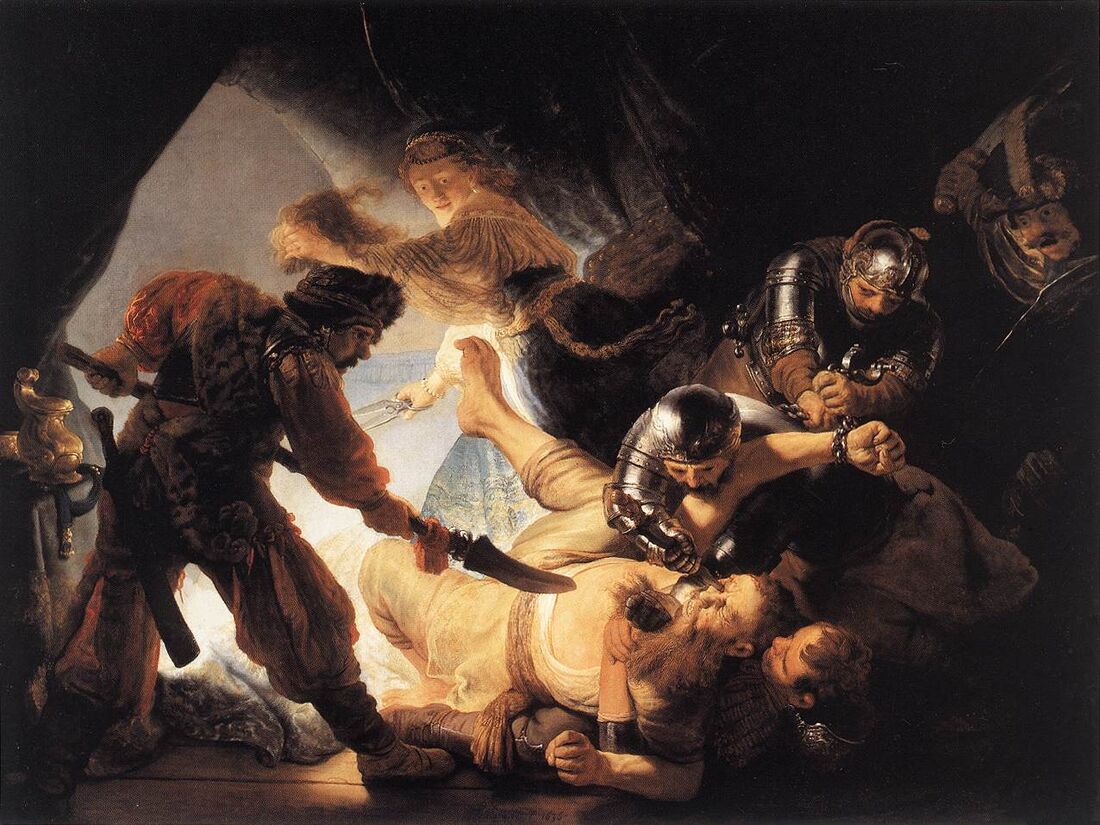
Rembrandt, "The Blinding of Samson" (1636). The betrayed hero is pinned to the ground and his eyes put out — strength given by the Spirit, and the blindness that overtakes it: the whole age of the judges in a single flash of light and blood.
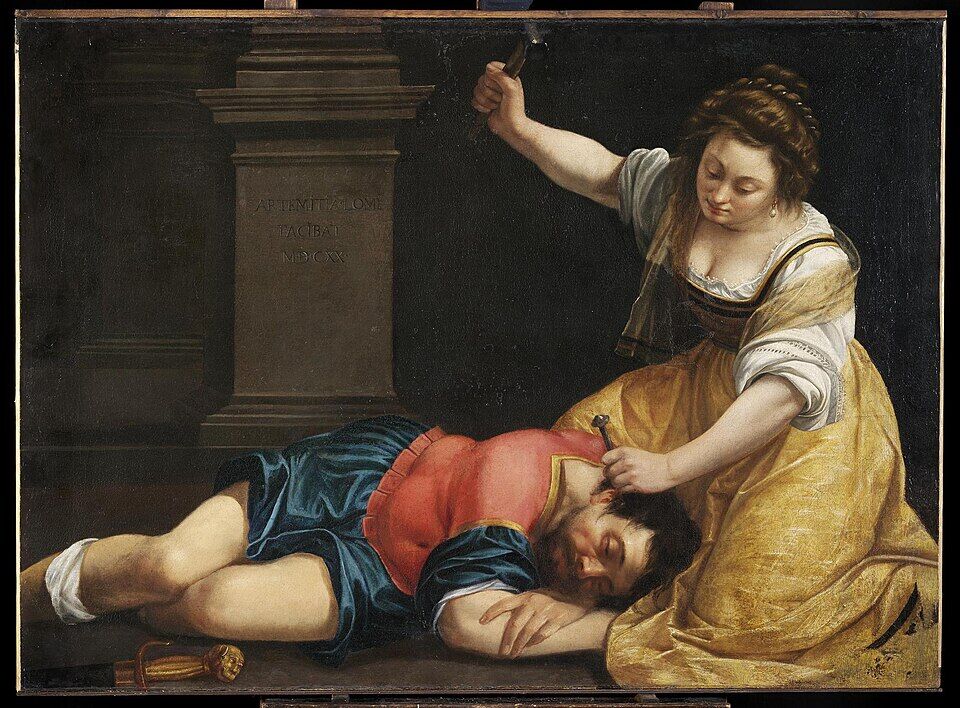
Artemisia Gentileschi, "Jael and Sisera" (1620). The people are saved not by a king or an army but by a woman with a tent peg and a mallet: in the age of the judges God makes a deliverer of anyone at all — only never the mighty of this world.

After Sinai, God attempts something no other people has known or ever will: life with no power set over it. For two hundred years Israel has no king, no army, no coercion — only judges, whom God raises up in the hour of need: ordinary people without a throne, whose only strength is what God has given them …

7

Kingship

collapse
Does power corrupt?
♪ Handel → Mozart"The Arrival of the Queen of Sheba" → "Lacrimosa"
The same subject, through the eyes of painters ↔
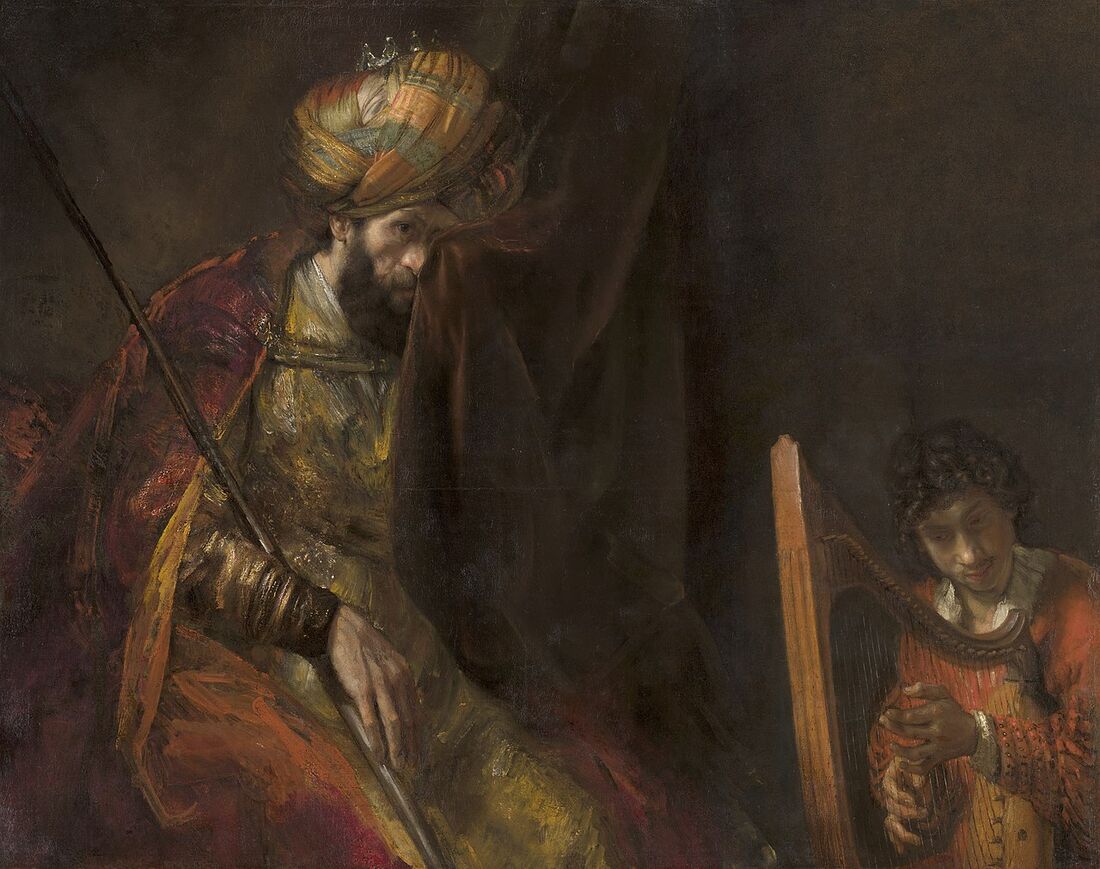
Rembrandt, "Saul and David" (c. 1655). King Saul, eaten by black envy, wipes away a tear with the edge of the curtain while the young David plays the harp: power that can no longer be held devours the one who bears it.
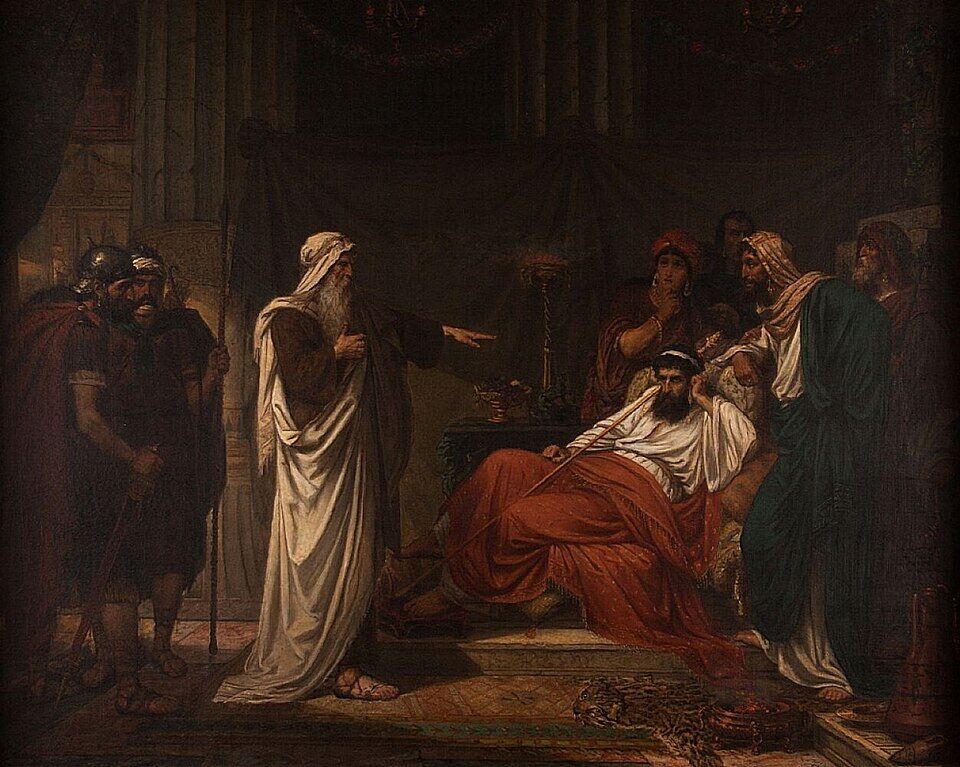
Eugène Siberdt, "The Prophet Nathan Rebukes King David" (19th century). The unarmed prophet points his finger at the all-powerful king: "You are the man" — and the king, who could have him executed, recoils in shame.
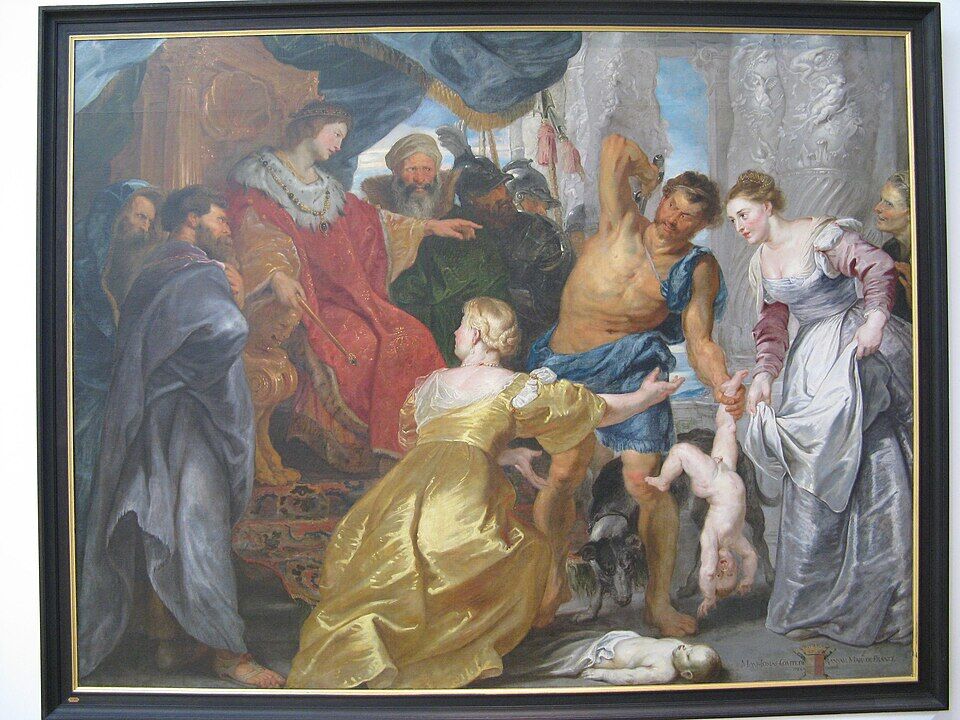
Peter Paul Rubens, "The Judgement of Solomon" (1617). The sword is raised over the living infant, and the true mother rushes to save him: the highest thing power can do is not force but righteous judgment.

The people received what they asked for — a king "like the other nations." But God sets a condition that none of their neighbors has: this king will not be a priest …

Who speaks truth to power?
♪ Johann Sebastian Bach"Toccata in D minor," BWV 565
The same subject, through the eyes of painters ↔
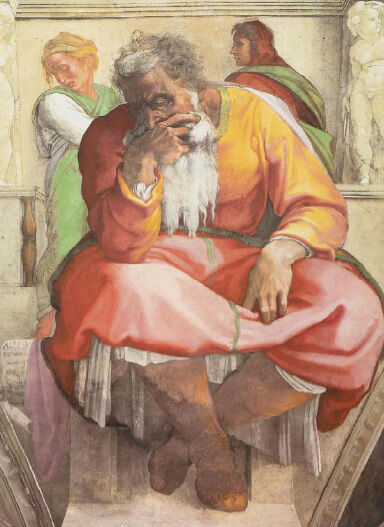
Michelangelo, "The Prophet Jeremiah" (Sistine Chapel, 1512). Bowed, head propped on his hand, the prophet is crushed by the weight of what he sees — the conscience of history, to which no one listens.
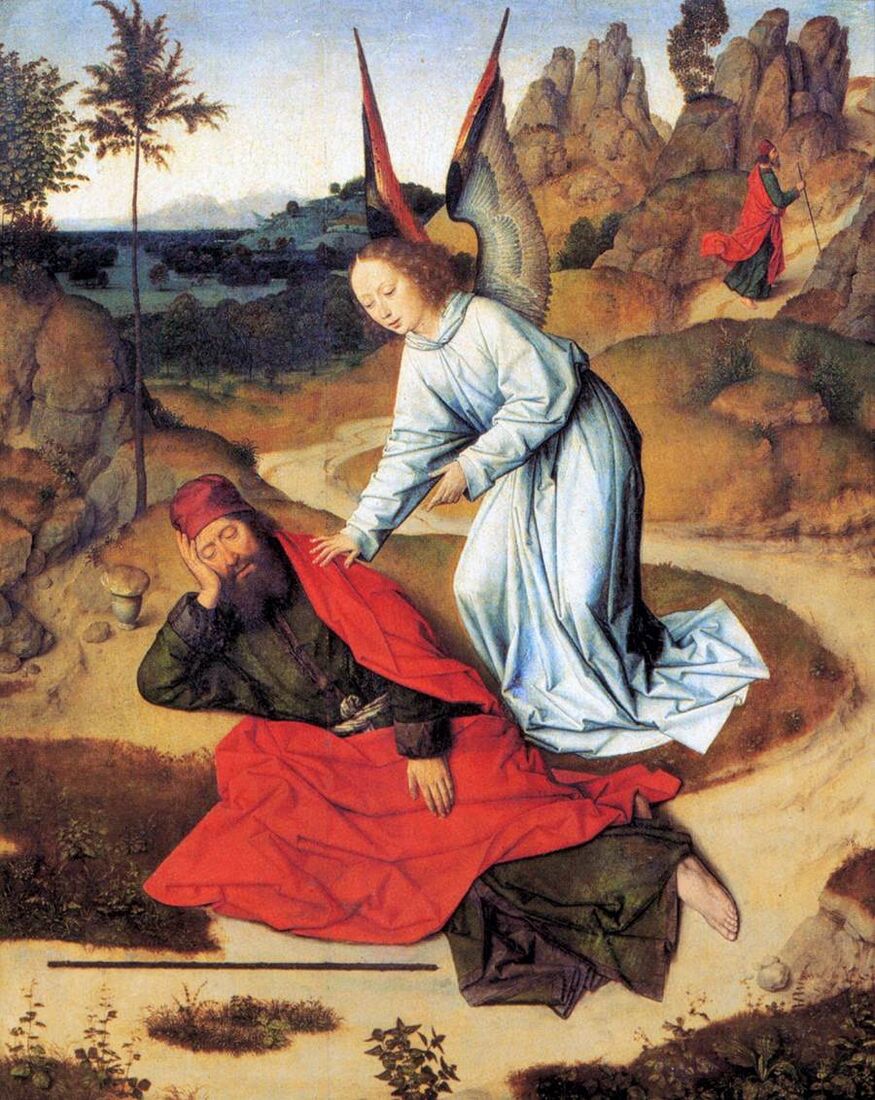
Dieric Bouts, "The Prophet Elijah in the Desert" (c. 1465). Victorious on Carmel and hunted by Jezebel, Elijah collapses under the juniper and begs for death — and an angel wakes him: "Arise, eat."

And then a voice rings out. The voice of the prophet. A prophet is not a foreteller: he is a man whose ear is tuned to the music of consequences, who sees how sin weaves the fabric of a coming catastrophe …

Read the chapter from the book: “Elijah. Ash on the Tongue”
9

Wisdom

collapse
Why do good people suffer and bad people prosper?
♪ Johannes Brahms"Denn alles Fleisch" from "A German Requiem" (1868)
The same subject, through the eyes of painters ↔
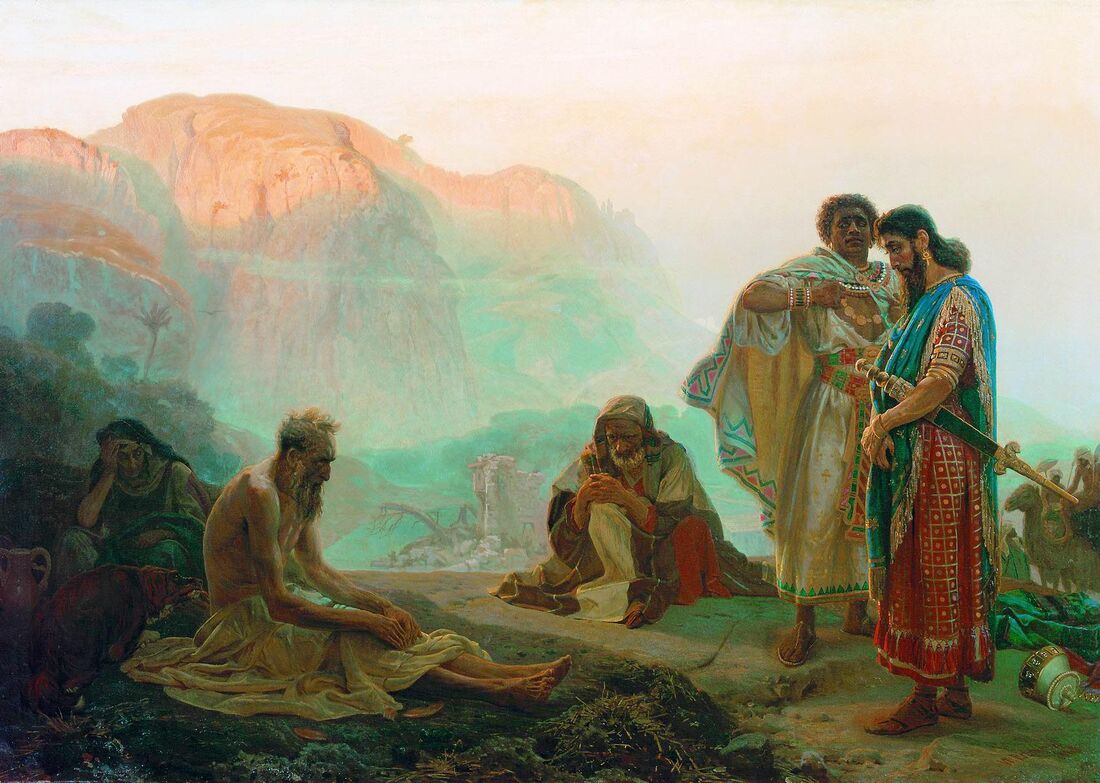
Ilya Repin, "Job and His Friends" (1869). Job in the dust, destitute and naked — while his finely dressed theologian friends explain that he has only himself to blame: suffering must fit the scheme.
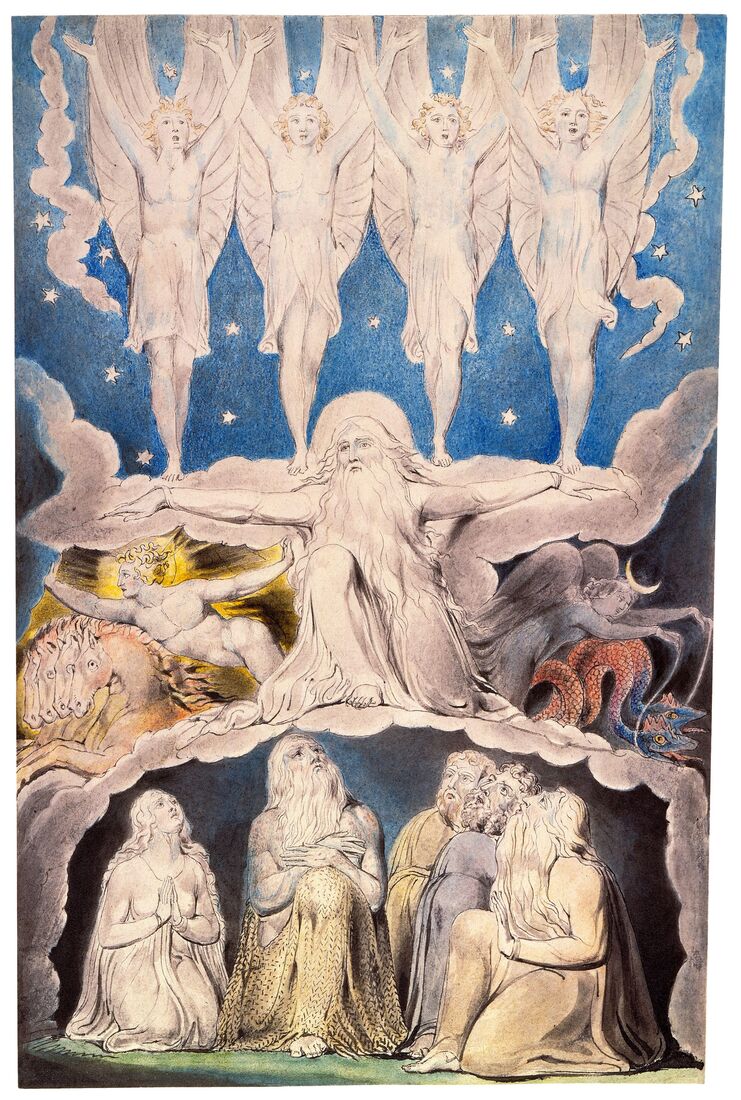
William Blake, "When the Morning Stars Sang Together" (c. 1805). God answers Job out of the storm — not with an explanation but with the whirlwind of creation: "Where were you when I laid the foundations of the earth?"
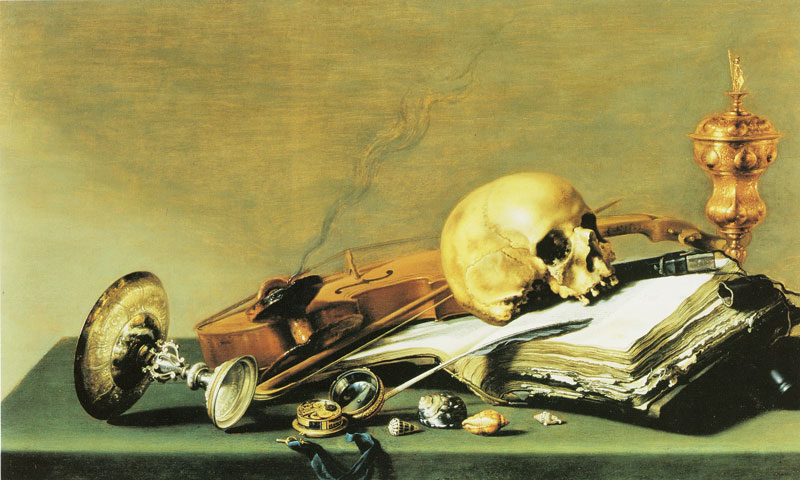
Pieter Claesz, "Vanitas" (1628). A skull on an open book, a violin, an overturned goblet, a clock, a snuffed candle: wisdom, art, wealth, time — "vanity of vanities, all is vanity."

Together with the prophets is born a thought turned inward — the personal search for meaning. And its very first question is the most terrible. The Book of Job is a terrible story: a righteous man, who has in no way deserved calamity, in a single day loses his children, his wealth, his health …

Read the chapter from the book: “Job. The Crack in the Mirror of the World”
10

The Captivity

captivity
What remains of faith when everything it rested on has collapsed?
♪ Gabriel Fauré"Élégie" for cello, Op. 24 (1880)
The same subject, through the eyes of painters ↔
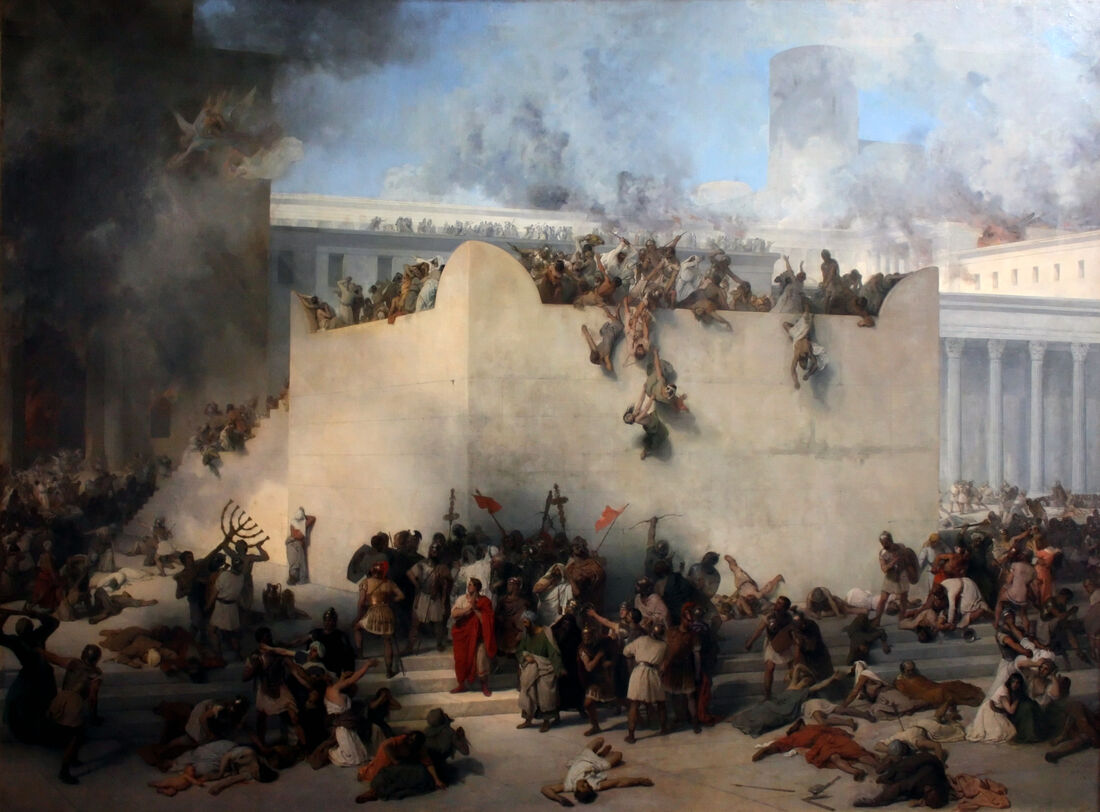
Francesco Hayez, "The Destruction of the Temple of Jerusalem" (1867). Smoke, collapsing walls, bodies on the steps, the sacred menorah carried off — the enduring image of the catastrophe in which everything faith rested on goes up in flames.
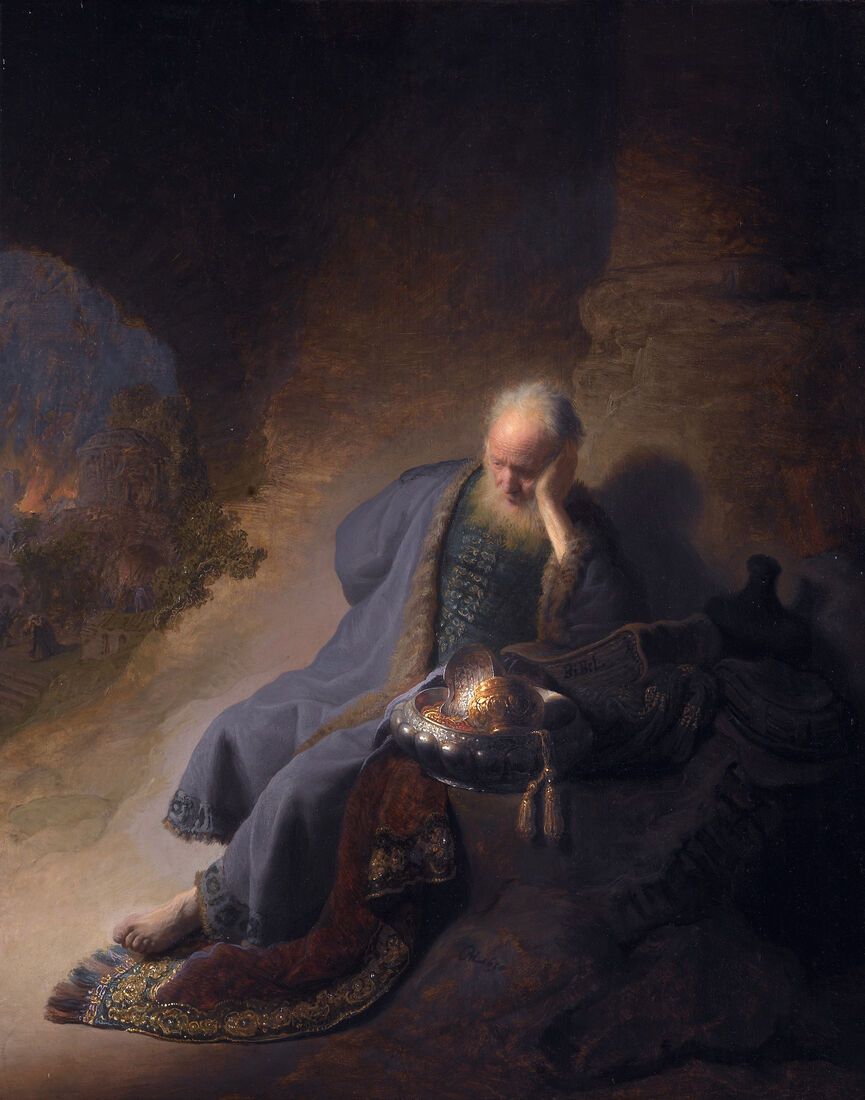
Rembrandt, "Jeremiah Lamenting the Destruction of Jerusalem" (1630). The burning city is a distant spark at the left; all the light falls on the face of the prophet who foretold it all, went unheard, and has now outlived the end of his world.
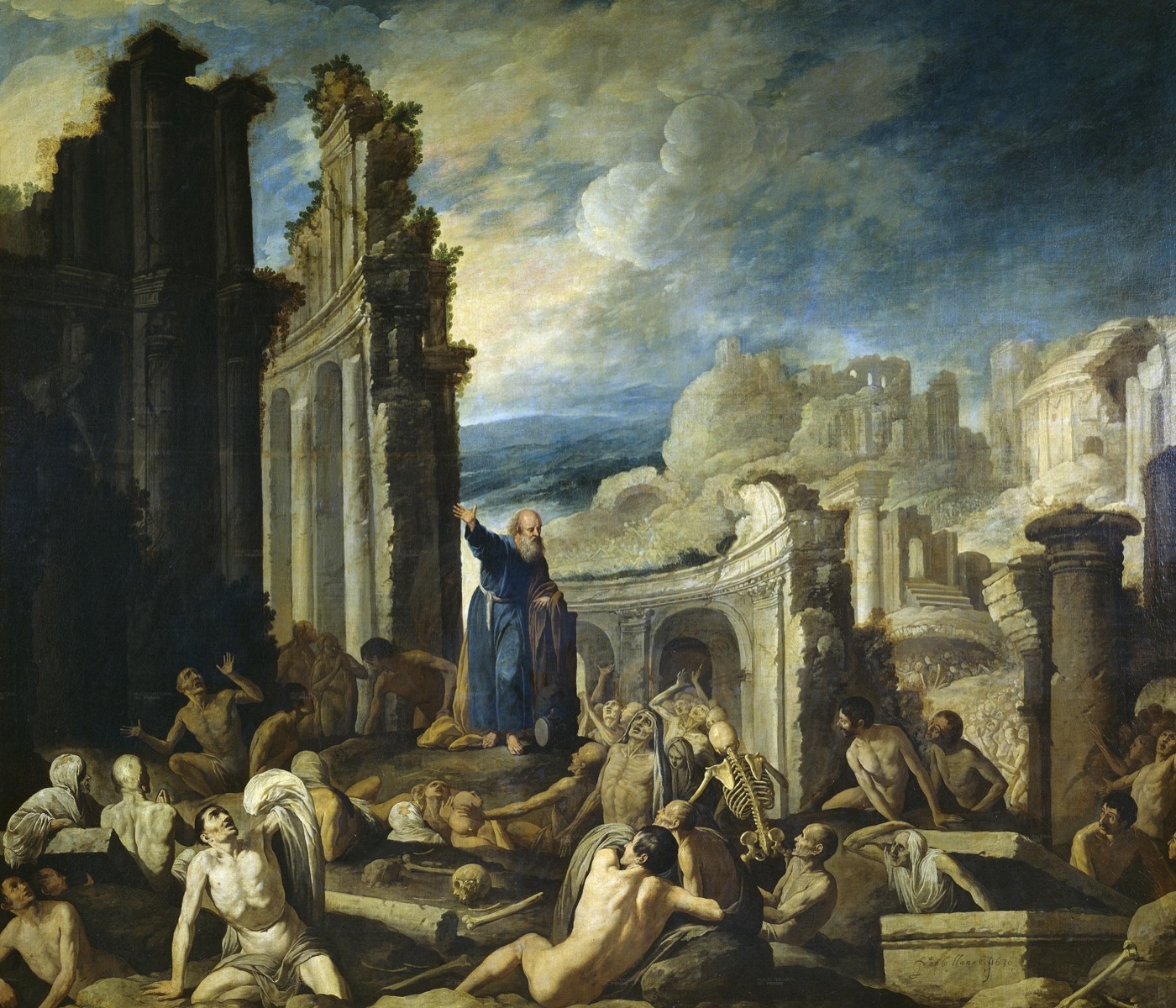
Francisco Collantes, "The Vision of Ezekiel" (1630). Amid the ruins the prophet stretches out his hand over a field of dead bones — and they come together and take on flesh: "Can these bones live?" God can raise even a dead people.

The collapse comes as it must — like a sentence long since pronounced but never heard. First Assyria swallows the Northern Kingdom, then Babylon burns Jerusalem. The Temple of Solomon, the visible sign of the covenant, is turned to ash …

11

The Waiting

captivity
How does one live when heaven is silent?
♪ Erik Satie"Gymnopédie No. 1" (1888)
The same subject, through the eyes of painters ↔
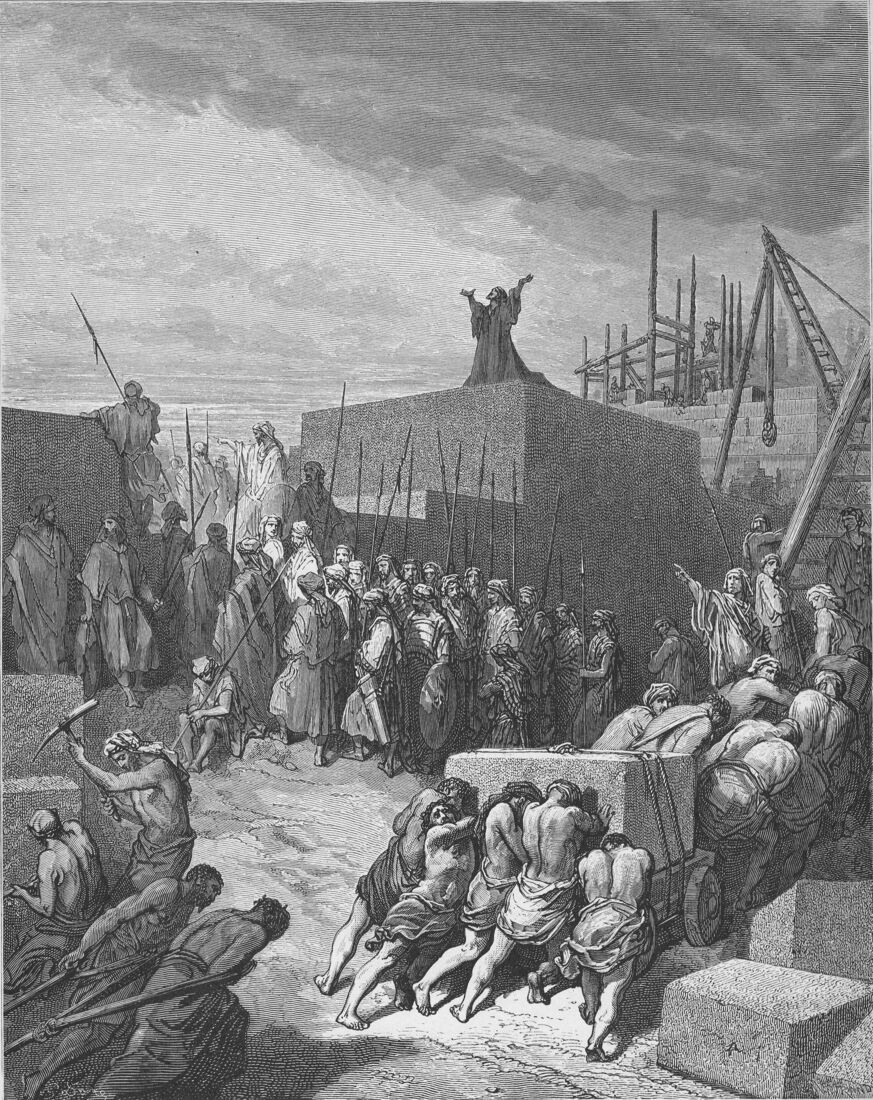
Gustave Doré, "The Rebuilding of the Temple." The returning remnant raises the temple again — but nothing of the former glory remains; the old men who remembered the first temple looked on these walls with tears.
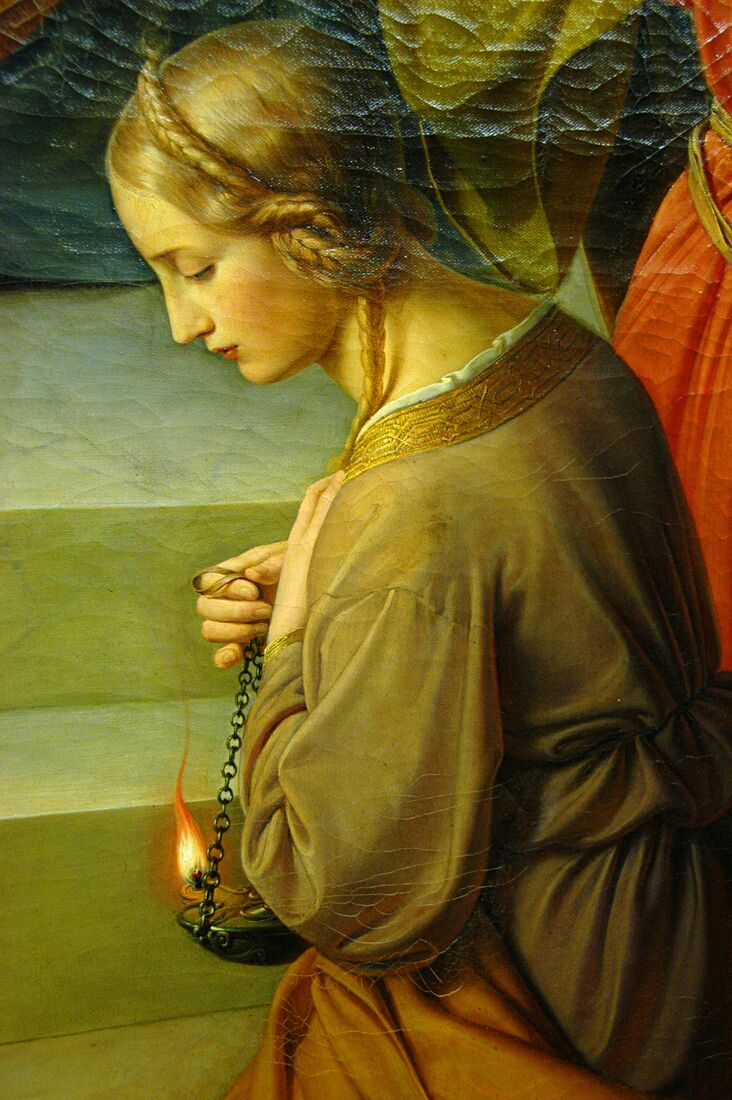
F. W. Schadow, "The Wise and Foolish Virgins" (detail). The wise virgin has bowed her head and keeps her lamp burning — the whole parable of waiting in a gesture: you do not know the hour, so tend the flame and do not sleep.
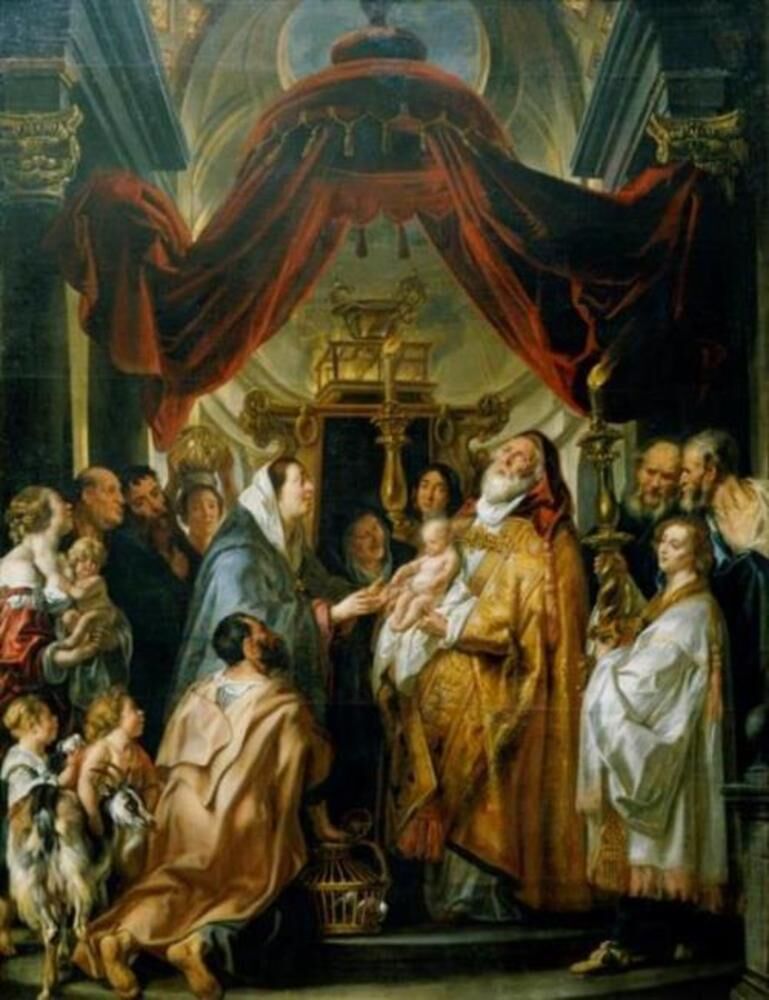
Jacob Jordaens, "The Presentation in the Temple" (c. 1660). The aged Simeon, who has waited all his life, recognizes the Savior in an ordinary infant; beside him stands the prophetess Anna: those who lived to see it because they never stopped waiting.

The Persians conquer Babylon and permit the Jews to return — but only a small part returns, a remnant, those for whom the faith of the fathers proved dearer than a settled life in a foreign land. They build the Second Temple, and at first a timid hope stirs among the people: the prophets Haggai and Zechariah spur the building on …

Read the chapter from the book: “Four Hundred Years of Silence”
The New Testament Drama
Can the eternal enter time without ceasing to be itself?
♪ Adolphe Adam"Cantique de Noël" — "O Holy Night" (1847)
The same subject, through the eyes of painters ↔
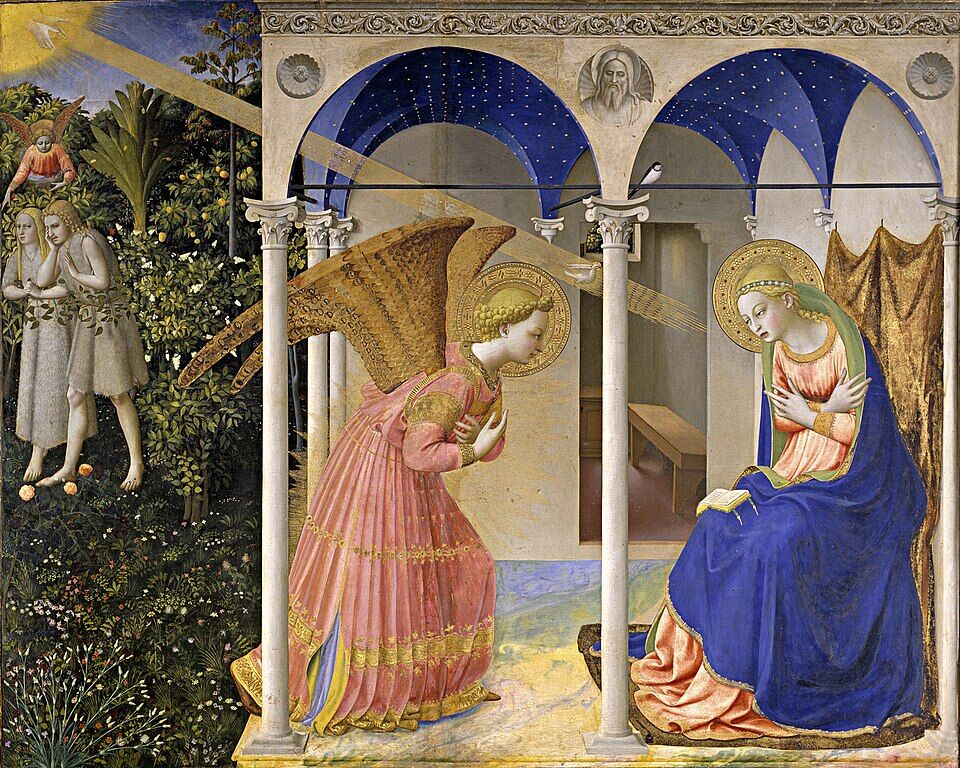
Fra Angelico, "The Annunciation" (c. 1426, Prado). The archangel and the Virgin lean toward each other beneath an arch; in the upper left corner, the expulsion of Adam and Eve from paradise. A single panel binds the two "noes" of Eden to the one "yes": at the very spot where the ancient couple walked out of the garden, Mary says "let it be to me according to your word" — and the door once slammed shut is opened by the first free human consent.
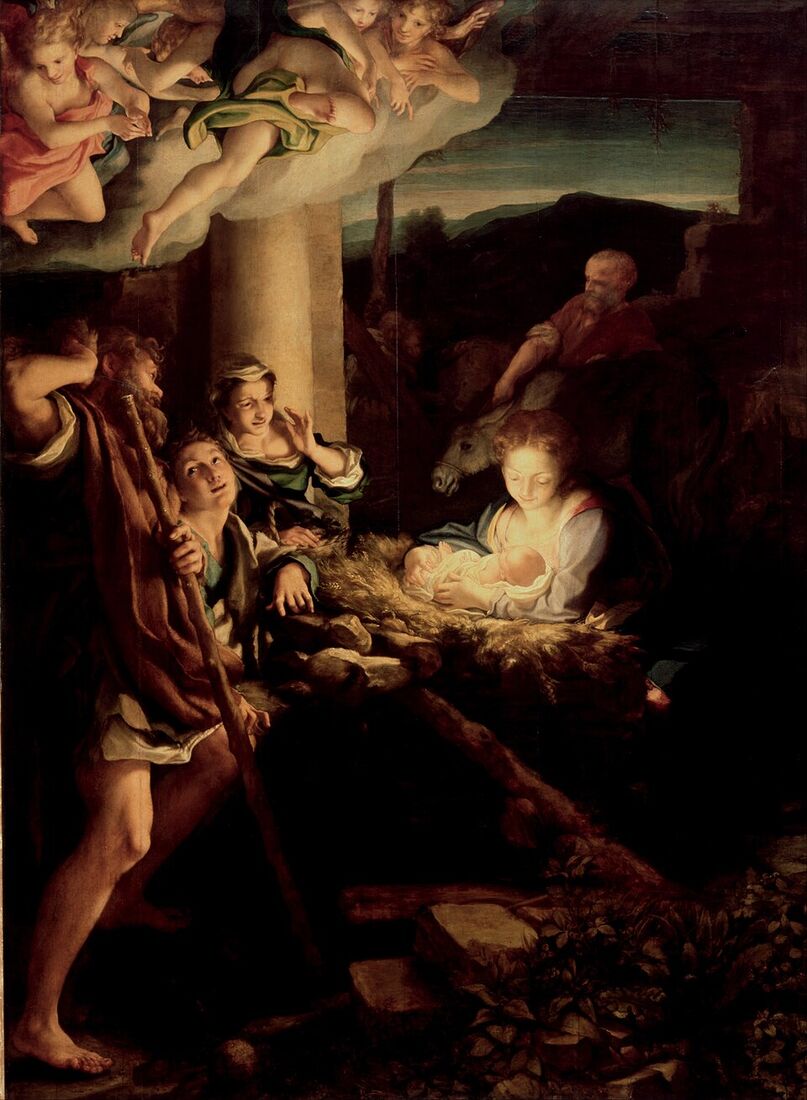
Correggio, "Holy Night" (c. 1525–30). The picture has no source of light but the Child himself: from him comes a radiance so strong a servant shields her eyes, and out of it the shepherds' faces emerge from the darkness. The theology of the Incarnation written in light — God enters the world not as thunder from above but as light from below, out of weakness.
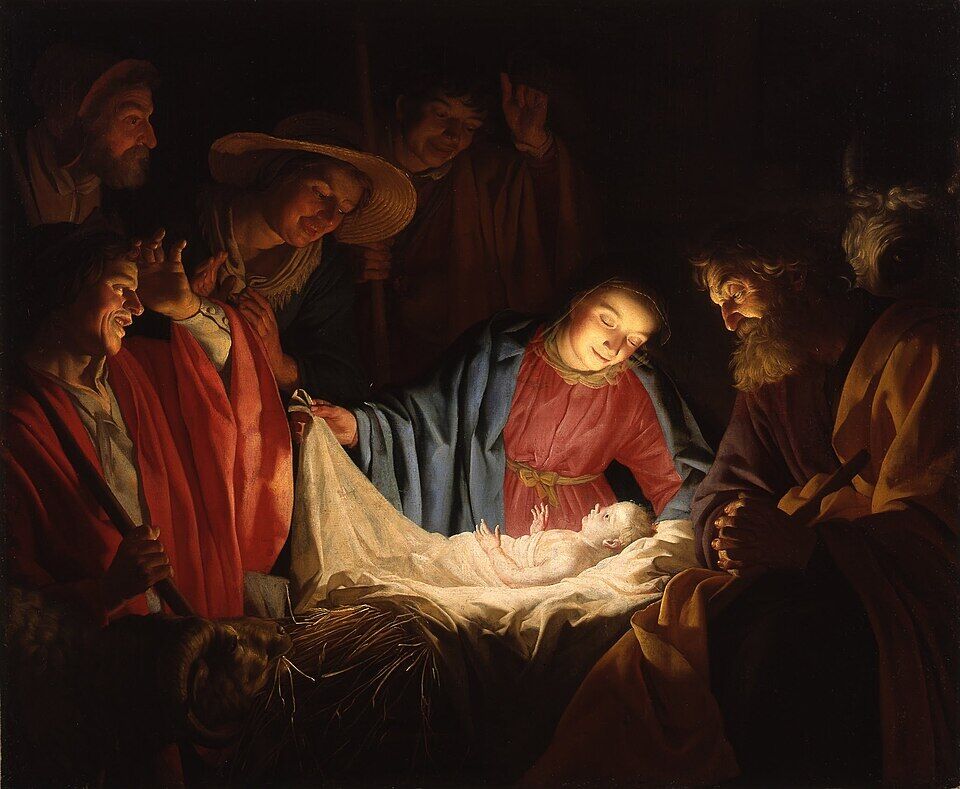
Gerard van Honthorst, "Adoration of the Shepherds" (1622). The darkness is nearly total — and the only lamp within it lies in the manger. The shepherds' coarse faces take on features for the first time, drawn out of the gloom by the light coming from the Child: the first to come to the light are those who had no face.

In Geertgen's dark night there is no moon, no torch, no angelic glow from above. The single source of light is the Child Himself …

13
Which is higher — to rule, or to serve?
♪ Jules Massenet"Méditation" from the opera "Thaïs" (1894)
The same subject, through the eyes of painters ↔
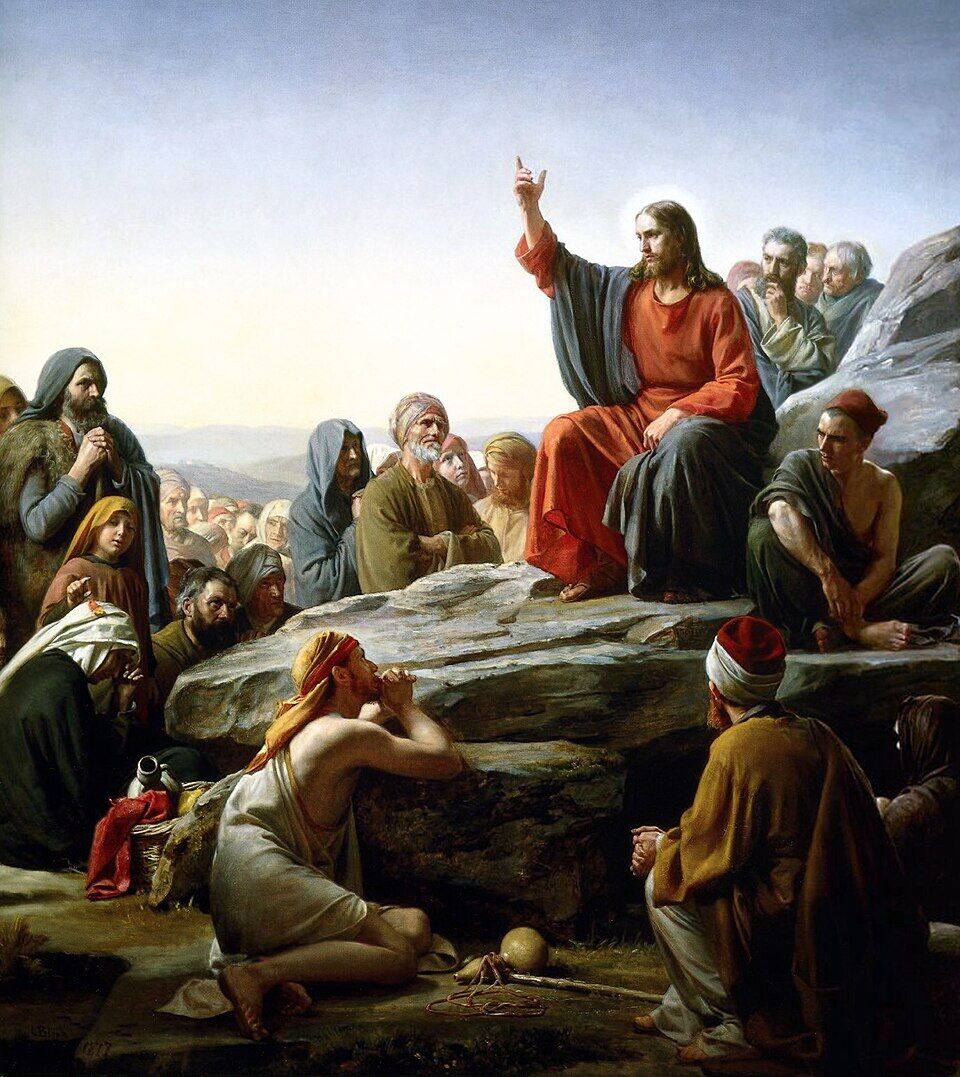
Carl Bloch, "The Sermon on the Mount" (19th century). Christ sits not on a throne but on a hillside, and around him is not a crowd but a multitude of distinct faces: a praying woman with a child, an old man, a beggar with a bowl at his feet. The artist refused to paint the mass — he painted the Kingdom as an address to each one separately.
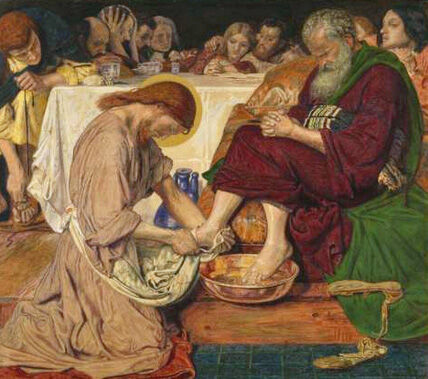
Ford Madox Brown, "Christ Washing Peter's Feet" (1852). The King, girded with a towel, kneels before his disciple; Peter draws back, unable to accept that the Lord should serve him. "Whoever would be greater among you, let him be your servant" — power turned upside down: dominion gives way to service.
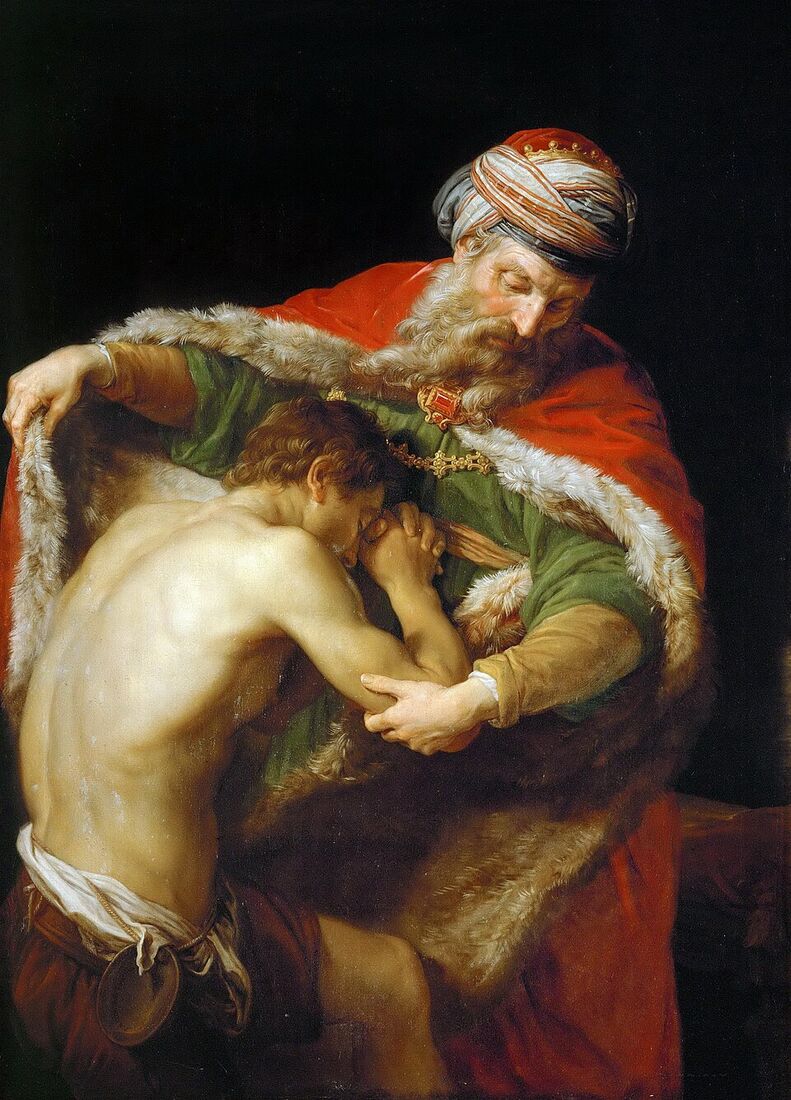
Pompeo Batoni, "The Return of the Prodigal Son" (1773). The father in rich garments embraces his half-naked, kneeling son, who hides his face against his chest. The parable inverted: it is not the sinner who searches painfully for God — God himself goes out to meet him and runs to embrace him.

In Bloch's painting Christ sits not on a throne but on a hillside, and around Him is not a mass but a multitude of separate faces: an old man leaning forward; a woman with a child; a distrustful scribe; a boy peering up from below. The artist refused to paint a crowd — he painted faces, each with its own story …

Read the chapter from the book: “The Book of Life”
14
Is any freedom freer than in a willing sacrifice?
♪ Tomás Luis de Victoria"O vos omnes" (1585)
The same subject, through the eyes of painters ↔
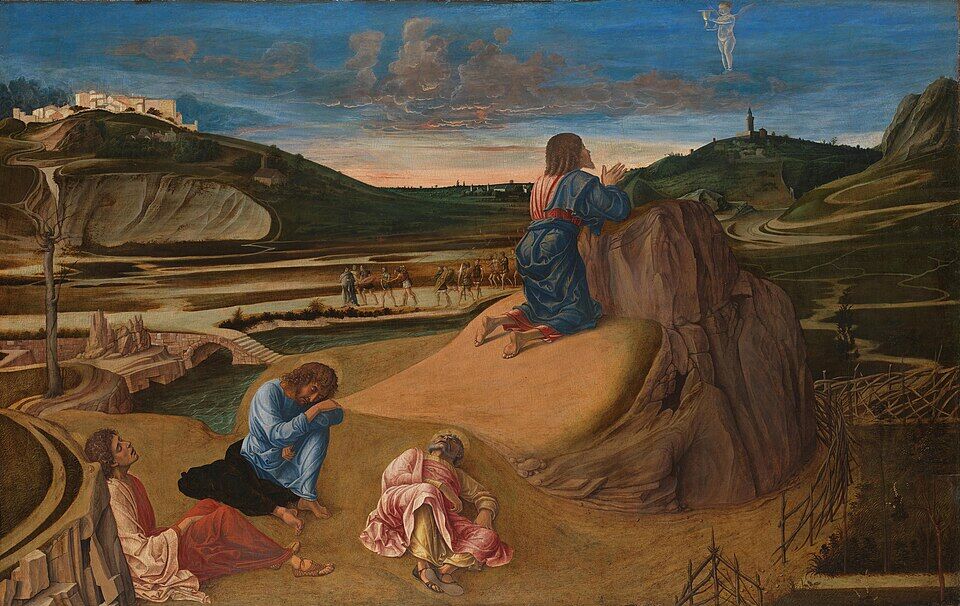
Giovanni Bellini, "The Agony in the Garden" (c. 1465). Christ prays on a rock in the first light of dawn; an angel appears in the sky bearing a cup; below, three disciples sleep, while in the distance Judas already leads the guard across the bridge. All of Gethsemane in a single frame: the cup, the sleep of those closest, the betrayal drawing near.
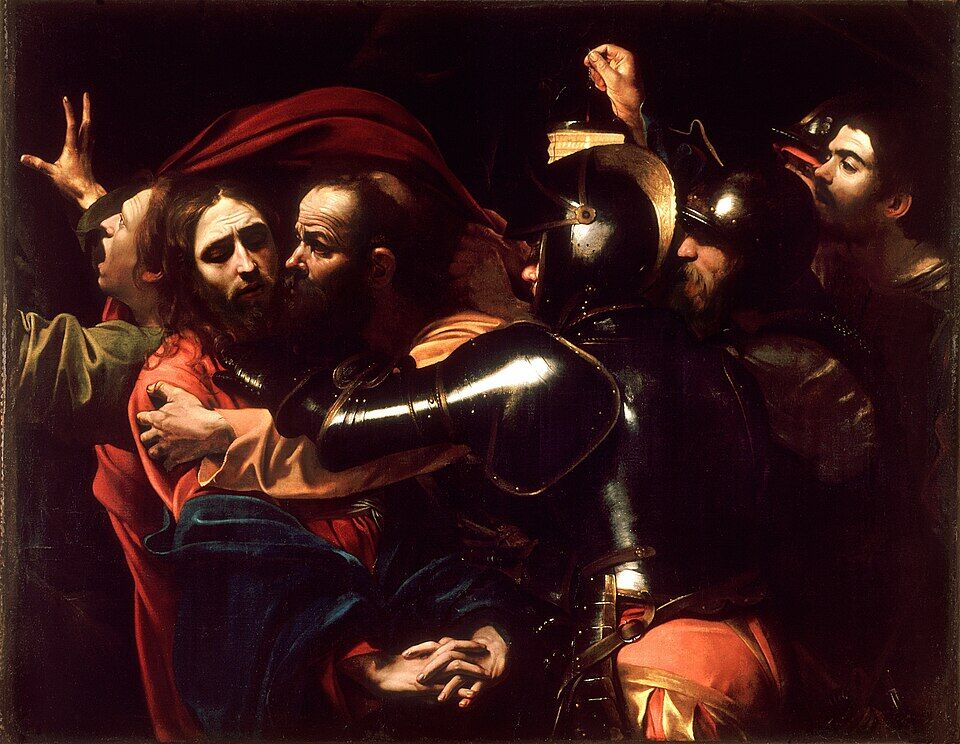
Caravaggio, "The Taking of Christ" (1602). Judas seizes and kisses the Master; the black-armored guard reaches out to grasp him; Christ's hands are folded without resistance — he is not a victim of circumstance, he chooses. At the left a fleeing disciple cries out; at the right Caravaggio himself holds the lantern.
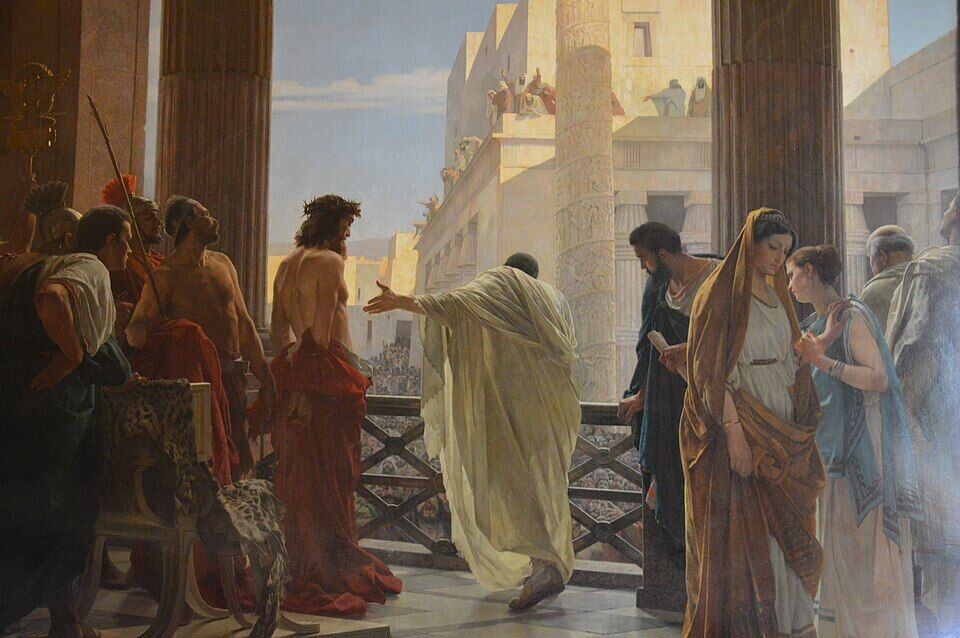
Antonio Ciseri, "Ecce Homo" (1871). From the balcony Pilate shows the crowd the beaten, thorn-crowned Christ: "Ecce homo." Below, the square roars; at the right, the women turn away. The trial is over — freedom that has chosen sacrifice leads to the cross.

In El Greco, Gethsemane is painted as a vision, not a report. The figure of Christ, drawn out like a flame, in crimson and blue robes; an angel descending with the cup; the disciples asleep, curled within a fold of stone as though in a womb; and far off, in the cold light of torches, the crowd of Judas already drawing near …

Read the chapter from the book: “The Fifth Seal: The Souls of the Slain”
15
Where is God when we suffer?
♪ Gregorio Allegri"Miserere mei, Deus" (c. 1638)
The same subject, through the eyes of painters ↔
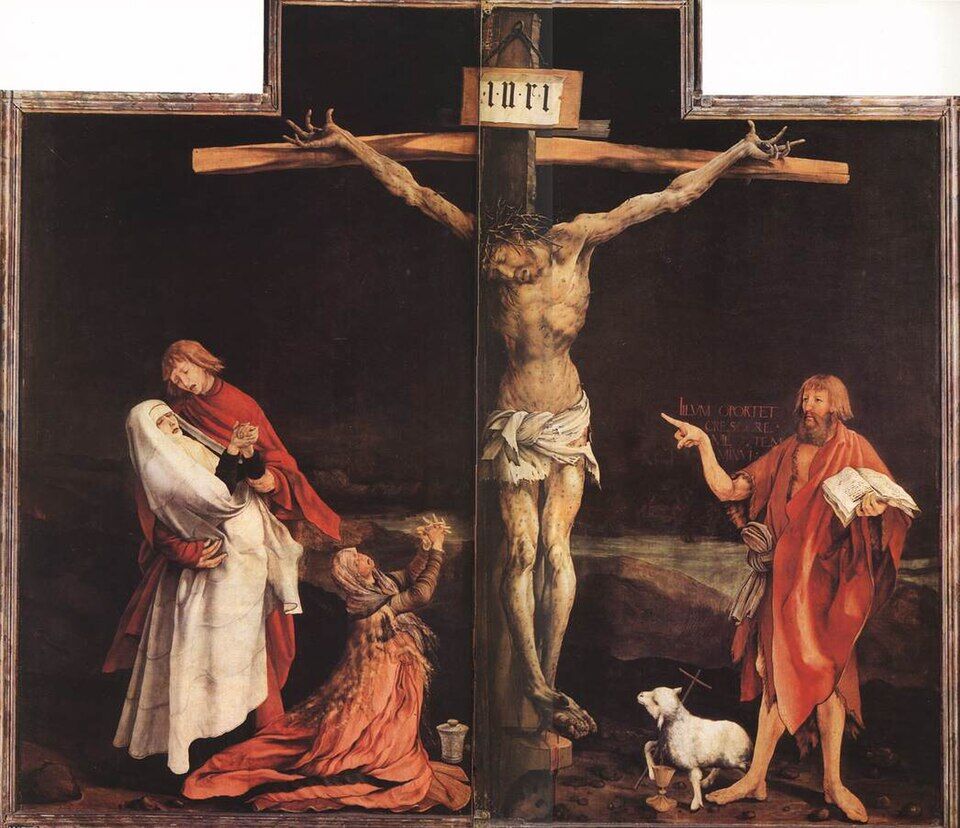
Matthias Grünewald, the Crucifixion of the Isenheim Altarpiece (1512–1516). The most terrible Crucifixion in art: a body covered in the sores of the hospital's sick, fingers contorted, flesh green with decay — a God who has taken upon himself your illness, precisely yours.
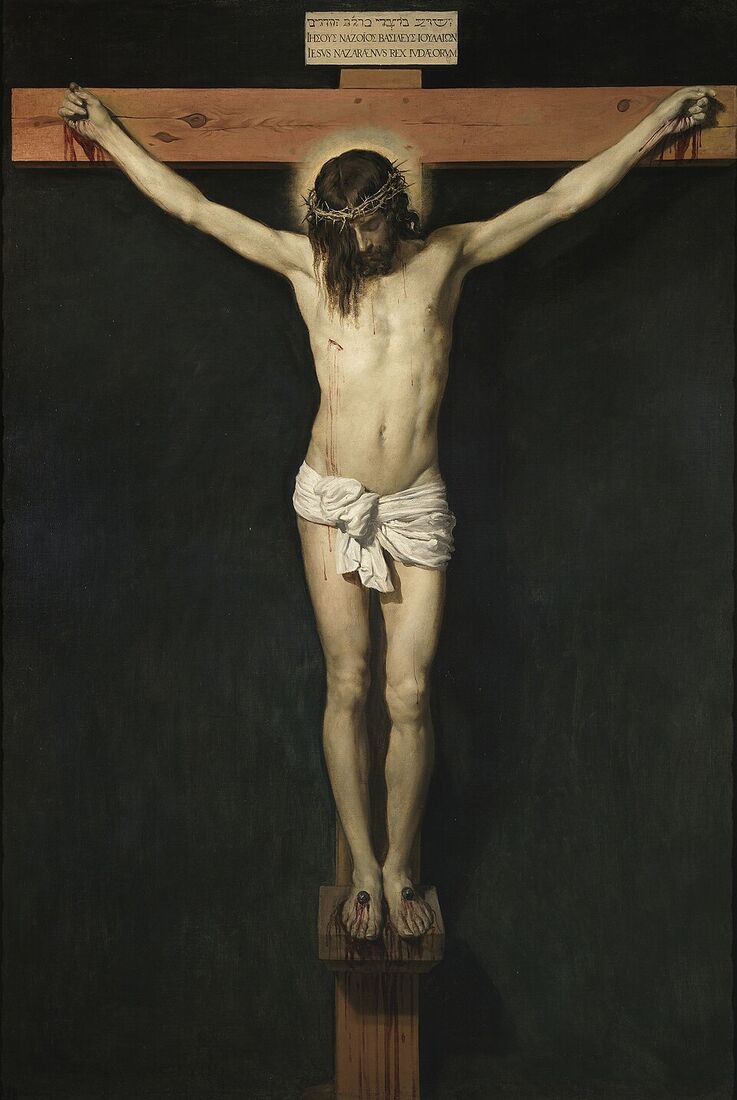
Diego Velázquez, "Christ Crucified" (c. 1632). A solitary figure against a black background, without witnesses or landscape; a lock of hair covers half the face. The death of God in complete silence — no storm, no darkness, only stillness.
Hans Holbein the Younger, "The Dead Christ in the Tomb" (1521–22). A tortured corpse at life size, with no halo and not the slightest hint of resurrection. Standing before this panel, Dostoevsky said: "Some people may lose their faith by looking at that picture."

Grünewald painted the most terrifying Crucifixion in all of art. This is not the idealized body of a sufferer but mutilated flesh: greenish-gray, torn by scourges, the fingers cramped in convulsion, covered with sores. The altarpiece was painted for the hospital of a monastery where patients were dying of "St …

Is love stronger than death?
♪ Marc-Antoine Charpentier"Te Deum" H.146, Prelude (c. 1690)
The same subject, through the eyes of painters ↔
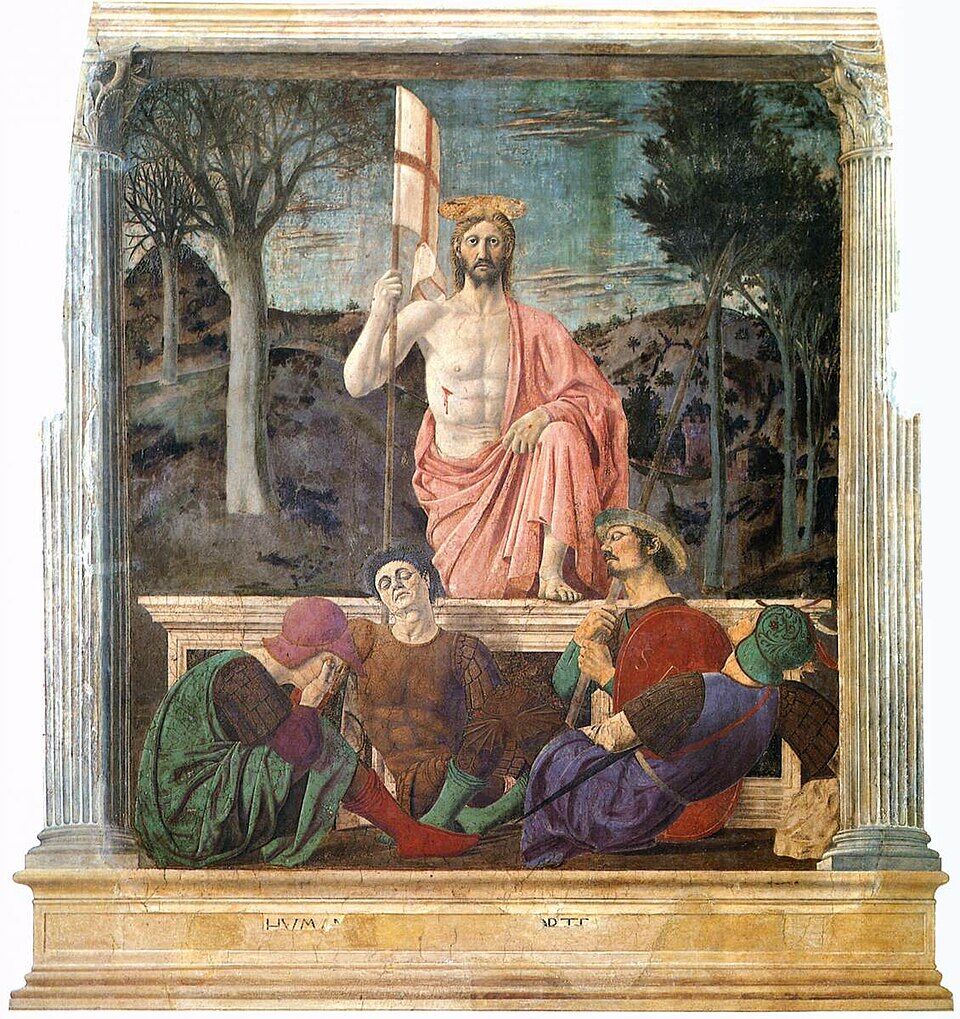
Piero della Francesca, "The Resurrection" (c. 1465). The risen one looks straight at the viewer, one foot set on the edge of the tomb; the guards sleep, the world has not noticed. The landscape is split in two: bare winter trees on the left, green ones on the right. Aldous Huxley called it "the best picture in the world."
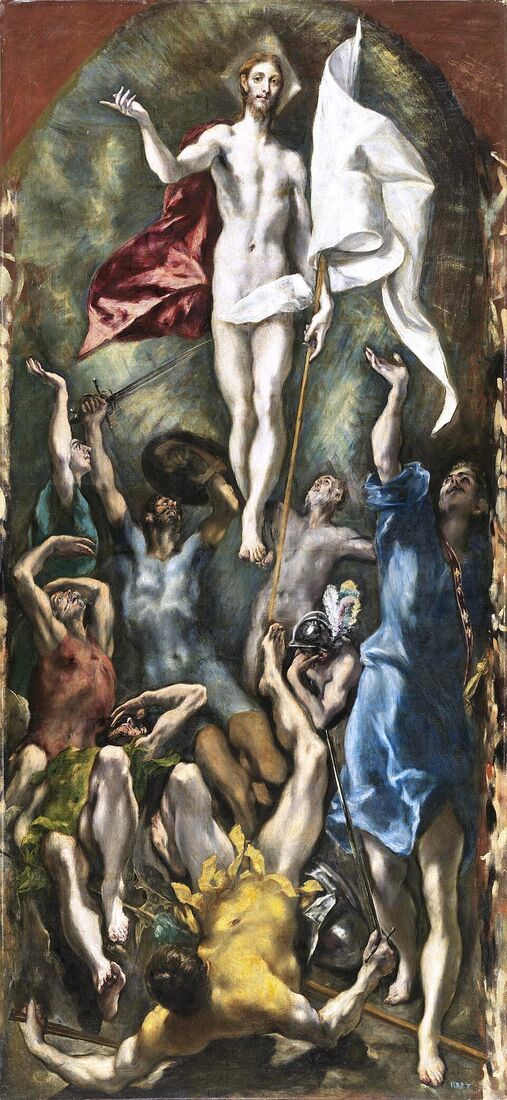
El Greco, "The Resurrection" (c. 1600). A vertical explosion: Christ soars upward with a white banner, weightless as a flame, while the guards tumble down. Not a triumph after death but an irruption of life that overturns the world.
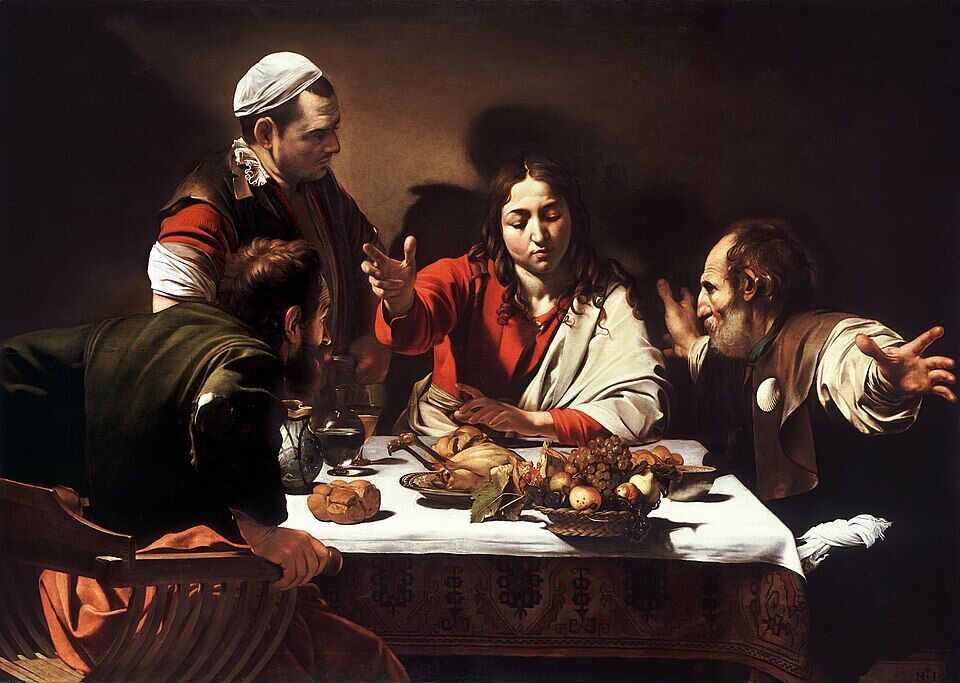
Caravaggio, "The Supper at Emmaus" (1601). The instant when two disciples recognize the Risen One in the breaking of bread: one recoils, the other flings his arms wide. Light tears the scene out of darkness — recognition as a flash.

Piero painted the Risen One frontally, head-on. One foot is already lifted onto the edge of the sarcophagus, in His hand a banner with the cross, on His body the wound is visible, and His eyes—wide open, motionless, terrible—look straight at you and do not let you go …

Read the chapter from the book: “Paschal Night”
The Drama of the Church
Why did the church become so powerful?
♪ Anton Bruckner"Locus iste" (1869)
The same subject, through the eyes of painters ↔
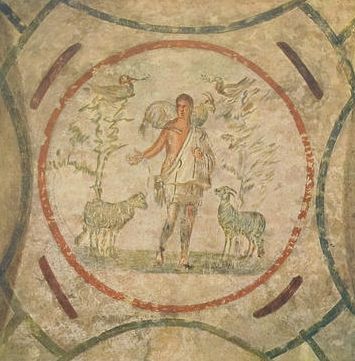
The Good Shepherd (Catacomb of Priscilla, 3rd century). The earliest image of Christ — not a fearsome Almighty but a young shepherd with a sheep on his shoulders, painted on the ceiling of a burial chamber. The Church of the catacombs: no power, no property — only love.
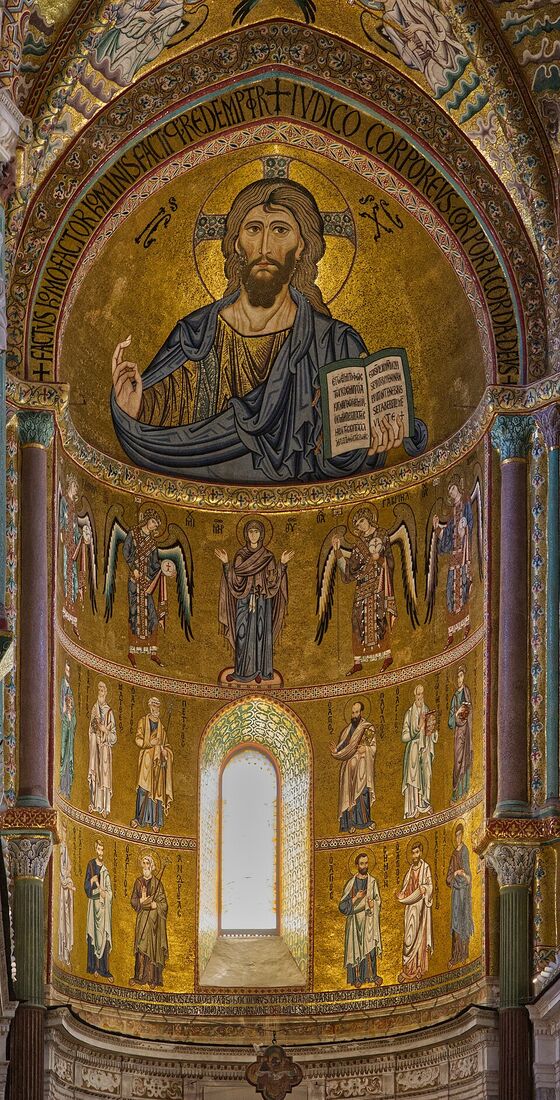
Christ Pantocrator (mosaic of Cefalù Cathedral, c. 1130). Within a single millennium the Shepherd with his sheep has ascended to the imperial throne of the Almighty: gold, vaults, a hierarchy of ranks. The ideal has become an institution, and the institution power.
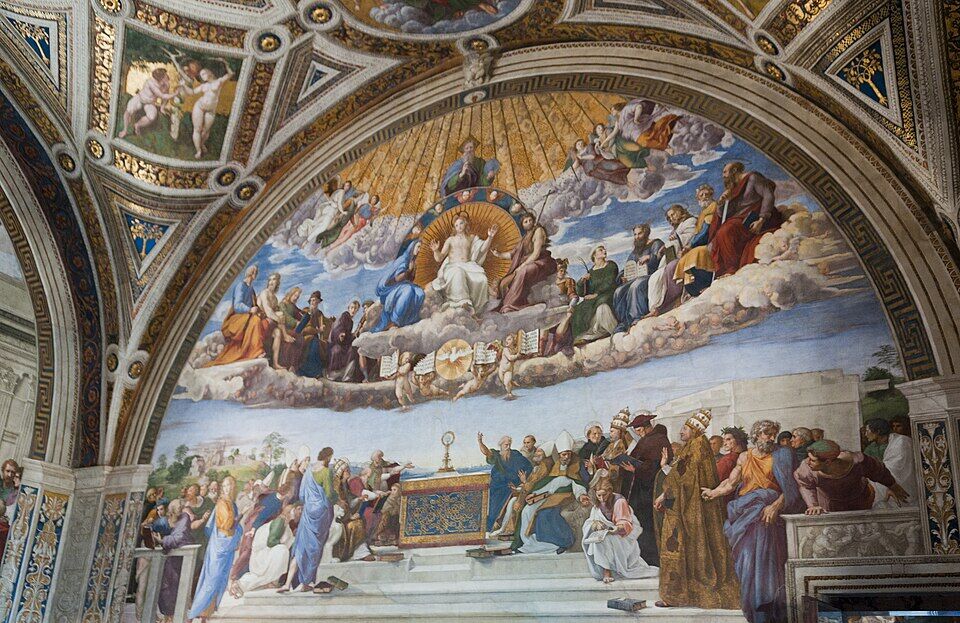
Raphael, "Disputation" (1509–1510). The Church in triumph: heaven and earth, saints and theologians converge in ordered harmony upon a single Chalice. The magnificent body of the ideal — and a beauty that risks forgetting the catacomb.

The earliest image of Christ is not the fearsome Pantocrator with a golden halo but a young shepherd bearing a sheep on his shoulders. He was painted on the ceilings of burial chambers, underground, the very posture borrowed from pagan bucolic. Here, in the catacombs, the Church is pure communion: no power, no property, no empire …

Read the chapter from the book: “1913. The Meeting with the Island”
18

The Schism

collapse
Why does being right so easily tear through the living?
♪ Martin Luther"Ein feste Burg ist unser Gott" (1529)
The same subject, through the eyes of painters ↔
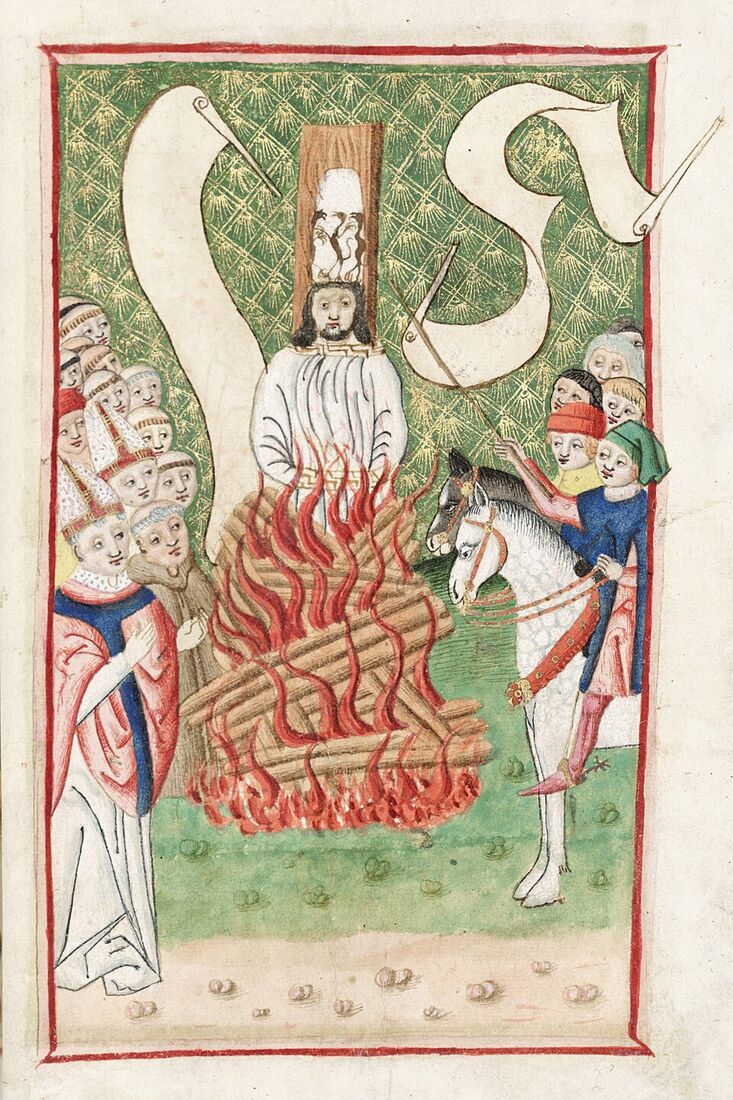
The Burning of Jan Hus (miniature, 15th century). The reformer burns at the stake in the paper fool's crown that marks him a heretic; on the left, bishops in their mitres. The Church, having become power, turns fire for the first time against those who demand its purification — a century before Luther.
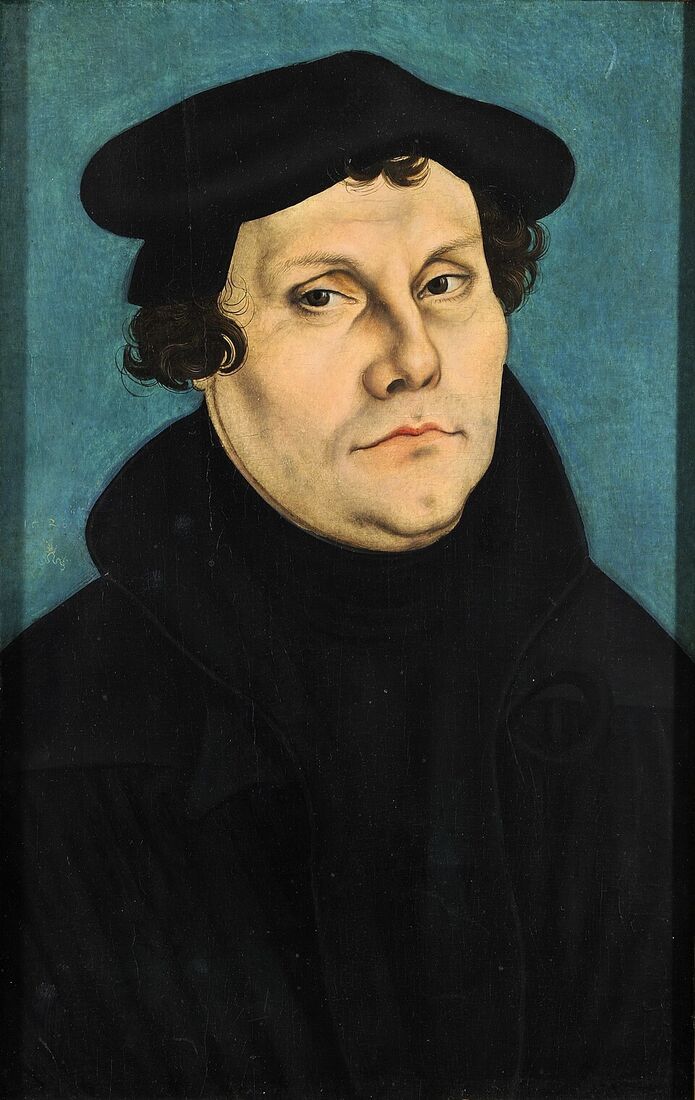
Lucas Cranach the Elder, "Martin Luther" (1528). The unyielding face of the reformer: "Here I stand, I can do no other." His being right will split the Western Church in two — not out of malice, but out of a conviction that does not know how to yield.
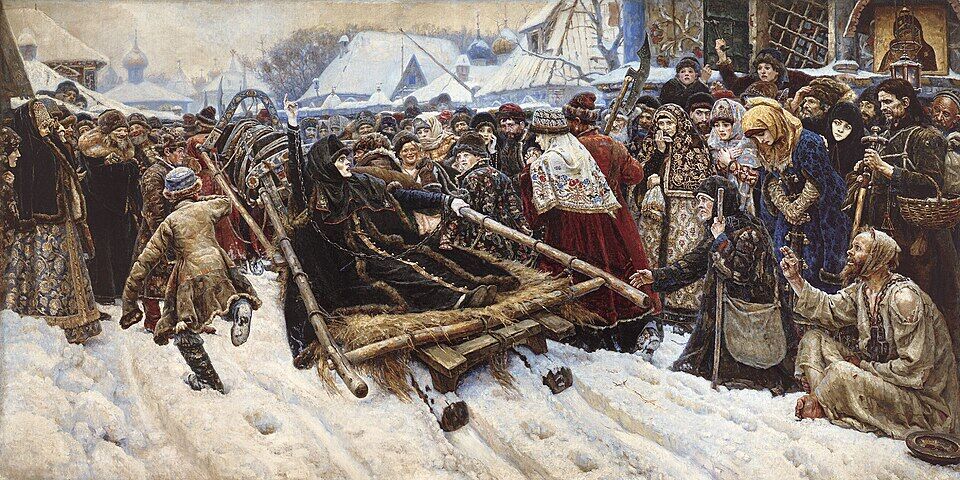
Vasily Surikov, "Boyarynya Morozova" (1887). The Russian schism: for the sign of two fingers a woman is carried off through the snow to torment, and along the sleigh's track a people is torn through living flesh. The black wedge of her figure cleaves the crowd as the schism cleaved Rus.

In Gethsemane, on the eve of His death, Christ prays not for victory but for unity: "that they all may be one; as Thou, Father, art in Me, and I in Thee, that they also may be one in Us." And the deepest wound of the Church is not persecution from without but division within: the rupture of East and West (1054), the Reformation, the Russian schism …

Can We Live Without God?
19
Can you be moral without religion?
♪ Franz Liszt"Dance of Death" (Totentanz, 1849)
The same subject, through the eyes of painters ↔
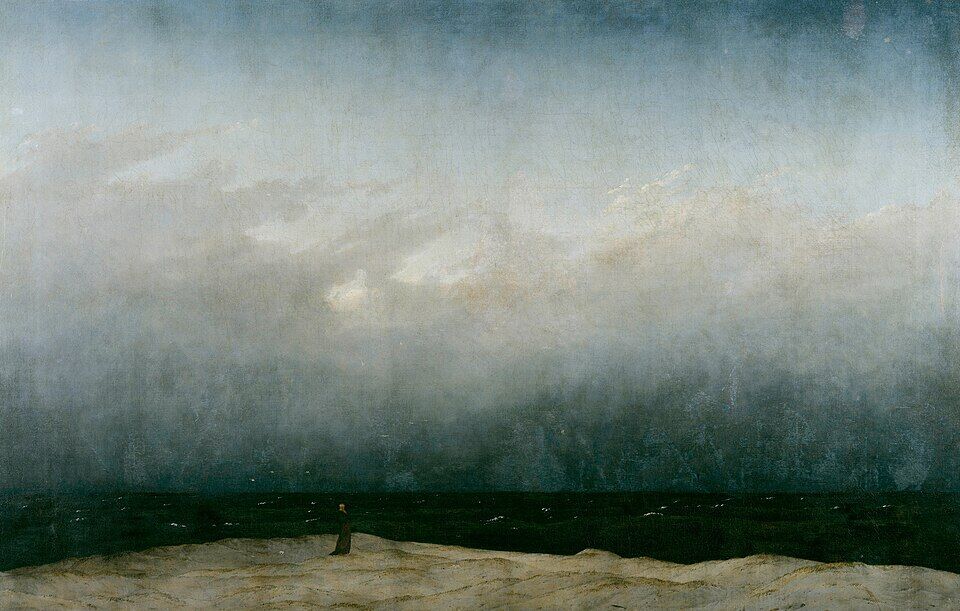
Caspar David Friedrich, "The Monk by the Sea" (1808–1810). A tiny monk before the boundless emptiness of sky and sea: faith stripped of every support, alone before a silent infinity. Not "there is no God," but "God is silent."
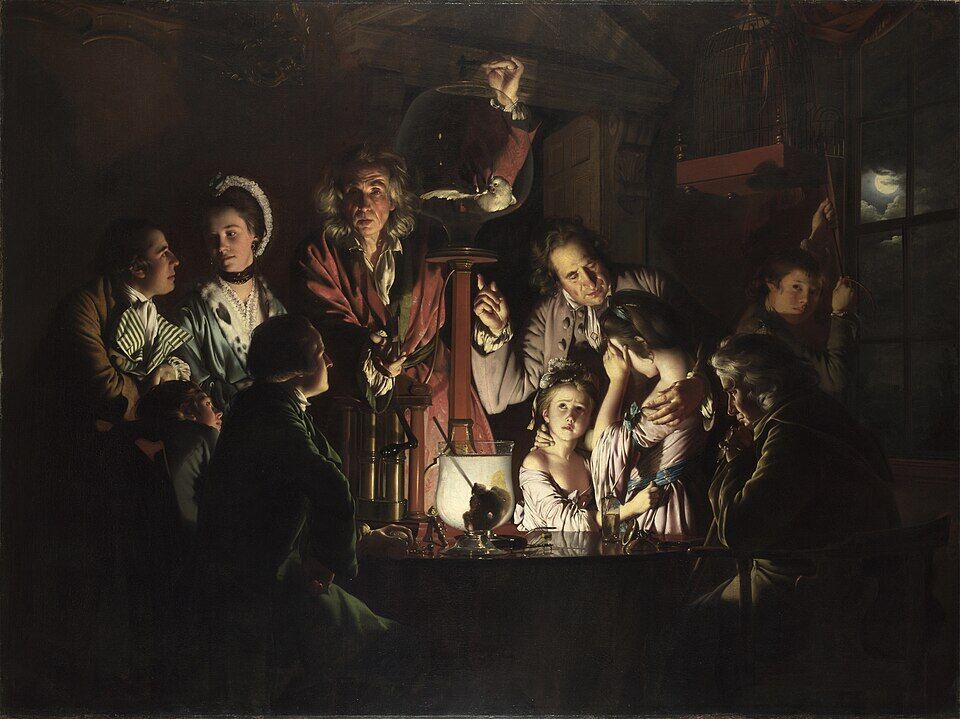
Joseph Wright of Derby, "An Experiment on a Bird in the Air Pump" (1768). A scientist in the role of priest pumps out the air by lamplight while the bird dies before weeping children. Reason takes the place of the altar — the new power of the Enlightenment.
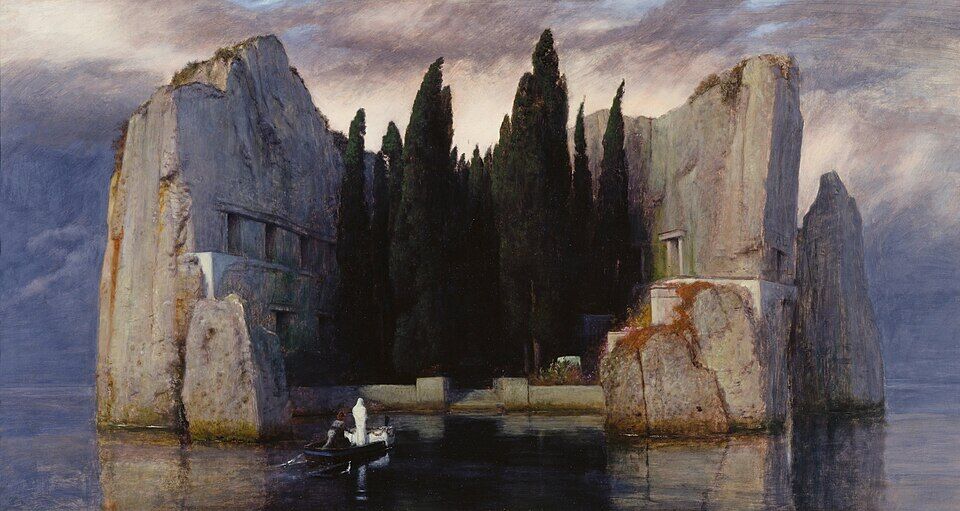
Arnold Böcklin, "Isle of the Dead" (1883). A silent island, a boat with a white figure, cypresses — death with no heaven and no resurrection, only a mute classical sorrow. The sublimation of the end in a world from which God has departed.

Friedrich painted the most radical reduction in all of Romanticism: an almost empty canvas — a boundless sky, a dark strip of sea — and on the narrow rim of the shore a tiny monk. No ship, no anchor, no second figure. This is precisely the condition of modern man: faith stripped of all its supports, standing alone before the silence …
Read the chapters from the books: “1920. The Closing” · “The Ring”
What in a person cannot be broken even by a total machine?
♪ Znamenny Chant"Let All Mortal Flesh Keep Silence" (Znamenny chant)
The same subject, through the eyes of painters ↔
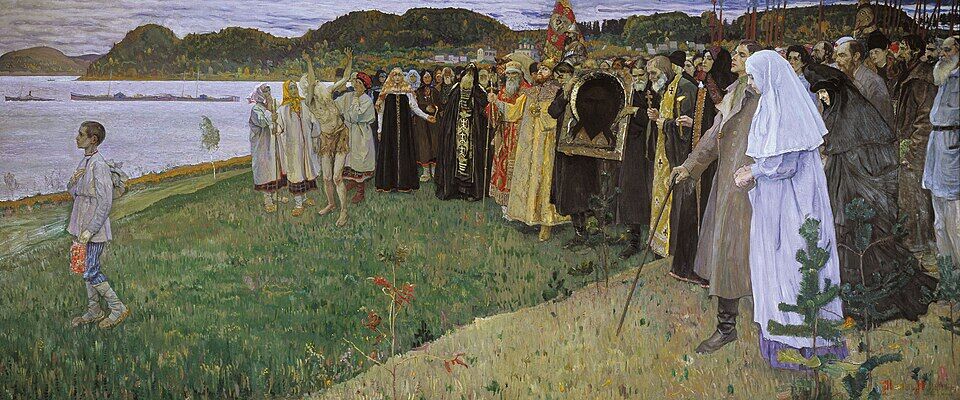
Mikhail Nesterov, "The Soul of the People" (1916). A whole people on the way toward the invisible: a sick boy walks ahead, and behind him come peasants, monks, a holy fool, the faces of Dostoevsky and Tolstoy. Finished on the eve of the collapse beyond which prison and the camps awaited many.
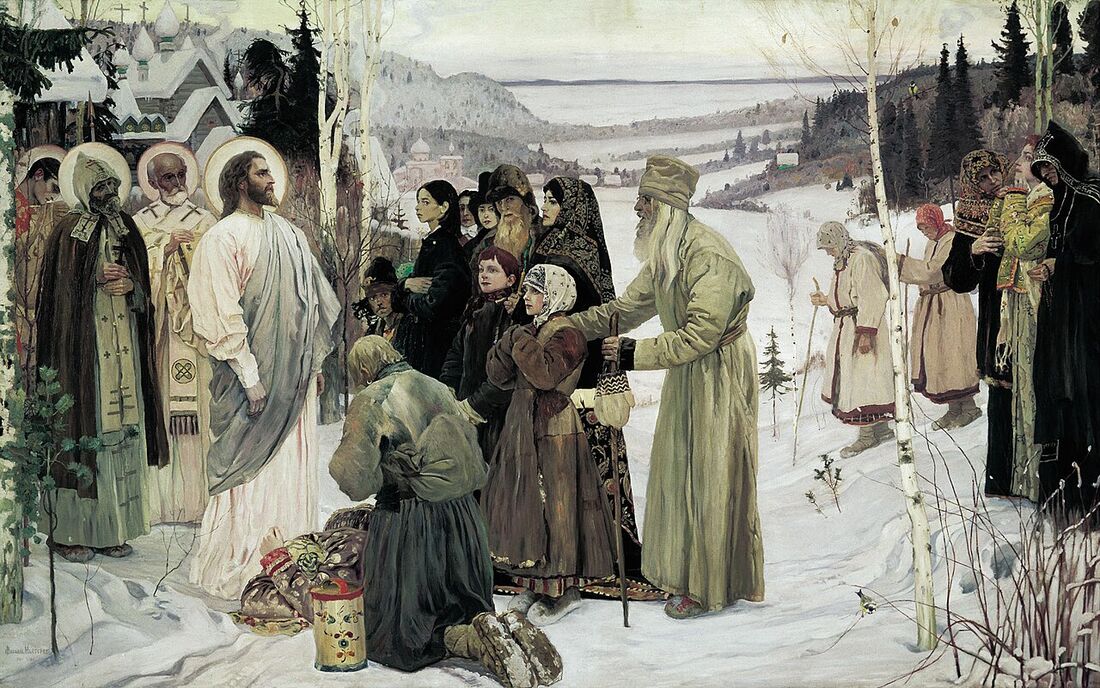
Mikhail Nesterov, "Holy Rus" (1901–1906). Christ and the saints appear in the snow to the suffering and the seeking — the sick, the poor, the kneeling. The faith of a people soon to be tested to the breaking point.
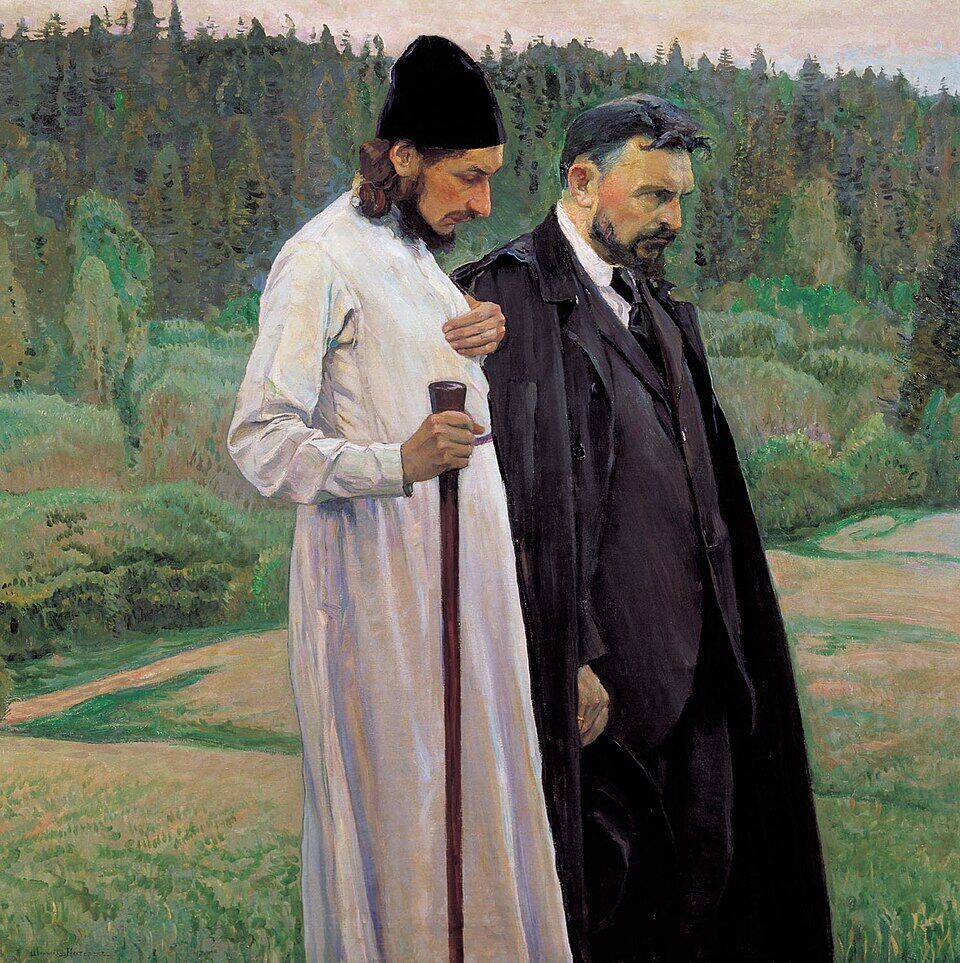
Mikhail Nesterov, "The Philosophers" (1917): Pavel Florensky in a white cassock and Sergei Bulgakov. Twenty years later Florensky would be shot in a camp — the witness this station has in mind: a person not reduced to a number.

Nesterov painted the procession of a whole people along a river: peasants and soldiers, monks and a holy fool, figures in whom one can make out Dostoevsky and Tolstoy—and at the head of them all a sick boy leads the way …

The Eschaton
21
How will the world end?
♪ Gregorian Chant"Dies irae" (Gregorian sequence, 13th century)
The same subject, through the eyes of painters ↔
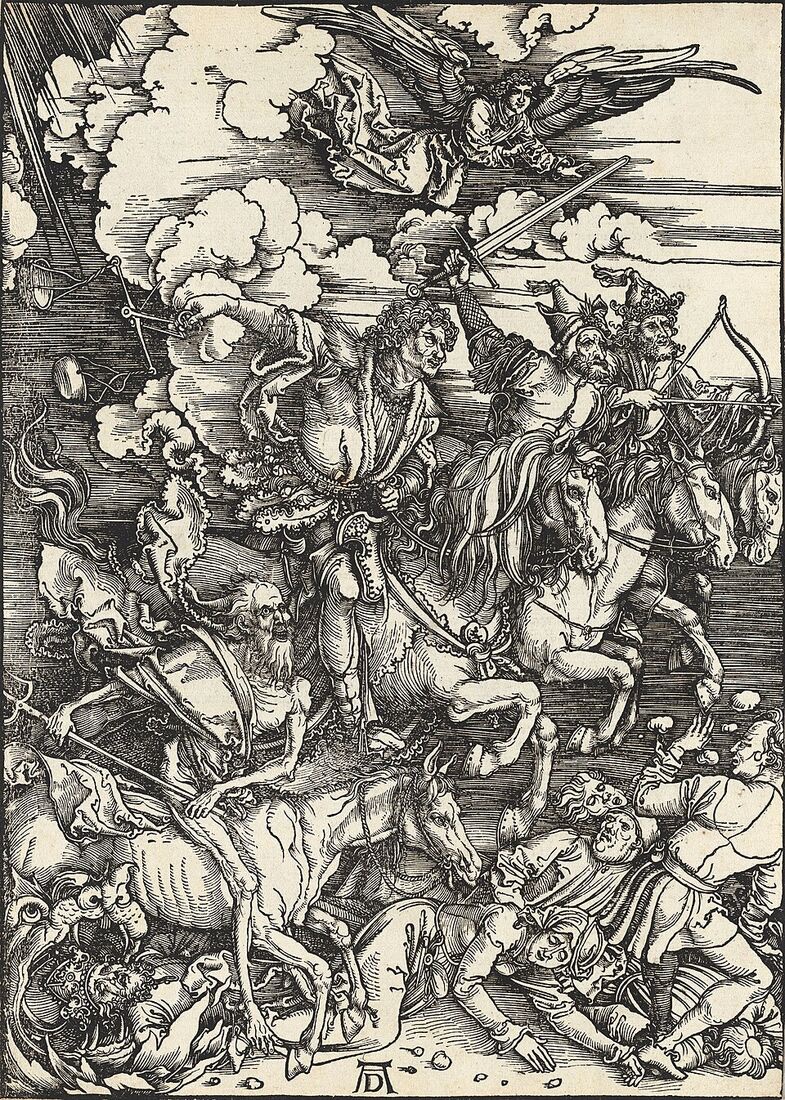
Albrecht Dürer, "The Four Horsemen of the Apocalypse" (c. 1498). Conquest, war, famine, and death sweep on in a single wave, trampling kings and beggars alike. The end as catastrophe — yet "apocalypse" means not destruction but the lifting of the veil.
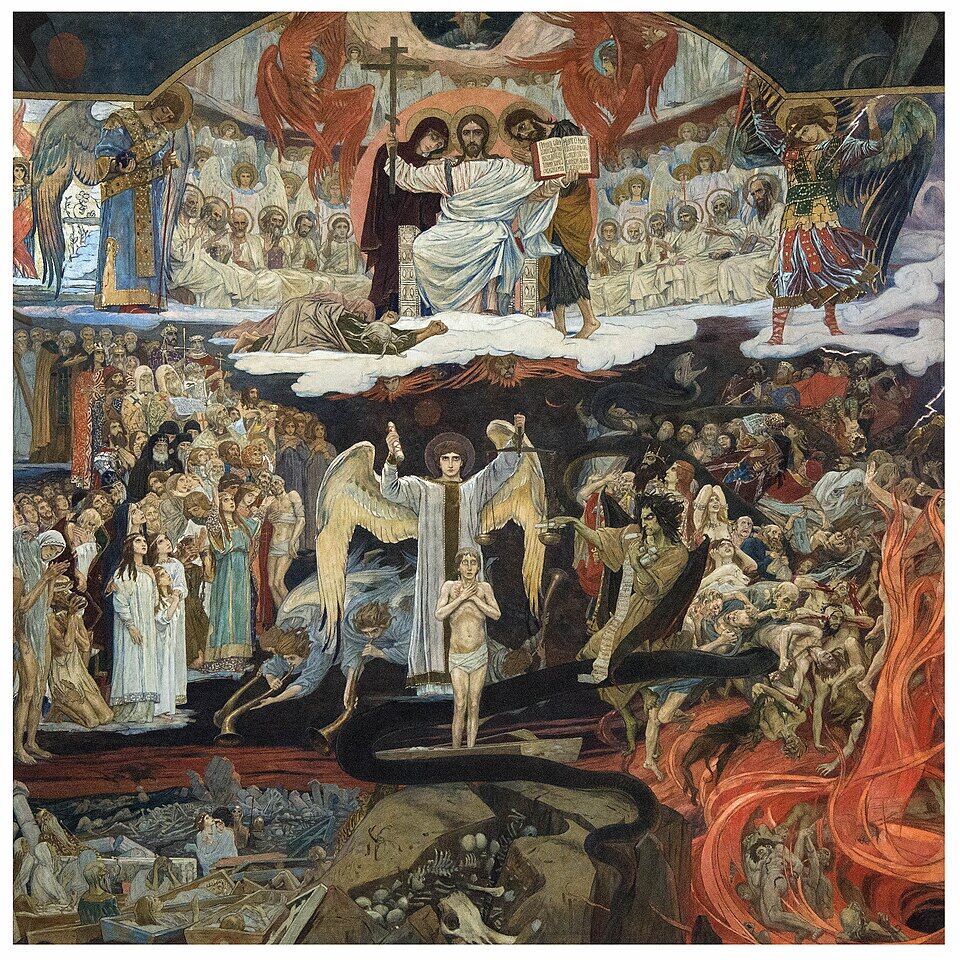
Viktor Vasnetsov, "The Last Judgment" (1904). An angel with scales weighs the souls; the Judge in glory bears the wounds of the Crucified. Judgment not as a reduction to a dossier but as an encounter: to be seen to the very end by Love, and not destroyed.
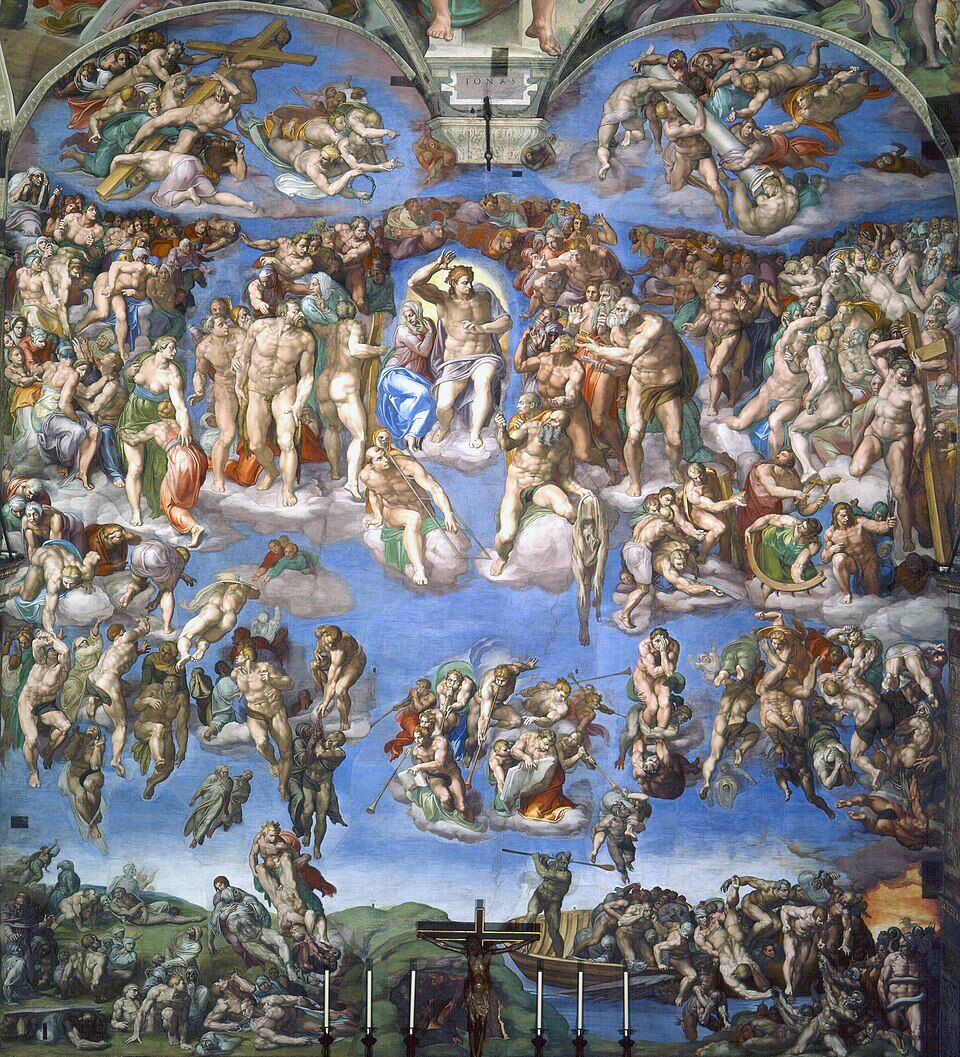
Michelangelo, "The Last Judgment" (Sistine Chapel, 1536–1541). Christ the Judge raises his hand, the dead rise, the condemned are cast down, souls drift in Charon's boat. The Western image of the same limit as in Vasnetsov — the end that lifts the veil.

Walter Benjamin left behind an image that holds this question better than any treatise — the Angel of History. Looking at Klee's watercolor "Angelus Novus," he saw an angel turned to face the past. Where we see a chain of events, the angel sees one single catastrophe, tirelessly piling wreckage at his feet …

Read the chapter from the book: “Epilogue. Breath”
The chapters behind these stations — the four books. Who makes this, and why.
The spine of it all — the arc. The same law through the four voices: philosophy · literature · painting · music.
Russian version
🇬🇧EN▼