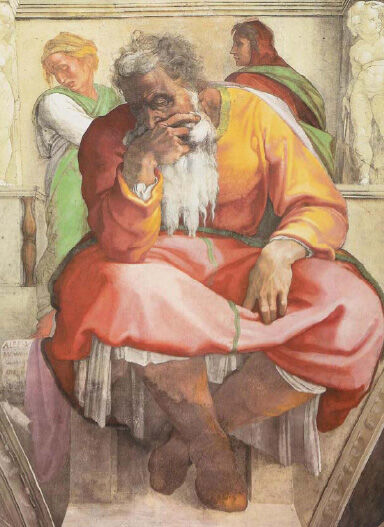
And then a voice rings out. The voice of the prophet. A prophet is not a foreteller: he is a man whose ear is tuned to the music of consequences, who sees how sin weaves the fabric of a coming catastrophe. With the division of the kingdom, a new and unheard-of power rises beside the king — the nabi, one who speaks not from himself but on behalf of God: the sole authority not subject to the throne. Only he could tell the king the truth to his face — and he paid for it as no one else did.
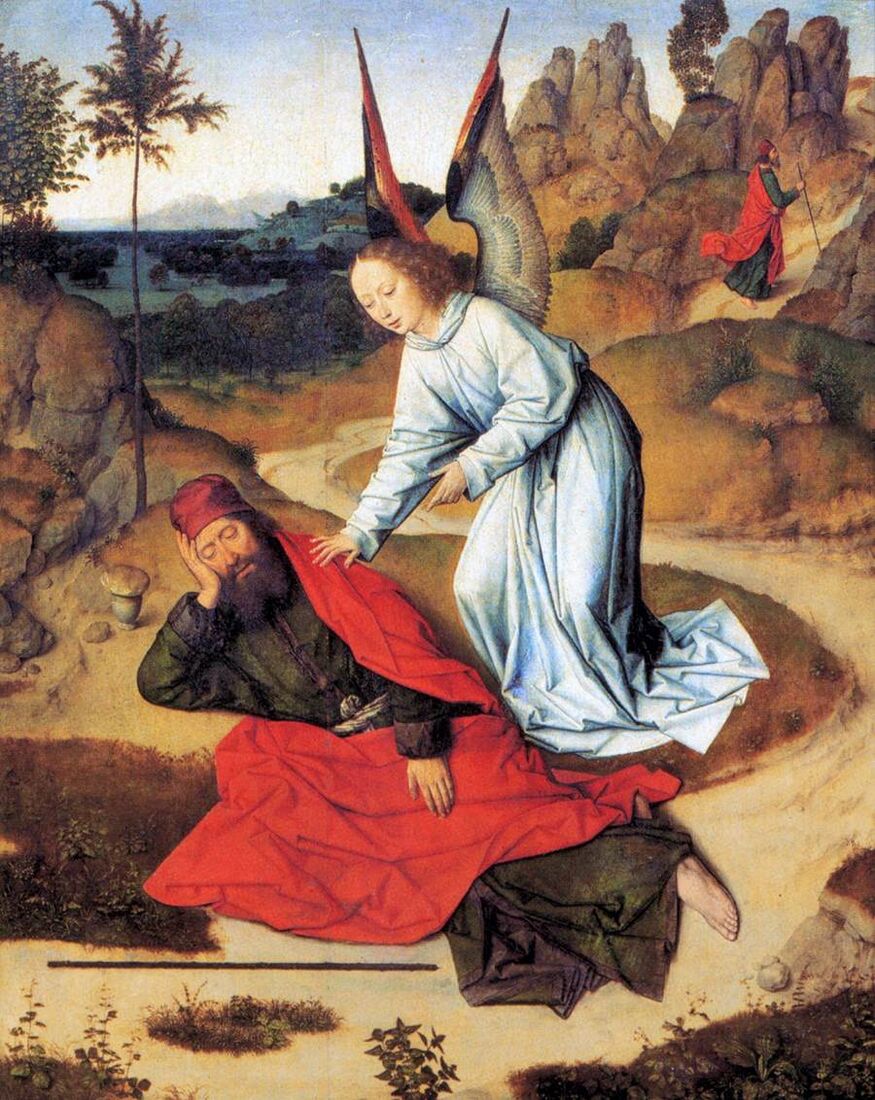
Elijah stands alone against the four hundred and fifty prophets of Baal on Mount Carmel: "How long will you go limping on both knees? If the Lord is God, follow Him; but if Baal, then follow him." Fire comes down from heaven upon the sacrifice — a victory, it would seem. But Queen Jezebel wants him dead, and the mighty prophet flees into the wilderness, sits down under a juniper bush, and asks to die: "It is enough now, O Lord; take my soul." And what of God? He is not in the storm, not in the earthquake, not in the fire — He is in the breath of a gentle wind, in a silent whisper. And to that same despairing prophet He reveals: you are not the only one left — I have preserved seven thousand who have not bowed the knee to Baal; and it is these unknown righteous ones who keep the land.
Amos, a shepherd, delivers his rebuke at the royal sanctuary itself: "I hate, I reject your feasts... but let judgment run down like water, and righteousness like a mighty stream" — and his words are a hammer that shatters ritual religion. And Hosea, whose harlot wife left him for others, lives out in his own life the very tragedy of God: his pain becomes a revelation that God is not a cold victor but a suffering husband whose love has been betrayed.
This is what the prophets are: the conscience of history. They stand as if struck down, reminding us that politics and culture are nothing without truth and mercy. And beside their loud voice, turned toward the nations, another is born — quiet, turned inward — and it will ask not about the fate of kingdoms but about the meaning of one innocent man's suffering. Of this, the next station.
The spine of it all — the arc. The same law through the four voices: philosophy · literature · painting · music.
all 21 stations · Russian version