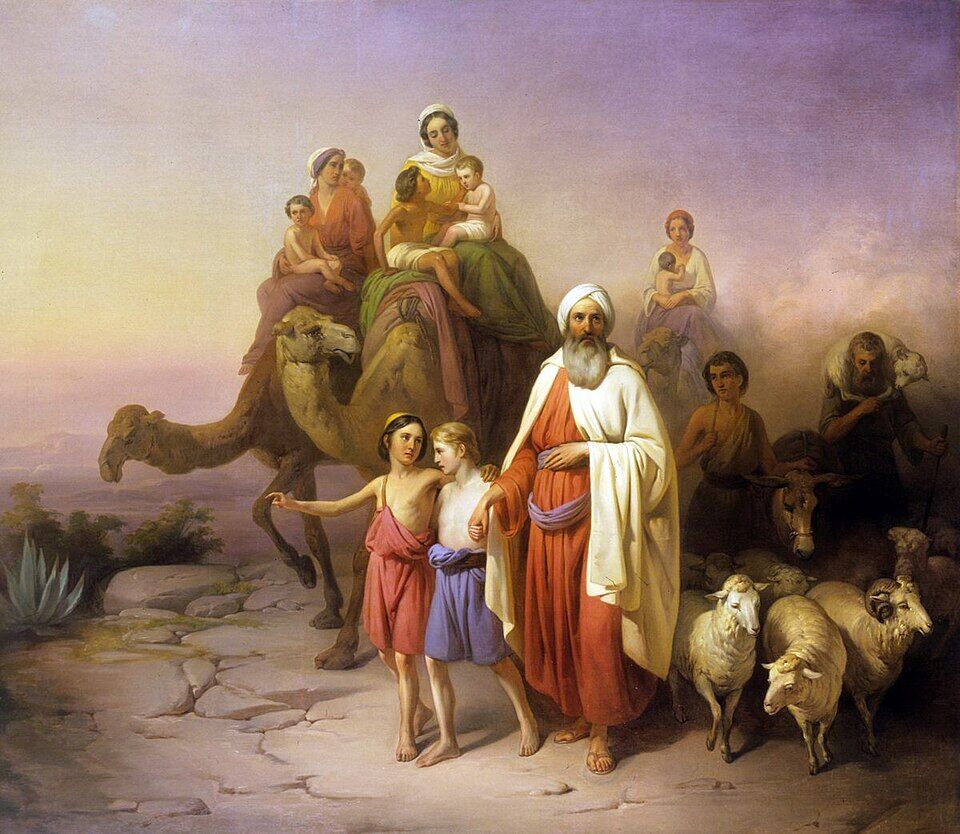
The search begins not with a king and not with a philosopher, but with a single old man. Abraham is neither a Jew nor a righteous man from birth: a wealthy Amorite cattle-herder from Ur, an aristocrat, a "prince of God," a man settled and deeply rooted. And then a voice comes to him: "Go out from your land, from your kindred, and from your father's house, into the land that I will show you."
Today it is hard to hear what an abyss lay in those words. In the ancient world, to leave one's city meant losing everything at once: the protection of the city walls; the vengeance of the clan, which alone stood up for its own; the laws under which you counted as a human being and not as prey; even one's own gods, bound to that land. Exile was the heaviest punishment after death itself. God calls Abraham to become a voluntary exile — a "wretched sojourner" among strangers, without rights, without guarantees, without a road back. And all of this in return not for a map or a treaty, but only for a voice and a promise that cannot be verified.
Abraham's faith is the first ray of light in the pitch dark of self-will: not certainty but risk — trust in One whose face you have not seen, on terms you do not know. Abraham departs — and never returns; grown old, he does not even carry the body of his dead wife back to his homeland, but buys a stranger's cave so as to lie forever in a foreign land. From this step the very word "Hebrew" is born — "ibri," "the one who crossed the river": not a name of blood, but a name of wandering, of restlessness for God's sake.
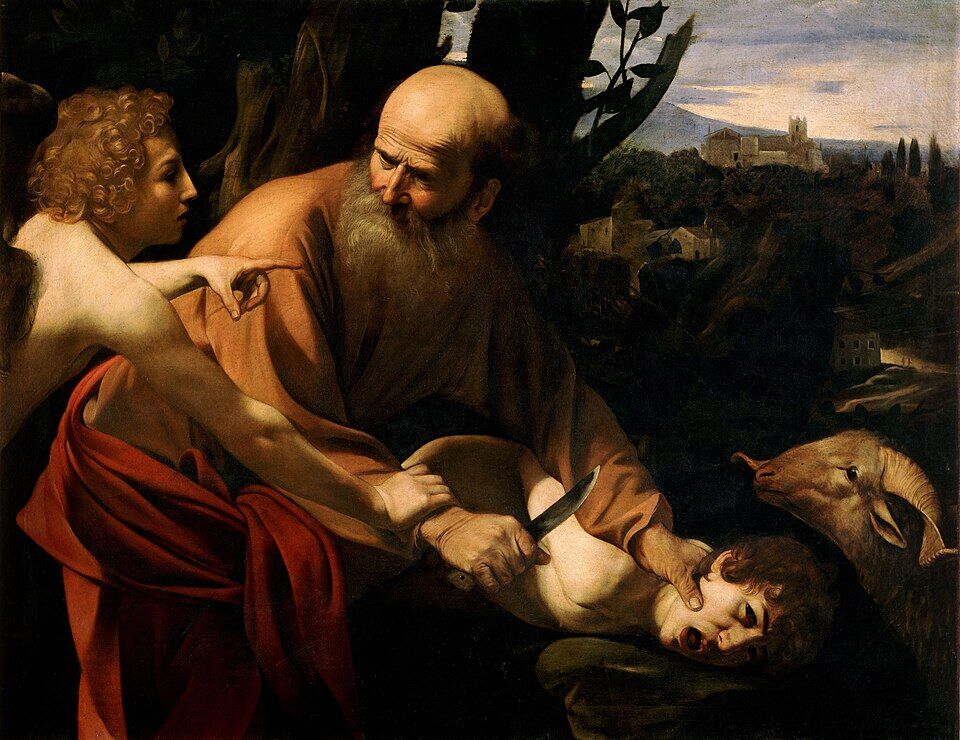
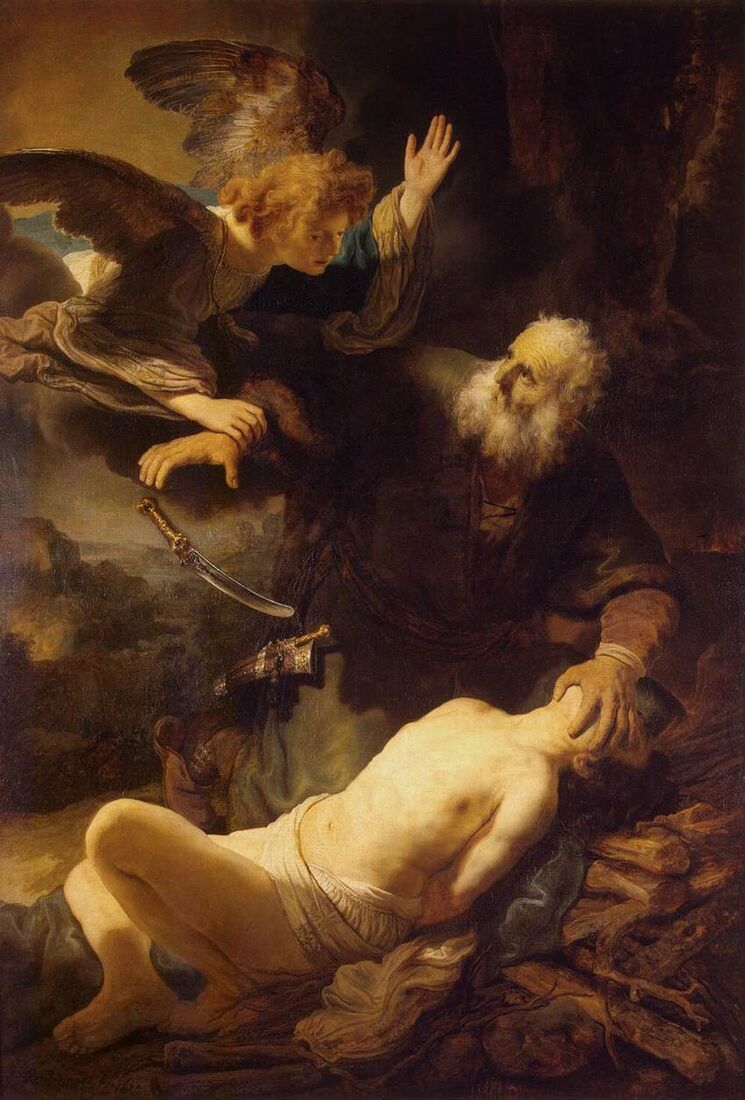
And when the risk seems tested to the very end, yet another abyss opens — Mount Moriah. God demands as a sacrifice Isaac, the son of the promise, for whose sake the whole thing had been undertaken. Abraham raises the knife, passes through the hellish pain of obedience — and at the last instant the hand of God stops him. Here the entire ancient world of bloody sacrifices collapses: it is revealed that God does not need human sacrifices — He needs hearts.
To Abraham it was given to learn the very thing for which it was worth going out from Ur: that one can trust God to the very end, because there is no one more faithful than He. This one old man who trusted will become the channel through which the promise flows down to a people, to the ages, to us. Of that — the next station.
The spine of it all — the arc. The same law through the four voices: philosophy · literature · painting · music.
all 21 stations · Russian version