In 1599 he was commissioned to paint an altarpiece for the church of San Luigi dei Francesi in Rome. He painted The Calling of Saint Matthew: Christ stretches out his hand toward a tax collector seated in a tavern. The light falls as if from a window — sharp, theatrical, harsh. No halo, nothing heavenly. God has come into a dive. It was a scandal. And a triumph at the same time.
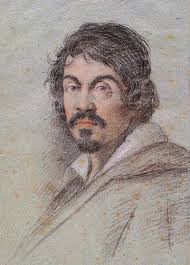
Michelangelo Merisi da Caravaggio was born in 1571 in Milan. At sixteen he left for Rome — with no money, no connections. He worked for little-known painters, fell ill, went begging. Then Cardinal Del Monte noticed him and took him under his patronage. It was out of that poverty that his eye was formed: he knew the underside of the city firsthand.
His method is tenebrism: an almost black background and a single harsh source of light. The figures step out of the darkness as though snatched from nonbeing. This is not merely a device — it is a way of speaking about reality: it is always half in shadow. Light here does not adorn but appoints — it points a finger at whomever it touches.
His models were Roman vagabonds, prostitutes, beggars. In The Death of the Virgin, the Virgin Mary was painted from a drowned courtesan — with a swollen belly and dirty feet. Patrons refused to accept such paintings: the holy should not reek of the body like this. Then those same canvases were bought by others for twice the price. The scandal proved worth more than propriety.
Here is the whole nerve of him. In his work the holy enters not an ideal figure but the coarse flesh of a common man — dirty heels, calloused hands, a face you might meet at the market. God does not descend from above in a golden cloud; He touches a man where he sits — at a table with money, in the half-dark of a tavern. The body is real, and so the touch is real — not a symbol but an event that happened to a living person.
His life was of a piece with his painting. In 1606 he killed a man in a brawl — whether by accident or not — and fled Rome. He lived in Malta, in Naples, in Sicily. He received a knighthood — and at once landed in prison over another fight. He fled again. In 1610, at thirty-eight, he died on the road between Naples and Rome — of fever, of wounds, of the impossibility of returning home.
He changed European painting forever. Rembrandt, Velázquez, Rubens — all of them passed through him, through that single ray that tears a man out of the darkness. After him, one could no longer paint light as though darkness did not exist.