In 1642 he painted “The Night Watch” — and his life began its long slide. Not because the picture was bad. Quite the opposite. But the patrons had expected ceremonial portraits: each man full-length, each clearly visible. Rembrandt gave them drama — figures in motion, light striking out of darkness, some faces half-swallowed by shadow. It was too much.
Rembrandt Harmenszoon van Rijn was born in 1606 in Leiden, a miller's son. He trained as a painter, moved to Amsterdam at twenty-five — and became fashionable overnight. The rich queued for portraits. He bought an enormous house and filled it with antiques, fabrics, weapons, plaster casts.
Then his beloved wife Saskia died. Then several of his children. Then the money ran out. In 1656 came bankruptcy. House, collection, possessions — all went under the auctioneer's hammer. He moved to a small flat in the Jewish quarter.
And it was then that he painted his best work.
“The Return of the Prodigal Son”: an old man embracing the son who has sunk to his knees before him. It was painted in the last years of his life, in near poverty. The light here is no stage effect — it is itself the meaning: forgiveness made literally visible.
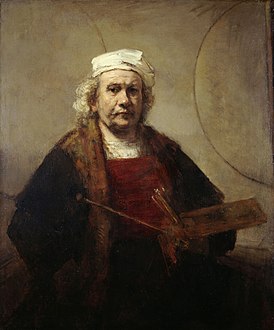
He painted self-portraits all his life — about a hundred of them. Young and self-satisfied, in extravagant hats. Middle-aged and tired. Old, without illusions, brush in hand. It is the documentation of a single life, six decades long.
He died in 1669 and was buried in an unmarked grave — there was nothing left to pay for one.