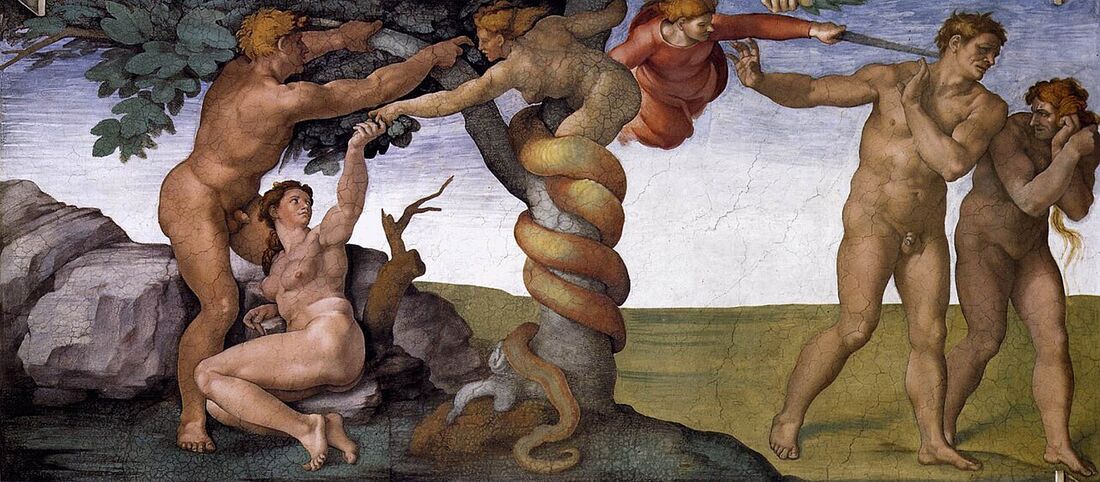
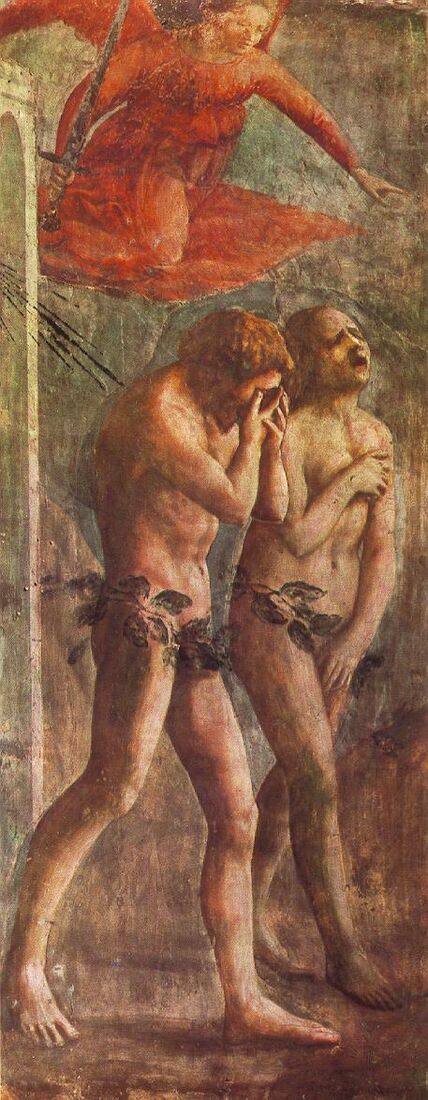
The Garden of Eden is a state of perfect trust. There is no shame, no fear: man and woman are still one whole, each the continuation of the other, and both are naked and are not ashamed. God walks with man in the cool of the day. But the serpent appears — and this is no crawling snake but the most ancient cosmic evil, freedom fallen away, older than man. He offers the apple — he offers doubt. "Hath God really said?" He offers freedom from God — and does not even lie about death: "ye shall not die bodily; ye shall be as gods, knowing good and evil." He is right in a terrible sense: it is not the body that will die but being itself, for God is being, and separation from Him is a passage into nonbeing.
And man makes the first tragic choice. But look closely at the motive: the fruit is "pleasant to the eyes, to be desired, good for food" — this is desire turned toward oneself. God creates by giving; here, for the first time, man wants to take — to live not for another but for himself.
And so the first thing they come to know, having known evil, is shame: not shame of the body, but the fear that another will use you, that the other is no longer kin to you but a danger. A rupture. A wall. Paradise slams shut not by God's will, but because man, having come to know shame, can no longer bear His gaze — and hides. And when God calls, "Adam, where art thou?" man answers by shifting the blame: "the woman whom Thou gavest me." Everyone is guilty, I least of all — the formula by which all of history will live.
And now God, whose heart is broken, asks the first question that will sound as the leitmotif of all history: what, then, is to be done? Destroy the creation — or find a way back that does not break their freedom?
The spine of it all — the arc. The same law through the four voices: philosophy · literature · painting · music.
all 21 stations · Russian version