Why do some people always have to be right?
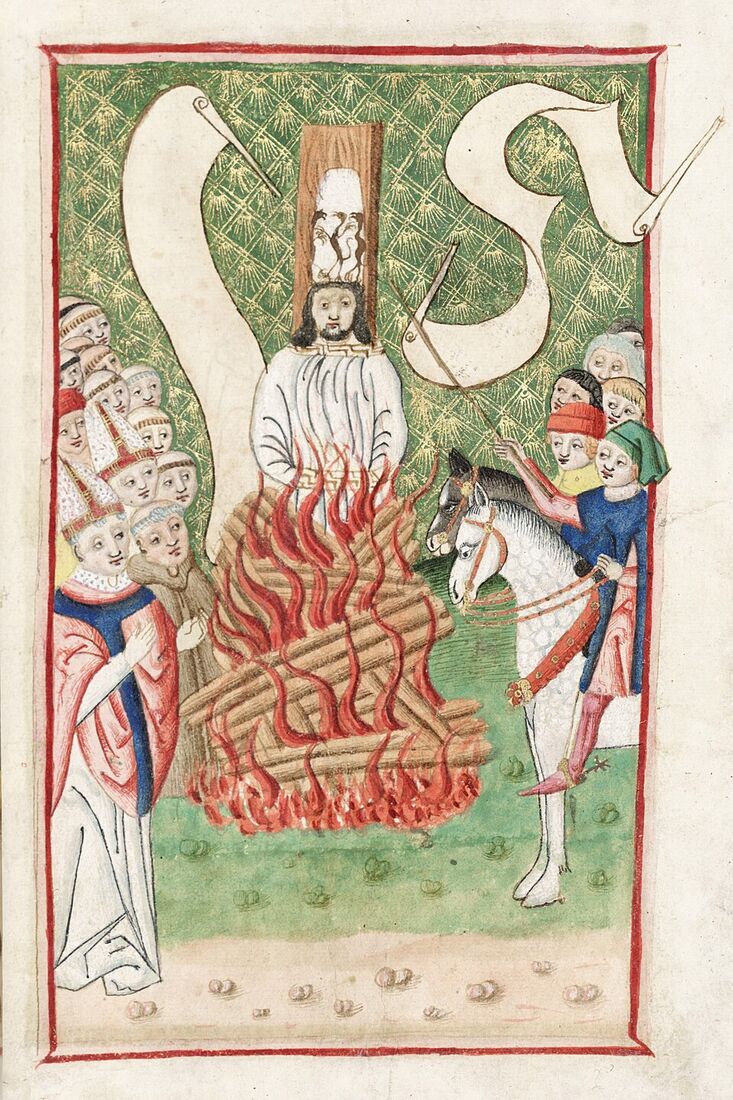
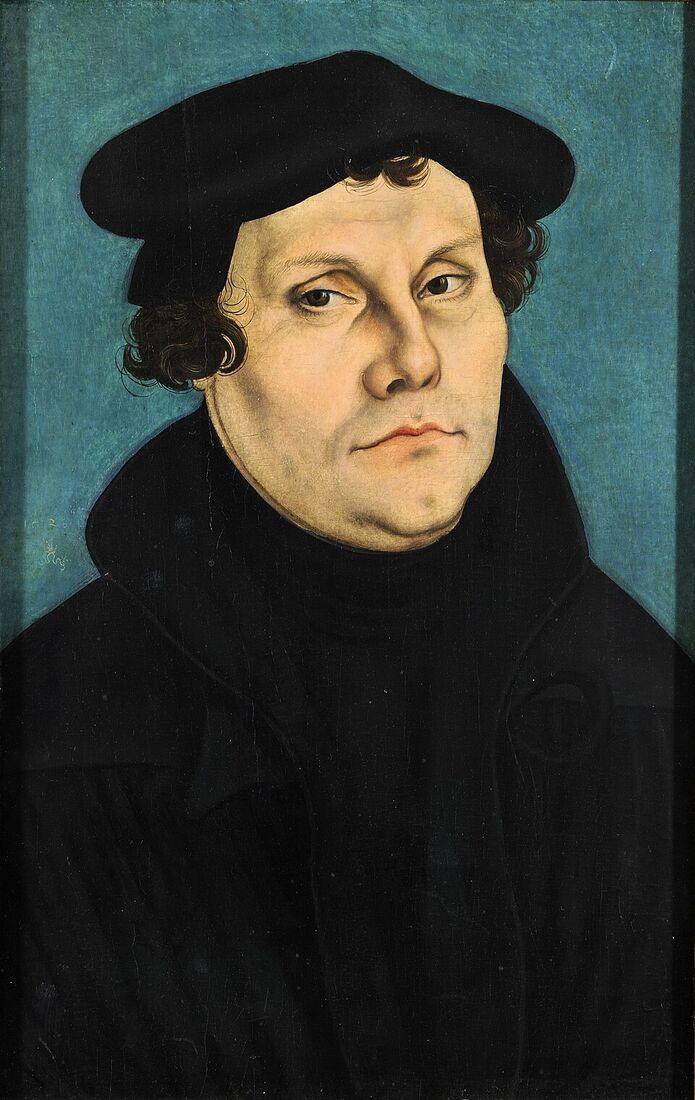
In Gethsemane, on the eve of His death, Christ prays not for victory but for unity: "that they all may be one; as Thou, Father, art in Me, and I in Thee, that they also may be one in Us." And the deepest wound of the Church is not persecution from without but division within: the rupture of East and West (1054), the Reformation, the Russian schism. Every schism is the prayer "that they all may be one" torn through living flesh.
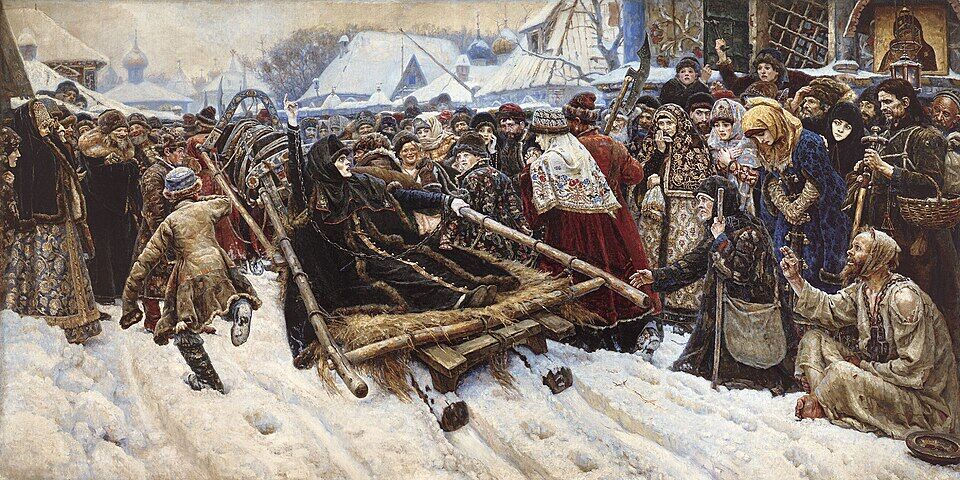
Surikov painted not a doctrine but a face. Boyarynya Morozova is carried on a sledge through the Moscow snow; she throws up her hand with the two-fingered sign — the old sign of the cross — and the crowd answers with the whole spectrum of the human: some jeer, some weep, and a holy fool at the edge blesses her with those same two fingers. From the outside the dispute seems trivial: how many fingers to fold, how to write the Name (Isus or Iisus), which way to walk in procession. But beneath the dispute over form lies the question of whether truth can be established by the power of the state. The Church, having become a power, now turns that power against her own children in the name of unity. The apparatus, born to guard communion, begins to fracture it.
And here is the ultimate bitterness: both sides pray "that they all may be one" — and anathematize each other. Objectification has closed into a circle: each part, defending truth, turns the brother into an object — a heretic, a schismatic, a subject to be corrected.
Berdyaev's thread runs through this whole drama: the history of the Church is Spirit, which ceaselessly falls into objectification (institution, power, coercion) and ceaselessly breaks back out toward communion — through the saints, through monastic and spiritual revivals, through those who again and again descend into the catacomb. The institution is necessary, but it is not Life itself; Life is the communion of persons in the risen Christ, and it is always greater than its shell.
Here too runs the boundary between archetype and confession — this time a quiet one. As archetype, the drama of the Church is universal: every ideal becomes an institution, the institution a power; every revolution devours its children, every movement ossifies, charisma is routinized into bureaucracy. "There you all are" — this is the law of any human community, and read thus the Church is only one more instance of the eternal plot of a flame locked inside an institution. But behind this lies the confession: that this Body, in spite of Constantine, in spite of schisms, in spite of the blood it has itself shed, is not merely a sociological institution but the presence, enduring through time, of a risen Person; that "the gates of hell shall not prevail against it" — not because the institution is pure, but because the One who lives within it is alive. The archetype says: a flame in an institution. The confession says: the Body of the living Christ. The boundary lies between "the Church is a beautiful and tragic human thing" and "the Church is the risen Christ, stretched out through time."
As for us — we stand at this quiet wall as free as we stood at the loud one. And the one thing the drama counsels us to carry with us is the memory of the catacomb. When the institution again becomes a power, the remedy is always the same: the Good Shepherd, love without power. The Church is at her healthiest when she remembers that she began underground — with no power at all, with one broken loaf of bread and a Name spoken in a whisper.
The spine of it all — the arc. The same law through the four voices: philosophy · literature · painting · music.
all 21 stations · Russian version