What is servant leadership in the Bible?
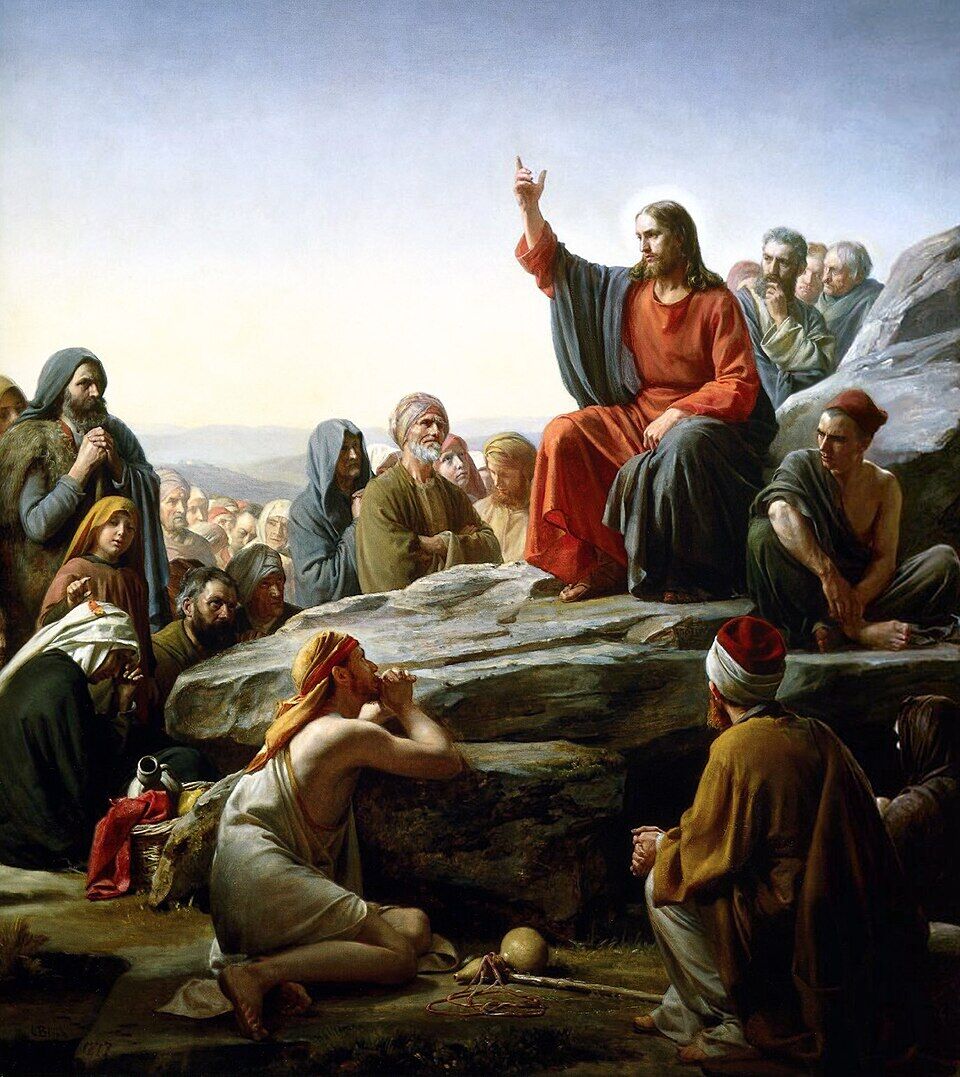
In Bloch's painting Christ sits not on a throne but on a hillside, and around Him is not a mass but a multitude of separate faces: an old man leaning forward; a woman with a child; a distrustful scribe; a boy peering up from below. The artist refused to paint a crowd — he painted faces, each with its own story. This is the Kingship as Jesus brings it: not a new system, not a better law, not a more just empire, but an address to each Person, one by one.
The old drama had tried every system — the covenant, the Torah, the monarchy — and each proved to be only a barrier at the edge of the abyss. Jesus does not mend the system; He overturns the very scale of values. "Blessed are the poor in spirit... Blessed are those who mourn... Blessed are the meek, for they shall inherit the earth." The pyramid of the world is stood on its head: at the bottom the victors, at the top the poor in spirit, those who mourn, the persecuted. This is not a morality for the weak but a revelation of how reality is ordered when love, and not force, stands at its center.
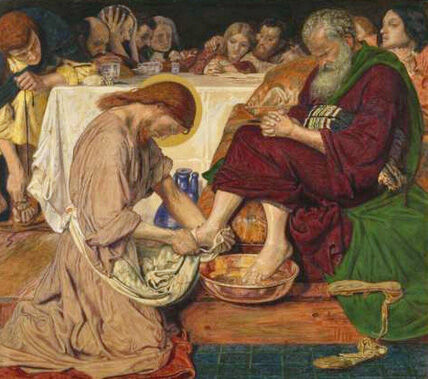
At the foundation of this overturning lies service set against domination, against objectification. The old king, in Samuel's word, "will take your sons... and you shall be his slaves": power turns people into instruments. Jesus says the opposite: "whoever would be great among you must be your servant"; "the Son of Man came not to be served but to serve, and to give His life." He washes His disciples' feet. He has nowhere even to lay His head. And His whole ministry is a succession of restorations — the face given back to the depersonalized. He touches the leper, who had been reduced to his disease; He speaks with the Samaritan woman, who had been reduced to her reputation; He calls Zacchaeus by name, who had been reduced to the trade of tax collector; He defends the woman reduced to her sin: "let him who is without sin among you be the first to throw a stone at her... neither do I condemn you." Each healing is an object become a Person once more.
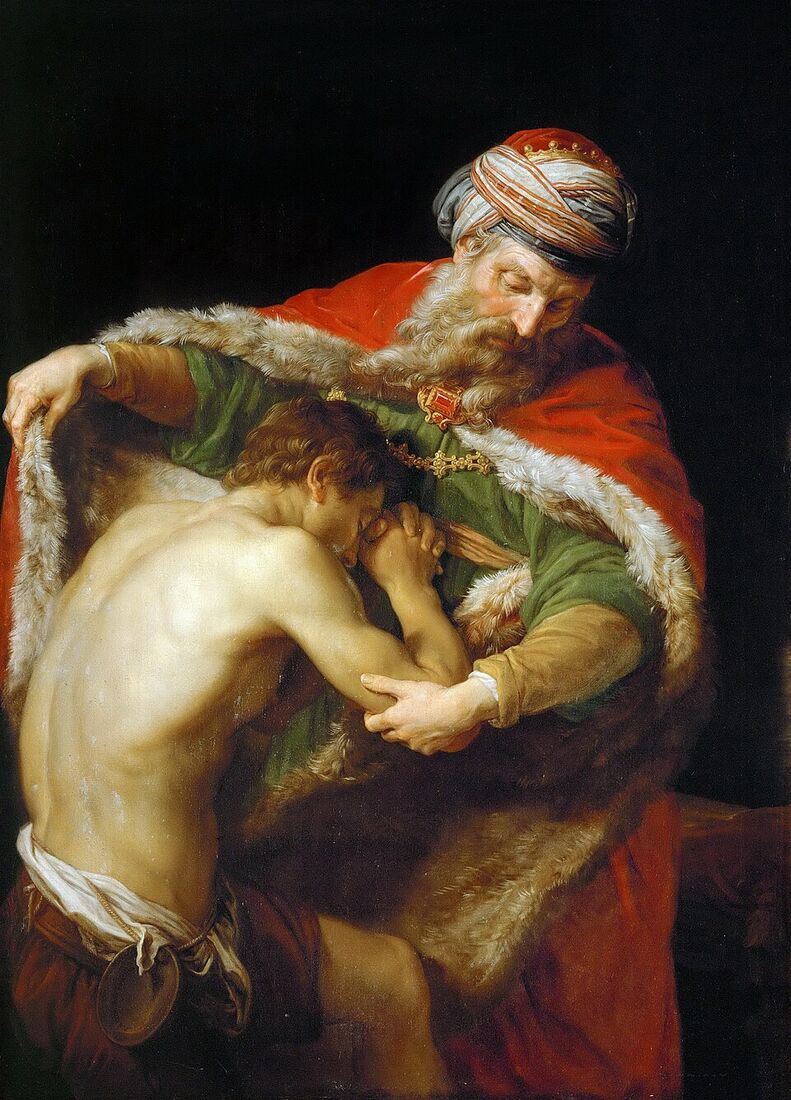
And in the parables sounds the chief news: God Himself has gone out to seek. The shepherd leaves the ninety-nine sheep and goes after the one that is lost. The woman turns the house upside down for one lost coin. And the father, seeing the prodigal son still far off, does not wait for his humble return — "he ran... and fell on his neck and kissed him." The One who in the old drama was sought in anguish now does the seeking Himself — and comes running to meet.
The spine of it all — the arc. The same law through the four voices: philosophy · literature · painting · music.
all 21 stations · Russian version