Where is God when we suffer?
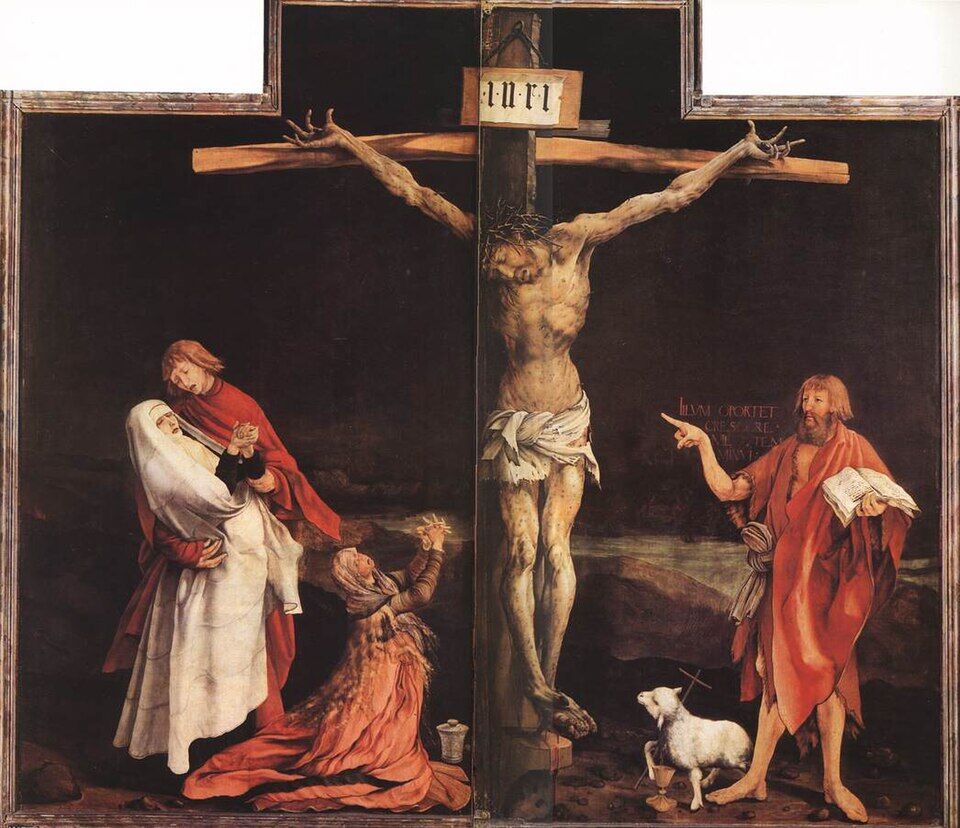

Grünewald painted the most terrifying Crucifixion in all of art. This is not the idealized body of a sufferer but mutilated flesh: greenish-gray, torn by scourges, the fingers cramped in convulsion, covered with sores. The altarpiece was painted for the hospital of a monastery where patients were dying of "St. Anthony's fire" — and the artist covered the body of Christ with the very sores that marked the bodies of the dying, so that each of them might see a God who had taken upon Himself precisely his own disease. Nearby, Mary sinking into the arms of John the Evangelist, and the wrung hands of the Magdalene. And the huge finger of John the Baptist, pointing at the Crucified, with the words: "He must increase, but I must decrease." At the feet, the Lamb, its blood flowing into a chalice.
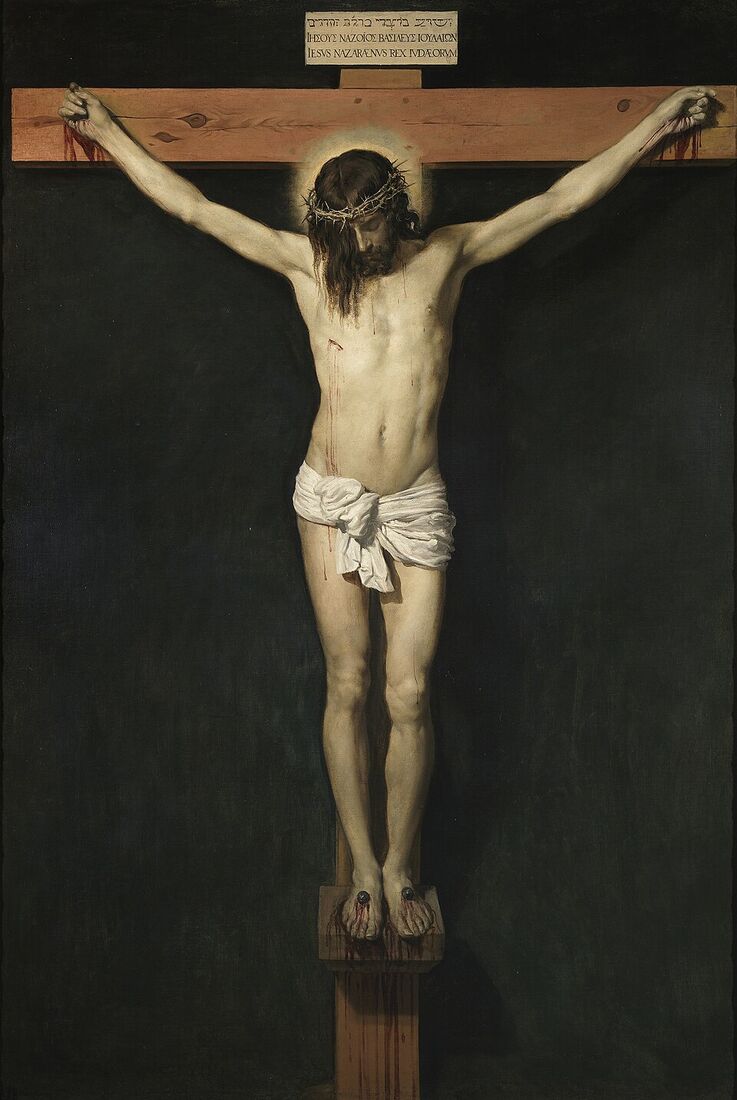
From the cross there rings out what had never been heard in the whole of the ancient drama: "My God, My God, why have You forsaken Me?" The God who had spoken from the storm, from the burning bush, from the whisper of a gentle breeze, and who then fell silent for four hundred years — now falls silent even for the Son. And the Son enters into this silence, into God-forsakenness, to the very bottom. This is the lowest point of the kenosis: God undergoes the absence of God. He who was boundless becomes the ultimate object — flesh that is seized, scourged, nailed, counted among robbers, a body that will be taken down from the tree.
And from the very bottom of objecthood, from the place where a human being has already been reduced to a thing, He refuses to reduce anyone whatsoever to a thing — even His executioners: "Father, forgive them, for they know not what they do." Here is the limit of the theme: the one who was turned into a total object objectifies no one. He sees a face in the robber crucified beside Him: "today you will be with Me in paradise." He sees a son in the beloved disciple and a mother in the woman standing at the cross: "behold, your son... behold, your mother." The defeat of objecthood is accomplished not by fleeing from objecthood but by descending into it to the very edge — and by a love that does not go out even there.
The spine of it all — the arc. The same law through the four voices: philosophy · literature · painting · music.
all 21 stations · Russian version