The Birth of Venus he painted around 1486. It was the first large painting in European art whose central figure was a nude pagan goddess rather than a Christian saint. No one had done it before him. Afterwards, everyone did.
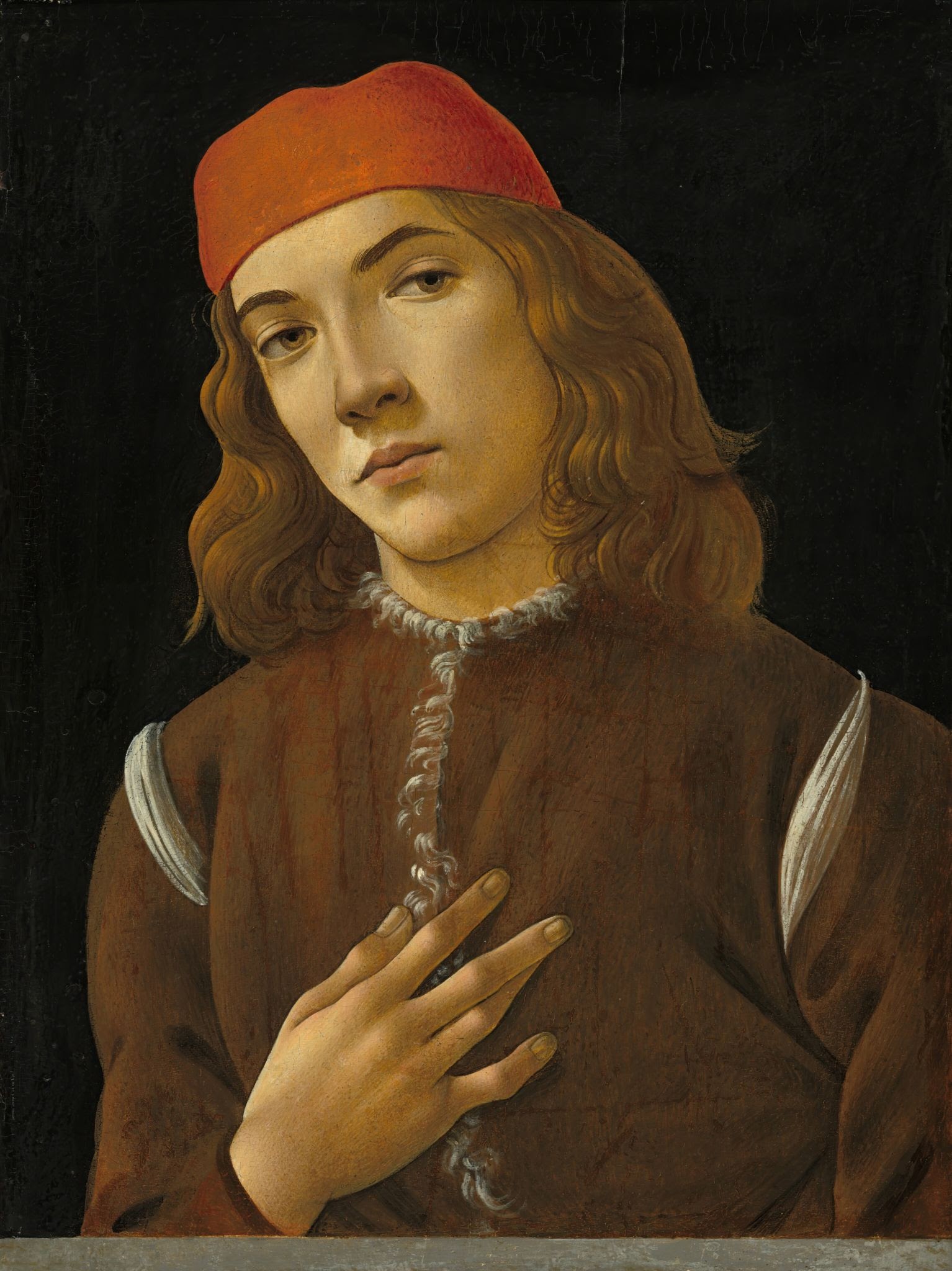
Sandro Botticelli was born in Florence in 1445, the son of a tanner. His real name was Alessandro Filipepi; the nickname Botticelli — "little barrel" — came down to him from an elder brother. In the workshop of Filippo Lippi he learned to paint beautiful faces, flowing lines, pensive gazes.
In the 1480s he stood at the summit: the favourite painter of Lorenzo de' Medici, Florence's great patron. He painted allegories and mythological scenes — spring, nymphs, the Graces. His Primavera is among the most interpreted and still unexplained images in history: what the nine figures mean, what is happening from left to right, who follows whom — volumes have been written on the question.
Then Lorenzo died. Then the Medici were driven out of Florence. Then came Savonarola, the friar who burned books and paintings, declaring them sin. The "bonfires of the vanities": people carried their possessions to the fire and threw them in. Botticelli, it is said, brought a few paintings of his own.
His last years were spent poor and nearly forgotten. He painted religious subjects in an archaic manner, as though he had stepped back twenty years. He died in 1510.
The nineteenth century rediscovered him: the Pre-Raphaelites found in him what official painting lacked — dream, melancholy, weightlessness.