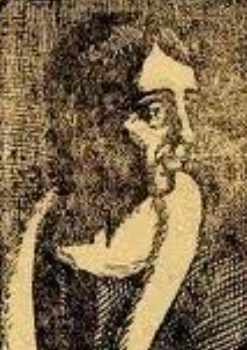
Masuccio Salernitano was born in Salerno, in Italy, sometime between 1410 and 1420. From the late 1450s he served as secretary to Roberto del Sanseverino, prince of Salerno.
His collection Il Novellino — fifty novellas in five books — is the most substantial Italian gathering of tales of the fifteenth century. Published in Naples in 1476 and reprinted more than once, it ranks among the significant monuments of Renaissance prose. Its model was Boccaccio's Decameron, to which, in the art of drawing character, Masuccio nonetheless remains inferior. The book is dedicated to Ippolita Maria of Aragon, Duchess of Calabria, the writer's patroness.
The thirty-third novella tells the love story of Mariotto and Ganozza, later taken up by Luigi da Porto in his Newly Discovered Story of Two Noble Lovers (1530). These works, together with Matteo Bandello's later version and Arthur Brooke's English translation, were the sources on which Shakespeare drew for his famous tragedy Romeo and Juliet.
Masuccio died in Salerno in 1475.