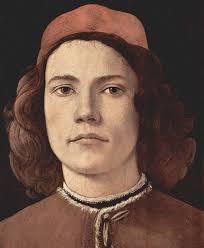
Picture a young man of twenty-three who challenges all of learned Europe to a debate. He draws up nine hundred theses — on philosophy, theology, magic, the Kabbalah — and invites any scholar to come to Rome and do battle with him, promising even to pay for the journey. Behind the audacity stands not vanity but an ardent faith: that all the wisdom of the world, scattered across ages and peoples, is at its depth one. This young man was named Giovanni Pico della Mirandola (1463–1494), a count from a family near Modena, and he burned out as swiftly and as brightly as he had flared up.
Pico was a marvel of learning. He passed through the universities of Bologna, Ferrara, Padua, Pavia and Paris, and mastered not only Latin and Greek but also Hebrew, Arabic and Chaldean — in order to read the Old Testament and the Qur'an in the original, not trusting to others' translations. This thirst for the sources led him toward a great aim — the synthesis of all doctrines. He was convinced that Neoplatonism and Aristotelianism, scholasticism and Hermeticism, Greeks and Jews all speak, in essence, of one and the same thing; that "all the philosophical schools are particular manifestations of a single truth." In this he is the heir of the Florentine Marsilio Ficino and his dream of a concord of wisdoms.
The crown of the design was the "Oration on the Dignity of Man" — the preface to those very 900 theses and one of the most intoxicating pages in all of European thought. In it Pico puts into the mouth of God an address to Adam: I have given you, unlike the other creatures, neither a fixed place, nor a special form, nor a nature laid down in advance — "so that you yourself, by your own will, might trace out these for yourself." Man is the only being without a ready-made image, a "creature of indeterminate kind," who has "nothing of his own" and has no bounds.
Hence a dizzying freedom. Man, says Pico, "has the power to be whatever he wills." He may "sink to the level of the beast and rise to a godlike being," remaining the free and glorious sculptor of his own self. This is a turning point in the understanding of man: his dignity lies not in the place allotted to him in the hierarchy of being, as with the ancient and medieval thinkers, but in the fact that he has no place, that he creates himself. Here, in this ardent oration, is born that sense of human freedom by which all of subsequent European culture would live.
Pico was the first of the humanists to plunge in earnest into the Jewish Kabbalah, seeing in it a key to the secret, allegorical sense of Scripture, and he became fascinated with "natural magic" — the grasping of the hidden forces of nature. But, paradoxically, he also wrote a passionate "Disputation against Divinatory Astrology": the stars have no power over man, he insisted, for that would demean the very freedom of the will he had proclaimed. Magic he understood not as an enslavement to fate but as a knowing — the disclosure of the wondrous order that the Creator has set within the world.
His boldness did not go unpunished. Pope Innocent VIII condemned first thirteen of the theses, and after the "Apology" all nine hundred; Pico was arrested, fled to France, and landed in the château of Vincennes. He was saved by Lorenzo de' Medici, and from 1488 the philosopher lived in Florence, where he worked on reconciling Plato and Aristotle in the unfinished treatise "On Being and the One." Toward the end of his short life he was drawn ever more strongly to the stern preacher Savonarola, and the brilliance of the humanist took on a mystical anxiety; he died at thirty-one.
Wherein lies the significance of this comet? In the fact that Pico gave the Renaissance its manifesto. Before him, man had been defined from without — by God, by nature, by his estate, by the stars. Pico said: man defines himself, he is an unfinished design in his own hands. This spark of freedom would be taken up both by mystics such as Nicholas of Cusa and by the whole modern European faith in man the creator. The young man who summoned Europe to a debate won it, in the end — from time itself.