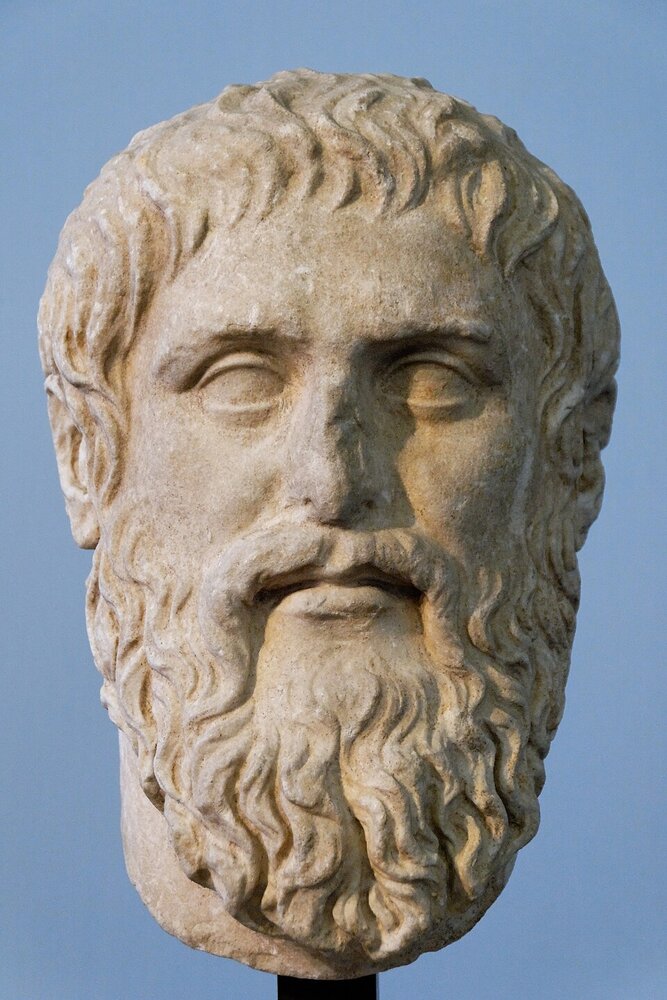
Plato was the first to divide the world in two. There are the things we see — they come into being, change, and perish. And there is that which makes them what they are: the eternal, unchanging Ideas (the Forms). There are many beautiful things — but there is Beauty itself; many just deeds — but there is Justice itself. What is truly real is precisely the Ideas; things merely partake of them, as shadows partake of the object. And above all the Ideas stands the Idea of the Good — the source of being and truth, its "sun."
He explained this in philosophy's most famous image — the allegory of the cave. People are chained in a cave with their backs to the entrance and see on the wall only the shadows of things passing behind them, taking these for the sole reality. The philosopher is the one who has managed to turn around, come out into the light, and see the things themselves, and then the sun (the Good). And it is his duty to return to the cave, to his former fellow prisoners, even though — blinded by the light — they will mock him. For Plato, knowledge is the agonizing turning of the whole soul from the shadows toward the light.
The soul, according to Plato, is immortal and consists of three parts: the rational (which strives for truth), the spirited (will, courage), and the appetitive (the desires of the body). Justice in a person exists when reason rules, will assists it, and the desires obey.
And here lies the central move of the Republic: the ideal city-state is ordered after the image of the soul. To the rational part correspond the philosopher-rulers; to the spirited, the guardian-warriors; to the appetitive, the craftsmen and farmers. The state is just when each class does its own work and does not meddle in another's. Hence Plato's most audacious conclusion: until philosophers rule — those who have seen the Good — states will not be rid of their ills. Not force and not wealth, but knowledge of the truth gives the right to govern.
In old age, in the Laws, Plato became more sober: seeing that ideal philosopher-rulers are not to be found, he stakes his hopes on the rule of law and on education from the earliest years, on a life as communal and closely knit as possible. From the youthful dream of a kingdom of the wise — to a mature reliance on law as a "second voyage."
Plato's influence is immeasurable: all subsequent philosophy, in the famous phrase, is "footnotes to Plato." His world of Ideas, through the Neoplatonists, would enter Christian theology (God as the Good, toward whom the soul ascends), and the dispute over whether Ideas exist apart from things would not subside until modern times.