The eighteenth and nineteenth centuries were a time of enchantment: man was enchanted first with himself, with his own reason, and then with outward idols — the nation, the state, inevitable progress. The twentieth century brought disenchantment with man. Clever, cultured humanity flung itself, like moths at a lamp, into the First World War; after it came totalitarian regimes and the Second War. And the educated man asked himself: how could I have done such a thing? This was a crisis not of daily life and not of history, but of man himself, who had come to see himself not as the master of the world but, in the words of one philosopher, as a skeleton in the wind, thrown into an absurd and alien world.
Out of this horror was born existentialism. The word itself goes back to a "stepping out of oneself": existence is the possibility of being. Unlike a plant or an animal, man is not what he is, but what he has decided to be; his existence is a self-construction, a leap forward beyond his own limits. The second favorite word of these thinkers is freedom. Their forerunner is rightly held to be the Danish eccentric Søren Kierkegaard, as well as Friedrich Nietzsche with his contempt for well-fed, philistine comfort.
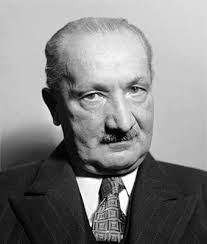
The strongest and most tragic among them was Martin Heidegger, born in 1889 into a poor German Catholic family. Falling in love early with philosophy, he became the assistant, and then the successor, of his teacher in the chair at Freiburg; in 1927 his fundamental work "Being and Time" appeared. And then came the trial. In 1933 the greatest mind of Germany accepted the post of rector, in his inaugural address called for loyalty to the newly established regime, joined the party, voiced antisemitic judgments in the "black notebooks," and did not come to the funeral of his dead teacher. Here the mark of the age was laid bare: the highest thought coexisted with a man who turned out to be dishonest.
What, then, is this thought? Heidegger poses anew the forgotten question of being. Metaphysics, in studying beings, forgot being itself; the pre-Socratics, by contrast, understood truth as aletheia — a self-disclosure, that which ceases to hide. The central concept is Dasein, "being-there," presence: man is the being that questions the meaning of its own being and in the same instant enacts it. He is not reducible to an object. On the contrary, he is being-in-the-world, where it is not things that define man, but man who gives things their meaning.
The structure of this being Heidegger calls care (concern) — a not-being-indifferent to oneself, to one's neighbor, to the whole world. Freedom is precisely being-in-possibility: man projects the world as his own project. But he is not alone: being-in-the-world is always being-with-others, and the other is not a thing but a person. Authentic care is to help one's neighbor find his own freedom. Set against this is inauthentic existence: the anonymity in which "one says so, one does so," a settling down to the level of a thing. And conscience calls toward the authentic, turning us away from self-admiration toward what we hide from ourselves.
The highest theme is being-toward-death. From this one possibility no one can escape: death is always only mine, and no one will die in another's stead. In its face the nothingness of every project aimed at oneself alone is laid bare; but the one who has opened to others the way to freedom overcomes death on earth. In his later years Heidegger makes a turn: man is not the master of beings but their shepherd; being discloses itself, and man's dignity lies in being called by being to guard its truth. Hence the famous saying: language is the house of being, and poets and thinkers are the keepers of this dwelling. Hence, too, the anxiety about technology: having dared to turn reality into a pure object of exploitation, humanity is handed a bill that being presents to the forgetful.
Heidegger demanded that philosophy be freed from the "humanistic deformation" — from the belief that man is the measure of all things; the error of dominion over beings he traced back to Plato. Beside him stands a contemporary, friend, and opponent — Karl Jaspers, a man of another fate, who kept his honesty where Heidegger showed weakness. So out of Kierkegaard's anguish and Nietzsche's daring grew a thought which, for all the tragedy of its creator, asked anew about man — and in that remained a living nerve of the twentieth century.