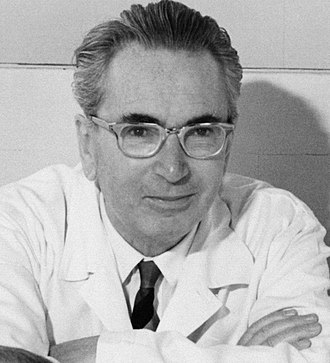
What keeps a person afloat when everything has been taken away — name, home, possessions, the very future itself? Many philosophers have pondered this question, but Viktor Frankl (1905–1997) tested the answer on himself, under conditions almost impossible to imagine. A Viennese psychiatrist, holding both a doctorate in medicine and a doctorate in philosophy, he emerged from the years of his captivity (1942–1945) not broken, but with a ready theory of what saves a human being. This theory was given the name logotherapy — healing through meaning.
Frankl began with a simple observation that overturned the psychology of his time. A human being, he said, is driven not by the pursuit of pleasure nor by the thirst for power, but by the will to meaning — an innate need to see significance and purpose in one's life. When this need finds no outlet, a person is seized by a peculiar anguish, an "existential vacuum" — the feeling that everything is permitted and everything is indifferent. Many neuroses, Frankl maintained, grow precisely out of this emptiness, and not out of repressed drives.
Meaning, he insisted, cannot be invented or arbitrarily assigned to oneself — it can only be found, and it is unique to each person and each hour. Frankl indicated three roads leading to it. The first is work and creativity — what we give to the world. The second is love and experience — an encounter with another person, with beauty, with nature. And the third, the most difficult and the most important: the attitude we take toward suffering that cannot be removed.
It is precisely here that his thought reaches its summit. There are situations that cannot be changed — an incurable illness, a loss, death itself. And yet, Frankl maintained, a human being always retains one last freedom: the freedom to take an attitude toward what is happening to him. Everything can be taken away except the right to choose how to bear one's fate. In this unbending freedom of spirit he converges with the Stoic Epictetus, who taught the distinction between what lies within our power and what lies beyond it, and with his own favorite saying of Friedrich Nietzsche: "He who has a Why to live can bear almost any How."
Frankl did not deny that a human being is in many respects conditioned — by the body, by environment, by circumstances. But he firmly opposed complete determinism. In the human being there exists a special, spiritual dimension — he called it the noetic dimension — in which values and meanings dwell and in which genuine freedom is rooted. Thanks to this dimension, a person is capable of self-transcendence: of going beyond himself, forgetting himself for the sake of a cause or another person — and it is precisely in this roundabout way that one finds oneself. Frankl understood conscience as a sensitive organ by which we intuit the one true meaning in the situation given to us.
With these insights he takes his place among the philosophies of existence. Like Karl Jaspers with his "boundary situations," in which a person meets his true self for the first time, Frankl saw in suffering, guilt, and death not only calamity but also the possibility of a final, decisive choice. But whereas many existentialists gazed into the abyss and into anxiety, Frankl brought out of that same abyss something different — a firm conviction that life never loses its meaning, under any circumstances.
Herein lies Frankl's enduring significance. He did not console with easy words, nor did he promise that suffering would vanish. He said something greater: that even in the most hopeless of fates, a person retains a task and retains a choice — and therefore retains dignity. His books became a support for millions precisely because they grew not out of armchair theory, but out of a conviction tested by life itself: that one can say "yes" to life in spite of everything.