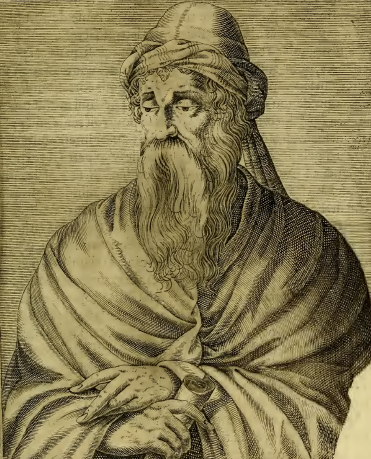
There are bishops whom history remembers by their see, and there are those it remembers by their controversies. Theodoret has come down to us in the second way. His see was Cyrrhus — a small town in the east of Syria, far from the brilliance of the capital — but his voice was heard at the councils where it was decided in what words the Church would speak of Christ. He grew up within the Antiochene school, that tradition of interpretation which reached back to such names as Ignatius of Antioch and John Chrysostom, and which trained one to read Scripture soberly, attentive to the human concreteness of the Gospel story.
The question around which his life was spent sounds simple and almost unbearable: how, in the one Jesus Christ, are God and man united? This is the very knot of the Incarnation. To say that God simply became man without remainder is to lose the fullness of human nature. To set God and man too far apart is to break the unity of the Savior, leaving, as it were, two beings side by side. The theology of the fifth century sought a formula that would hold both: a true God and a true man in one Person.
The Antiochene school, to which Theodoret belonged, guarded precisely the distinction of natures — it feared dissolving the human in the divine. The Alexandrian current, headed by Cyril of Alexandria, insisted above all on unity. The clash of these two truths became Theodoret's personal drama. When the dispute unfolded around Nestorius, he stood up in defense of the Antiochene side and sharply objected to Cyril's anathemas. Thus he became a participant in the Council of Ephesus in 431 — and for a long time fell among those whom their opponents suspected of heresy.
And yet Theodoret was not a man of a single theme. He left behind works through which one comes to know the age from within. The "History of the Monks of Syria" is an account of the Syrian ascetic monks, a rare document of living spiritual life, where the early Christians are shown not as a scheme but as people with their own struggle and their own striving toward perfection. In the apology "The Cure of the Greek Maladies" he answered the objections of the pagans calmly and learnedly, showing the reasonableness of the Christian faith. And the theological dialogue "Eranistes" reveals the whole depth of his thought — now turned against the opposite extreme, the one that swallowed up the human in Christ entirely.
For the pendulum swung the other way. There arose the teaching of Eutyches, which merged the two natures into one — and here Theodoret became a defender of the distinction as firmly as he had once guarded unity against excessive separation. But the times were unkind to him: at the council of 449 he was deposed and sent into exile. It seemed his name had been struck out for good.
The resolution came in 451 at the Council of Chalcedon. There a confession of faith was adopted that took in the letter of the Roman bishop Leo I as well: in Christ two natures are confessed — divine and human — without confusion and without division, in the unity of one Person. This formula joined together both truths for which, at different times, Theodoret had contended. The council lifted its condemnation from him and restored him to communion with the Church.
His position remained a complex one — some of his early writings would be disputed even later. But this very complexity makes his figure eloquent. In Theodoret one sees how difficult it was, at the price of exiles and vindications, to work out the precise word about the Incarnation — about the truth that God and man in Christ are neither mingled nor parted. His life remained a testimony: for the right words about what matters most, one must hold fast even when the price of them is disgrace.