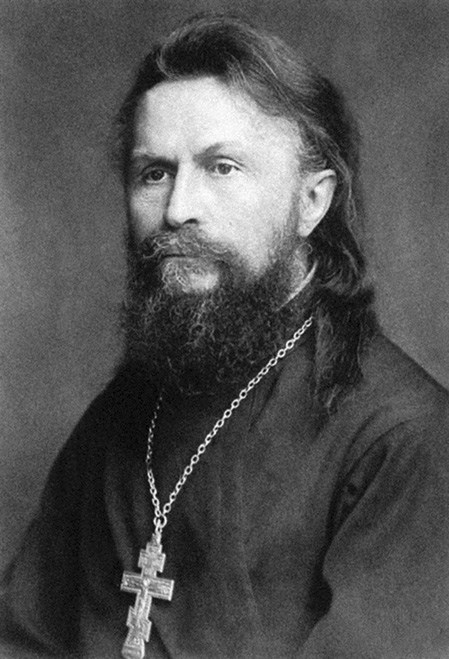
The path of Sergei Nikolaevich Bulgakov is perhaps the most telling in the history of Russian thought at the beginning of the twentieth century: a road from the university chair to the church altar. One of the foremost Russian Marxists, a professor of political economy at Moscow University, in 1903 he brought out a collection with a telling title — "From Marxism to Idealism." This was neither a whim nor a betrayal of himself, but an inner logic: a social thinker in search of the truth about man discovered that this truth would not fit into a scheme of classes and productive forces. He had been a Marxist — and he ceased to be one.
In the summer of that same year, 1903, some two dozen prominent Russian intellectuals — among them Semyon Frank, Nikolai Berdyaev, Bulgakov, and others — traveled to Switzerland, to the Black Forest, in the guise of tourists, and there laid the foundations of the liberal "Union of Liberation." But the political road would soon diverge from the spiritual one. Already in the collection "Landmarks" Bulgakov, together with Evgeny Trubetskoy, Berdyaev, and Frank, would pass a stern verdict on the very milieu from which he himself had come: love of the people had turned into idolatry, the struggle against autocracy had been set above the search for truth, and truth itself had ceased to be given first place.
What follows is the most decisive step. The former Marxist and economist takes holy orders and becomes, in emigration, one of the most gifted, though very free-thinking, teachers of Russian Orthodox theology. This change was not a renunciation of thought but a deepening of it: what he had earlier sought in social theory he found in the experience of the Church.
At the heart of his theology stands Sophia — an idea he inherited from Vladimir Solovyov. Solovyov wrote of Sophia as the "social incarnation of the Divinity in the Church," and this thought carried both Bulgakov and Pavel Florensky along with it. The Russian people, Solovyov had already noted, knew and loved Sophia long before any philosophy — under the name of Holy Wisdom. Thus the abstract metaphysics of all-unity became, in Bulgakov, a living ecclesial and popular feeling.
Bulgakov was a man of vast ecclesiastical and historical learning, and this erudition gave him a special depth. He showed that even the ancient Egyptian funerary "Pyramid Texts" sound the same mysterial motifs as the Christian services of Holy Week — Holy Thursday, Great Friday. For him this meant not a rivalry of religions but something greater: the pre-Christian world was not an alternative to Christianity but its long waiting, its premonition of what was to come.
Bulgakov's prose is difficult — his contemporaries admitted that he was harder to read than the lucid and logical Frank. But behind that difficulty stands a rare union: an economist who became a priest, a Marxist who became a sophiologist, a study-bound thinker who became a teacher of the Church. His life is a vivid portrait of an entire generation of Russian philosophers who traveled the road from the temptations of social utopia to the depth of Christian faith. And this turning of Russian thought cannot be understood without following him — from Solovyov to Sophia, from the idea to the Church.