There is in the history of thought a wonderful roundabout road by which a great inheritance returns home. Aristotle was gradually fading out of late antiquity; the most powerful Aristotelian school of that time lived not in the Latin world but in the Syrian East — in Damascus and its neighbouring cities, among Greek-educated Syrians who pursued both philosophy and medicine. They were not Christians, and at the end of the fifth century the emperor Zeno forbade their school to exist on the soil of Byzantium. The philosophers did what they always do — they left, in this case for Persia. And when Persia was conquered by Islam, the Baghdad caliph treated this school with care, remembering that before him stood the heirs of a great culture, and forced no one to change his faith. So in the ninth century Aristotle, Hippocrates and Galen were translated here from Greek into Arabic, while from the East came Indian mathematics — those very "Arabic" numerals that in fact hail from India.
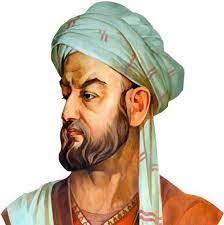
In this milieu rose the commentators of Aristotle — al-Kindi, who wrote a commentary on the treatise On the Soul, and al-Farabi, a Sufi mystic who developed the idea of the creating intellect. Curiously, if Platonism proved closer to Eastern Christianity, then Aristotle was to the liking of Islam. And the leading figure of Muslim Aristotelianism became Ibn Sina, whom the Latin West would call Avicenna (980–1037). A native of Bukhara, physician at the courts of rulers, author of a whole encyclopedia of the sciences and of the famous Canon of medical knowledge, he was captivated by the Aristotelian categories of matter and form — and it was precisely these that he laid at the foundation of his view of man.
His central idea is simple and bold: a single substance can have many forms. Man is three forms, set one within another and joined together: the vegetative, the animal and the rational. As a brilliant physician, Ibn Sina linked to the structure of a single bodily substance the four characters as well — the phlegmatic, the choleric, the sanguine, the melancholic; it is precisely through Avicenna that this teaching on temperaments would later come to Europe. All three forms arise, in his view, at once — at the very instant of conception: from that moment man already is, and before it he is not.
But the most important thing in his teaching is the fate of these forms after death. The first two, the vegetative and the animal, are mortal: with the death of the body they vanish. But the rational form is immortal, for it is the form of choice and will — and a different fate awaits it, a movement toward paradise or toward Gehenna. True, Avicenna too could not resolve the eternal dispute over freedom and predestination; as a Muslim he leaned toward predestination — for in Islam God creates and foreknows everything, and man here is less free than in Christianity. And yet only of the highest, rational form can one speak as of that which answers for the eternal fate.
With Avicenna the idea of the proof of the existence of God becomes one of the most important — the very one that would soon become the heart of scholasticism in a thinker such as Anselm of Canterbury. Ibn Sina's epistemology is subtle: the essence of God itself is not known by the reasoning mind, but through the intellect it enters man directly. In man there is, as it were, an experiential, lived, but unanalyzable touch of the divine; and what already yields to analysis is the shaping, the form. Grasping God in his essence, man begins to be shaped in his likeness, as though deified — though for strict Muslim theology such a thought is almost unthinkable.
The significance of Avicenna and of the whole Syriac-Arabic school for the West can hardly be overstated. Through the Arab world — and above all through Muslim Spain, then a true centre of the sciences — the preserved Aristotle returns to Europe in the ninth and tenth centuries. In essence Aristotle owes his second appearance precisely to the Arabs. And when the golden age of scholasticism flares up in the Latin world, when Thomas Aquinas sets out to build his vast synthesis of faith and reason, his foundation will be that same Aristotle who was saved and interpreted in the East. So the East played an enormous part in the West's knowledge of itself — and everything in this story is wonderfully interconnected.