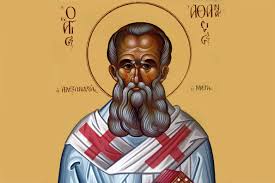
Almost nothing is known of his birth — even the year is approximate. But what he devoted his conscious life to is well known. In 325, still a very young deacon and secretary to the bishop of Alexandria, he found himself at the walls of the cathedral in Nicaea, where for the first time in three centuries Christians from across the empire gathered to decide who exactly they confessed Jesus Christ to be. The dispute was not about words, but about the very core of the faith.
The Alexandrian presbyter Arius taught coherently and persuasively: the Son of God is the highest of created things, but a created thing nonetheless; there was a time when He was not. The logic was seductive: God is one, therefore the Son begotten by Him is lesser than the Father. The Council of Nicaea answered with a single word — homoousios, "of one substance": the Son is not created but begotten, of the same nature as the Father. Athanasius understood that this was no theological nicety. If Christ is merely a creature, then humanity's encounter with God never truly took place, and there is, in truth, no one to save us.
He wrote his principal book — the treatise "On the Incarnation of the Word" — early, and held to its thought to the end. Why did the eternal God enter time and become mortal? Man was created in the image of God, but, having turned away from the Source of life, gave himself over to corruption and death — the image grew dim, like a portrait fading on a panel. This could not be corrected from outside, by a simple command: human nature itself had been corrupted. Therefore the Word itself, by which the world was made, entered this nature from within, took on a mortal body — and, by accepting death, destroyed its power. The eternal entered time without ceasing to be itself.
From this Athanasius drew the formula for which it was worth losing everything: "He became man so that we might become divine." God became man not merely to give an example or a law, but to restore to man his lost image and to join him to incorruption — to the very life of God. This is what is called deification: not that man becomes another god, but that created nature, united with God in Christ, is healed and filled with His light.
He had to hold to this alone. After Nicaea the pendulum swung back: the emperors who succeeded one another sought peace in the Church and inclined toward more convenient, blurred formulas, and with them so did the majority of the eastern bishops. Athanasius, by then bishop of Alexandria, was deposed and exiled five times. He was accused of everything, up to sorcery and murder; he fled, hid, returned, and again refused to sign a single word that compromised the doctrine of one substance. In this stubbornness lies his portrait: the solitude of being right, when throne and councils and almost the whole Church stand against you.
He died in 373, without having seen his cause fully triumph — but having seen its triumph draw near. It fell to the next generation to complete what he began: the Cappadocian fathers, and above all Gregory the Theologian, refined the language of one God in three Persons, and at the Council of 381 the Nicene faith was confirmed once and for all. And Athanasius's thought — that in Christ the eternal had truly entered the human — became the foundation for all later theology of the Incarnation, from Maximus the Confessor to John of Damascus. "Athanasius against the world" turned out to be right, and in time the world came round to him.