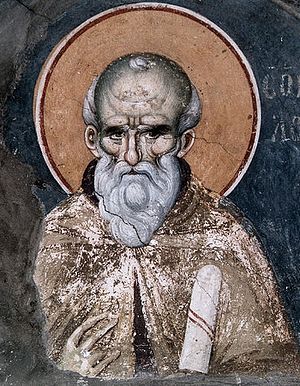
Among the fathers of the Greek-speaking East there are names that are summits and names that are bridges — those who carefully carry what earlier generations had won across the abyss of time. Maximus the Confessor, one of the last great fathers of the Church, was precisely such a keeper and interpreter. Through his labors the hidden became manifest and the obscure became clear.
The point is that the mysterious writings of Pseudo-Dionysius were long kept almost as a secret, esoteric teaching, and were disclosed widely only much later. It was Maximus who brought them to light: he wrote a remarkable commentary on them and, importantly, was utterly convinced of their authenticity and argued for it. Without this interpretation, the apophatic language of the Areopagite — speech about God through negations, about a super-essence that is beyond every affirmation and denial — might have remained the possession of a few initiates.
In this ministry lies the very nerve of Eastern patristics. Here theology is not composed anew but read out of what has already been given and passed on: from teacher to pupil, from age to age. Maximus stands at the end of this golden chain as the one who gathered its links together and made them fast. Through him the intuitions of a God who is unknowable and at the same time near entered the very fabric of the Church's thought and became common property rather than the secret of a school.
In interpreting the Areopagite, Maximus also preserved his central hope — deification: God became man so that man might become god. Unattainable in His super-essence, God by the power of divine likeness turns every creature toward Himself and calls man to become as He is. This idea, daring for the Greek mind, in Maximus's rendering received a firm form and a language intelligible to the educated heir of Hellenic culture.
The significance of Maximus the Confessor lies in the fact that, thanks to him, a great inheritance did not perish but continued to live. He linked the apophatic theology of Pseudo-Dionysius with the later tradition — the one in which the voice of John of Damascus would soon be heard, building faith already in different, Aristotelian categories. It is on such keepers, and not only on the first discoverers, that every great culture rests.