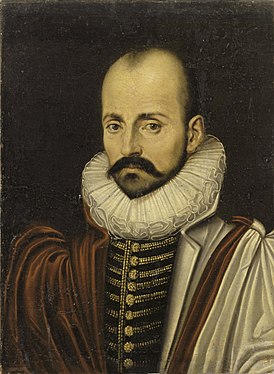
Michel de Montaigne entered history as the great doubter. Where other thinkers strove to build a well-ordered edifice of truth, he halted before the question itself: is a human being capable of knowing anything at all for certain? His is the gaze of a skeptic, for whom everything in the world turns out to be relative, seen from someone's point of view, colored by the time, the temperament, and the habit of the observer.
Montaigne entrusted his thought to a special genre — the free-ranging "Essays," in which the author samples various subjects for their taste, in no hurry to pronounce a final verdict. This is philosophy without dogma: it does not assert but weighs; it does not command belief but invites doubt. The human being, for Montaigne, is a fluid, contradictory creature, and it is more honest to acknowledge this than to construct a false certainty.
It was with just such an absolute skeptic that the whole philosophy of Blaise Pascal entered into dispute. For Pascal, Montaigne was the embodiment of temptation: he loved and read him, but could not accept his repose. Skepticism carried to its limit seemed to him a halt halfway — there, where doubt about man ought to have led to God, it left man alone with himself and with his own relativity.
Behind the dispute of these two Frenchmen lay a fork in the road of an entire age. The more Europe learned about the world, the less a person felt responsible before the higher. Montaigne was eagerly taken up by the freethinkers — those who wished to keep God somewhere at the edge of thought, pushing Him away from living life. Later Voltaire would side with Montaigne against Pascal, defending the human right to look at oneself without tragic anguish.
And yet Montaigne's skepticism is not destruction but honesty. Just as Erasmus of Rotterdam set living humanity against dry erudition, Montaigne set against self-assured systems a sober awareness of the limits of our minds. His doubt matters not for what it denies but for the way it forces thought to return to itself and ask: on what do I in fact stand?