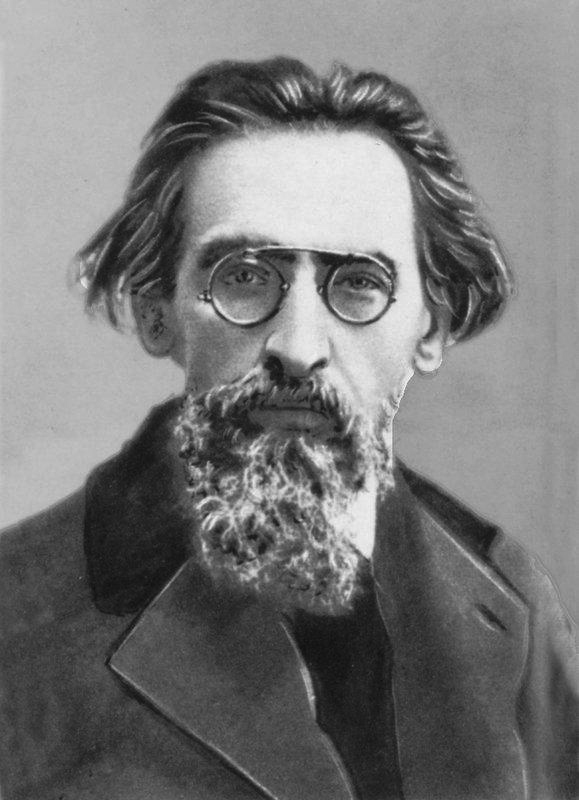
Lev Platonovich Karsavin was a man of an extraordinary and tragic destiny. He was born in 1882 into the family of Platon Konstantinovich Karsavin, a ballet dancer of the Mariinsky Theatre; his mother, Anna Iosifovna, née Khomyakova, was the daughter of a first cousin of the Slavophile Alexei Stepanovich Khomyakov, and his sister was the famous ballerina Tamara Karsavina. From this artistic milieu Karsavin drew a particular cast of nature — that of a man who did not merely think but lived, as if playing a certain game of life. In this he differed markedly from the strict and logical Semyon Frank.
By training Karsavin was a historian. He graduated from the Faculty of History and Philology of St. Petersburg University, was a pupil of the remarkable medievalist Ivan Mikhailovich Grevs, and began as a scholar of the Western Middle Ages. But the historian in him gradually grew into a philosopher of history, seeking behind the succession of events a certain inner meaning and law.
Karsavin belongs to that great line of Russian thought which reflected on the idea of all-unity — a line running from Vladimir Solovyov and reaching back in its depths to Plato, to Plotinus, to Nicholas of Cusa. It is no accident that he wrote a book on Giordano Bruno: he valued Bruno precisely for having risen up against narrowness and returned to the Platonic ideas of all-unity. In these same years appeared his principal philosophical works — The Philosophy of History (1923) and On First Principles (1925).
His historical conception Karsavin infused with Eurasianist motifs. He was drawn to the acute feeling that Europe is aging, rotting, and inclining toward its sunset, while the future belongs no longer to the West but to the East, to Asia. In this he echoed those moods of the age that also spilled out in Blok's "The Scythians" — "Yes, we are Scythians, yes, we are Asiatics." History for him was not merely a succession of eras but the movement of a whole, unified humanity.
The fate of this thinker proved bitter. In 1928 he was invited to Lithuania and became a professor — in Kaunas, and then in Vilnius — where he shone as a lecturer. But in 1944, with the return of Soviet power, he remained, as his contemporaries put it, "on the other side of the Iron Curtain"; his subsequent fate long remained unknown even to his fellow émigrés. Vasily Zenkovsky, in his History of Russian Philosophy, wrote of him exactly thus — that Karsavin's further fate was unknown. Like many of those who stayed, a cruel death awaited him.
In Karsavin, the Russian philosophy of all-unity found one of its most artistic and daring representatives — a historian who became a metaphysician, and a metaphysician who was not afraid to inscribe the fate of Russia into the great drama of world history. His figure is a necessary link in the chain that stretches from Solovyov through the whole religious-philosophical renaissance of the early century.