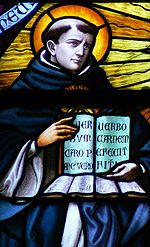
He was born around 1100 in English Salisbury, and he went to study in Paris — to the place where, in those days, the heart of European thought was beating. Among his teachers was Peter Abelard, and all his life he preserved a grateful memory of those lessons. "Kneeling, I received from him the first rudiments of the logical art, and I greedily drank in everything that came from his lips," he recalled in his old age. From that school he carried away the chief conviction that he would bear through all his works: all knowledge is limited, but knowing is boundless. Every text is finite, every thought of ours is partial — yet a human being can know without end, for the fullness of truth lies in God alone.
A great admirer of Cicero and Aristotle, he did not remain a philosopher of the study. Life threw him into the very thick of the struggle for power that was shaking the whole Western world — the struggle between emperors and popes over whose word stood higher. Returning to England, he became secretary to the Archbishop of Canterbury, whom he had known earlier as a brilliant royal chancellor and who, on taking holy office, suddenly turned from a lover of feasts into a stern defender of the Church. When the archbishop was killed on the steps of the altar in 1170, his secretary fled to France. He spent his last ten years there, and four years before his death he became Bishop of Chartres — the very school with which the philosophical flowering of the age had once begun.
The bitter experience of service at court forged him into a political thinker. Society, he taught, is like a living creature: it has a soul and a body. The soul is the Church, the body is civil society, and civil power must be subordinate to spiritual power, with God standing as guarantor of the whole order. But society, like a person, can fall ill: if the Church ceases to obey God and begins to live for itself, becoming the handmaid of the king, society becomes mentally sick. The health of the whole rests not on force but on fidelity to a higher order — and this thought sounded bold and unsettling for its time.
Hence his teaching on law and the tyrant. Law is law only when it embodies the will to justice and truth; if it fails to embody this, it is an empty form cloaking arbitrariness and partiality. The ruler is not above the law: it is not he who makes the law, but the law that justifies the ruler. A sovereign who violates or lawlessly alters the law forfeits the right to be sovereign and turns into a tyrant — and such a one may be resisted, and in the extreme case even his removal is justified. Before the law all must be equal, because before God all are equal, and the law comes from God.
It is remarkable how he arrived at these conclusions. He did not proclaim them as declarations but derived them through logical reasoning, transferring into the political sphere that very dispute about the universal and the particular which so occupied the philosophers. He conceived the state just as Aristotle conceived both metaphysics and politics at once: a single principle realizes itself in a multitude of particular manifestations. And society, like the individual, only strives toward its own fullness, never attaining it on earth, yet having no right to renounce it.
For a long time he was all but forgotten — and yet he is one of those who, against the grain of the common theology, opened new paths. He carried the fire of his teacher's thought over into a doctrine of the right, dignity, and freedom of the human being, making freedom an object of philosophical reflection at a time when it was not yet customary to speak of it. In him one sees the whole spirit of his age: reason was gathering strength and extending its domains, yet did not step beyond the limits it set for itself — where logic ended, revelation began. This bequest he received from Peter Abelard and passed on to those who were building the cathedrals of medieval thought.