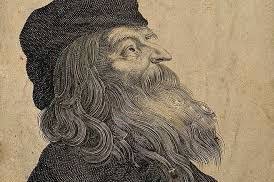
Empedocles steps onto the stage of Greek thought in the wake of Parmenides — and so, to understand him, one must remember what his great predecessor had proved. Parmenides made a genuine discovery: there is only being; non-being does not exist and cannot exist, for one can think only of what is. And this means that being is whole, one, eternal, and indivisible. But here a tormenting question arises: if being is whole and unchanging, then where do all the changes, births, and deaths that we see around us every day come from? It is precisely this question that Empedocles sets out to answer.
His answer is four roots, or elements, of being: earth, water, air, and fire. Where the earlier sages sought a single first principle — water for Thales, fire for Heraclitus — Empedocles took four. Being, meanwhile, remains whole and unchanging as beingness itself: it always is, it neither comes to be nor passes away. But within itself it lives, moves, and continually changes its appearance — it is the four elements passing into one another, combining and scattering apart again. In this way he manages to preserve the eternal, single being of Parmenides while also explaining the mobility of the visible world.
These transformations are set in motion by two great forces. The first is Love: it joins everything together, and its ultimate form is the Sphere, that rounded, perfect, whole being so beloved of the Greeks, where all is fused into one. The second is Strife, or Hatred: it separates everything, and its ultimate form is chaos, complete crumbling and dissolution. The world lives by a pulsation between Sphere and chaos, between love and strife, and these feelings, according to Empedocles, belong not to man alone but to all that exists.
Empedocles was at the same time a mystic. He believed there is a certain divine perfection where there is no force of strife at all, where absolute love alone abides. And this perfection lies not somewhere outside but within that same single being, as its highest region, to which one may ascend.
To ascend — because, following Pythagoras, Empedocles taught the transmigration of souls. If all substances pass into one another, he reasoned, then man too is reborn after death. And where he goes depends on his ethical qualities: whoever builds his life in love rises ever higher, attains divine being, and from a man becomes a god; whoever destroys himself through strife degrades and descends into lower creatures. He set down his teaching in two works — "On Nature," about the structure of the world, and "Purifications," about how to cleanse oneself of the defilement of hatred. The most perfect of animals he held to be the lion, and of plants the laurel, for these are the highest rungs of rebirth.
Of Empedocles himself the tradition relates that he wrote of himself as one who had already become a god — and that therefore any further stay on earth had become impossible for him, and he is said, according to legend, to have thrown himself into the crater of a volcano, thus ending his earthly existence. His significance is immense: he joined cold philosophical reflection on being with the living fate of man and his salvation. Answering the riddle of Parmenides about unity and change, he laid down a path that Anaxagoras too would follow, likewise seeking how all the diversity of the world is born from unchanging being.