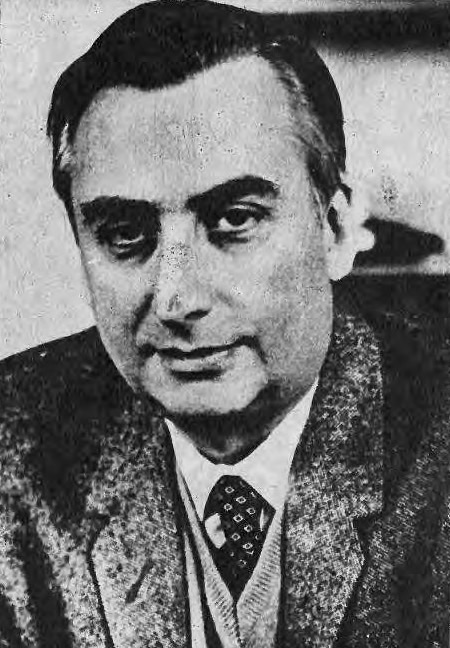
Take a magazine cover, a soap advertisement, a steak with fried potatoes, a wrestling bout in the ring. Trifles of everyday life, one might think, unworthy of a philosopher. But Roland Barthes (1915–1980) knew how to look at these trifles in such a way that beneath their innocent surface a second, hidden meaning came through. In his book "Mythologies" (1957) he showed: modernity is woven through and through of myths. Only, for him, a myth is not a tale of gods but a special language, the way by which a society passes off what is its own, particular, and historical as eternal and natural. Myth, by Barthes's famous definition, is depoliticized speech: it takes something made by people and whispers — "this is how things are of themselves, this is how it always was."
To take apart this machine of deception, Barthes turned to semiology — the science of signs, the dream of which had been bequeathed already by Saussure. "Language is everywhere," Barthes repeated, "everything is language": fashion, cuisine, urban advertising, gestures — everything speaks, everything signifies something. He learned to read culture as a text, breaking it down into signifier and signified, into the direct meaning and connotation — that halo of added meanings with which a thing becomes overgrown in society. A bottle of wine is not merely a drink but a whole clot of notions about health, friendship, the French spirit.
Barthes began still under the spell of Marxism and existentialism, and his first book was "Writing Degree Zero" (1953). There he introduced a concept he would carry through his whole life — writing. Not language in general and not individual style, but something third: a tone, a manner, a moral choice by which the writer binds himself to society and history. To write is to take a position, even when one dreams of a pure, "zero," unencumbered form. Writing, Barthes understood, is never innocent.
In 1968 he threw out a formula that became the battle cry of an entire generation — "the death of the author." We are accustomed to explain a book through its creator: what he meant to say, what he lived through, what he had in mind. Barthes overturned the board. A text, he asserted, is born of writing itself, not of the confession of an authorial "I"; it is woven of countless quotations, echoes of other people's speech, and unity is given to it not by the one who writes but by the one who reads. To dethrone the author is to liberate the reader, to hand him power over meaning. In this Barthes converged with his contemporaries: with Michel Foucault, who was also unsettling the figure of the author, and with Jacques Derrida, for whom the text always outgrew its creator.
The rigorous structuralist lived side by side in Barthes with a man of the senses, and the later books — "S/Z" (1970), "The Pleasure of the Text" (1973) — turned from cold analysis toward enjoyment. He distinguished the work and the text: the work is a finished thing, completed, having taken its place on the shelf; the text, on the other hand, is a living, rebellious, polysemous movement that does not fit into genres and refuses to freeze. Reading ceases to be the deciphering of a single correct message and becomes a pleasure — an almost bodily joy of gliding across a multitude of meanings, a resistance to every imposed ideology.
Herein lies Barthes's gift: he gave us back a keen eye for the everyday and taught that there are no things that are "just so." Every advertisement, every fashion, every stock image insinuates something to us, and to recognize this quiet voice is already an act of freedom. Alongside the anthropology of Claude Lévi-Strauss, who sought structures in the myths of distant tribes, Barthes sought the same structures in the myths of his own age — and by that turned the critic from a connoisseur of the beautiful into a keen-eyed reader of the world, for whom no text is too paltry to be worth thinking about.