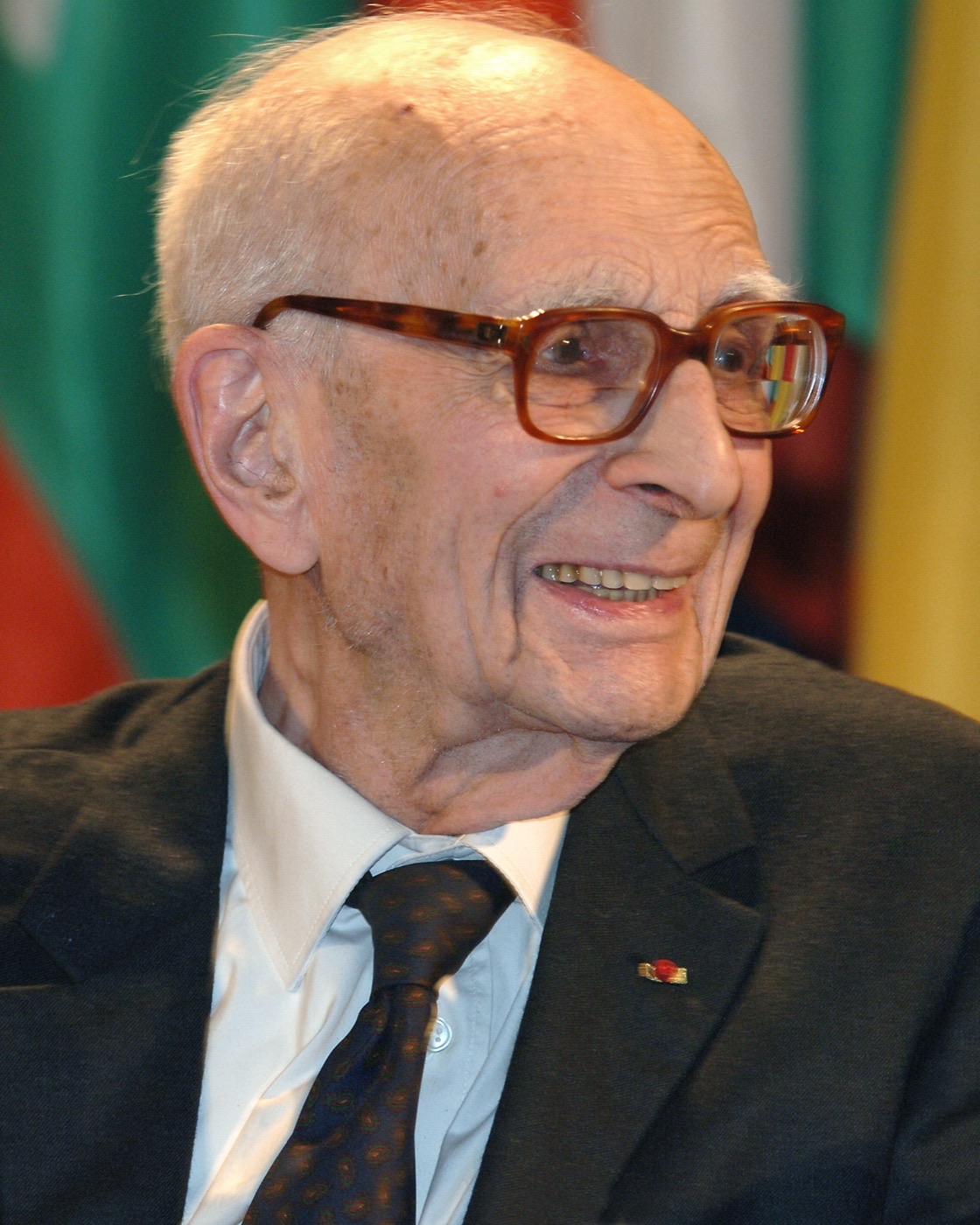
In the 1930s a young Frenchman wandered across the scorched plateaus of Brazil, sleeping in the villages of the Nambikwara Indians, recording their kinship reckonings and their legends. Later he would call the book about these travels "Tristes Tropiques" (1955) — a bitter tale of civilizations we are quick to declare "primitive." But Claude Lévi-Strauss (1908–1990) brought back from the jungle not exotic curiosities but a startling insight: the mind of the "savage" is built just like the mind of the scientist. Only the objects to which thought was applied changed — its logic itself remained one and the same through all the ages. With this quiet assertion he overturned a whole tradition that had divided humanity into "prelogical" children of nature and enlightened adults.
The key to his method he found not in the field but in linguistics. From Saussure, Trubetzkoy, and above all Roman Jakobson he glimpsed a marvellous device: to understand a language, one must move from what people are aware of to the unconscious structures that govern speech behind their backs. And what if customs, marriage, myths, cuisine, and art are built in the same way as language? So was born structural anthropology. The true meaning of a culture, Lévi-Strauss maintained, is revealed not at the level of people's consciousness but at the level of a deep structure — empty, like grammar, yet all-powerful, ordering any material that falls into it.
And this structure everywhere proved to be composed of binary oppositions — pairs of contraries on which the human mind rests: the raw and the cooked, nature and culture, one's own and the foreign, the masculine and the feminine. Reason, according to Lévi-Strauss, thinks by cleaving the world in two and then playing with the halves. It is no accident that he considered the first law to have separated culture from animal nature to be the prohibition of incest: it is precisely this that turns the biological family into a system of exchange — by giving away sisters and daughters to other clans, a person weaves society into a single fabric.
The most grandiose application of this method is myth. Lévi-Strauss devoted all four volumes of the "Mythologiques" (1964–1971) to the legends of the Indians of both Americas, analyzing them as a linguist analyzes a sentence. Myth, for him, is not naive fantasy but rigorous work of thought. It takes an agonizing contradiction — between life and death, sky and earth, nature and culture — and tries to soften it, to build a bridge, to find a mediator. That is why myths proliferate in endless layers, varying one and the same logical problem that can never be fully solved but can be replayed without end.
To show that "wild thought" is in no way poorer than scientific thought, Lévi-Strauss found a beautiful image — bricolage. The bricoleur is a jack-of-all-trades who repairs and creates from whatever is at hand: scraps, fragments, remnants of earlier work. Such is mythological thinking: it builds from ready-made images and signs, whereas the engineer-scientist works with concepts. But the difference here, Lévi-Strauss insisted, lies only in the means, not in the quality of the mind. Bricolage is just as logical and just as real — it merely speaks the language of sensory images.
His own position he called "Kantianism without a transcendental subject," and he dreamed of restoring the unity of the sensory and the rational lost by cold European civilization. His influence is immense: together with Roland Barthes and Michel Foucault he made "structure" the watchword of an entire epoch, and his attention to the hidden mechanisms of thought echoes the discoveries of Sigmund Freud. Herein lies his gift to us: Lévi-Strauss restored dignity to those once haughtily called "savages," and showed that beneath the motley diversity of human cultures beats one and the same mind — kindred to ours, like a distant but recognizable voice.