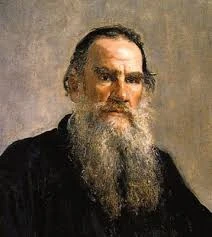
Leo Tolstoy lived eighty-two years, wrote War and Peace and Anna Karenina, and then renounced them as vanity and began to preach the simple life. At eighty-two he left home in secret — away from family, from property, from everything — and died at the railway station of Astapovo, in the stationmaster's house, surrounded by journalists.
He was born in 1828 at Yasnaya Polyana. He lost his parents early and was brought up by aunts. The student years were carousing, cards, hunting; then the Caucasus, and the Crimean War. The Sevastopol Sketches made him famous — by truth, not by pathos.
War and Peace took seven years to write: twelve hundred pages, more than five hundred characters, the year 1812 and an entire age. Anna Karenina is about how society kills a woman who has dared to live in her own way. Dostoevsky's verdict: “Beyond compare.”
After the spiritual crisis of the 1870s Tolstoy rejected the Church, the state, property, meat, sex, art — everything except the commandments of Christ taken literally. The Church excommunicated him. His followers built “Tolstoyism.” He himself said he had not yet learned to live as he taught. He left home in October 1910 and died ten days later.