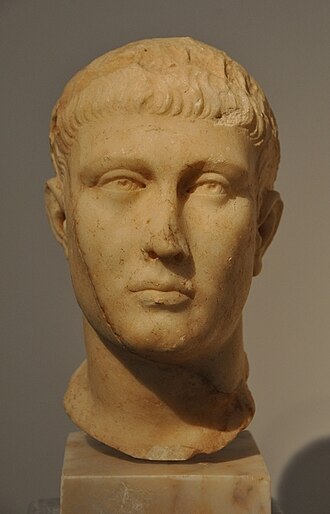
Theodosius was born around 347 in the Spanish town of Cauca, into the family of the general Theodosius the Elder — one of the most successful commanders of the emperor Valentinian I. As a boy he saw his father triumphant: the elder Theodosius put down revolts in Britain and Africa, while the son served under his command on the Danube from his youth. But in the mid-370s the father's career came to an abrupt end — he was executed under circumstances that contemporaries preferred not to explain. The young Theodosius withdrew for several years to his Spanish estates, far from the court.
A catastrophe forced his return. In 378, at Adrianople, the Goths shattered the Eastern Roman army and killed the emperor Valens — Rome had not lost so many soldiers in a single battle within the long memory of its history. The emperor Gratian, left at the head of the West, needed a man capable of holding the crumbling East. The choice fell on the son of the executed general: on 19 January 379 Theodosius was proclaimed Augustus of the East. The first years of his reign he spent in negotiations and wars with the Goths, and in the end settled them on the lands of the empire as federates, bound to serve in its army.
In the winter of 380 Theodosius fell gravely ill at Thessalonica and, like many Christians of the time, received baptism only in the face of death. Having recovered, on 27 February he issued an edict addressed to the inhabitants of Constantinople: all the empire's subjects were obliged to profess the faith as the bishops of Rome and Alexandria kept it, and the law henceforth branded all other teachings as the "madness" of their adherents. Thus Nicene Christianity became for the first time in history not merely a permitted religion but the sole lawful religion of the state.
A year later, in 381, a council gathered at Constantinople which confirmed the Nicene Creed and completed the work on the dogma of the Trinity. The teaching of Arius, which had split the church for decades, was officially rejected as a heresy. The dispute for which Athanasius of Alexandria had earlier paid in exiles and banishments was settled under Theodosius not only theologically but by the law of the state.
Power over faith did not, however, mean power over conscience. In 390, after the troops of Theodosius brutally suppressed a revolt in Thessalonica, the bishop of Milan denied the emperor communion until he should perform public penance. For several months Theodosius stood in the church on the same footing as the penitent laity before he was admitted back to the altar. This scene long served as a model: even the emperor answers for his deeds before the Church, and not only before the law that he himself issues.
In his last years Theodosius carried the matter through to the end: the edicts of 391 and 392 forbade all pagan rites — from household sacrifices to public festivals — throughout the empire, from Britain to Egypt. Temples were closed, colleges of priests that had existed for centuries were disbanded. Pagan Rome, as it had been known for centuries before Theodosius, ceased to exist as a state religion — and was never restored.
He had no shortage of military opponents: Theodosius twice defeated usurpers who laid claim to the western throne — Magnus Maximus in 388 and Eugenius in 394. The second victory he had no time to make use of: a few months later, on 17 January 395, Theodosius died in Milan. The empire was divided between his sons — Arcadius received the East with its capital at Constantinople, Honorius the West. A single Roman Empire existed no longer: Theodosius was the last to rule it whole.