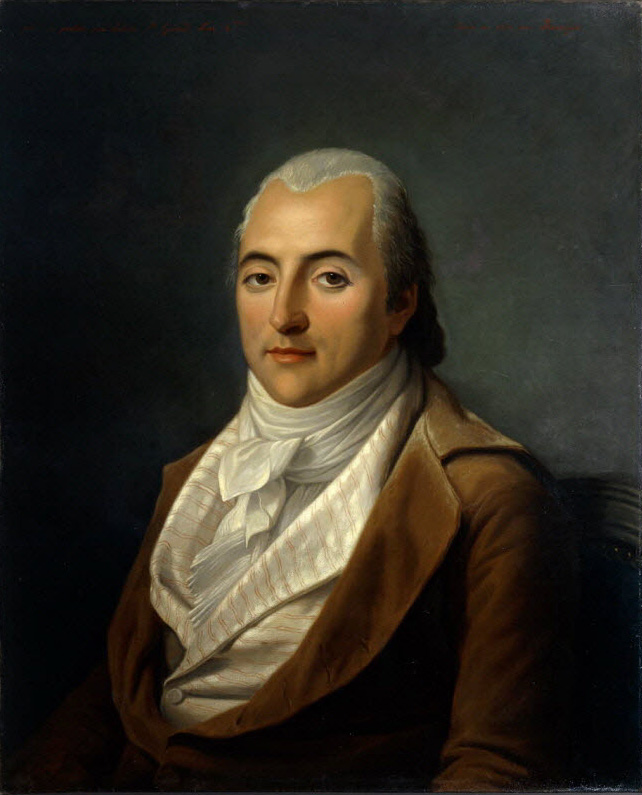
France had already lived through a revolution, an empire and the return of the Bourbons, and her thinkers were ever less stirred by the idea of God — its place had been taken by the idea of social order. Here a special place belongs to Claude Henri de Saint-Simon — a man many of whose ideas entered modern life, sometimes by a roundabout route, through Karl Marx. His writings — "Letters of an Inhabitant of Geneva to His Contemporaries," his works on the transformation of European society, on industry, and finally "The New Christianity" (1825) — remain genuinely interesting.
His secretary and assistant was Auguste Comte, the future founder of positivism — and this kinship of thought was no accident. Saint-Simon advanced an idea of progress that was not linear but complex. Development, he held, passes through two alternating phases: the organic, when the inner logic of a society reproduces itself ever more perfectly, and the critical, when a society arrives at the negation of its own foundations and creates new ones. Thus the organic order of the Middle Ages was subjected to the crisis of the Reformation and the Enlightenment. This scheme was later deeply absorbed by Marx.
The new organic order, in his conception, would be built on the positive sciences. Spiritual authority would pass to men of science, able to predict events, and temporal power to the industrialists, those who feed the majority by peaceful labour. "Politics is a science," he wrote; in that age of the tumultuous growth of the sciences and technology, the very word science rang out like an absolute, and society was quite literally captivated by it.
His parable is famous. If France were to lose its three thousand best officials, bishops and administrators, the state would replace them with new ones without difficulty. But the loss of the three thousand ablest scholars, artists and inventors would spell for it utter ruin and subjugation to other nations — until "the head grew back." It is not production that is valuable in itself, he maintained, but intelligent people: scholars, engineers, philosophers, artists — those who created the very cultural sound with which the world entered the new age.
In this lies his "new Christianity" as well. Being neither an atheist nor a fanatic of belief, he said that the divine essence of Christianity lies in letting the greatest part of human capacities come to fruition; the Church's task is to bring man to fulfilment. He was a singer of human gifts and believed that in each person — even in a peasant or a worker at a steam mill — lie enormous capacities. "Man is not a function; man is a whole world," and society is obliged to unfold that world within him.
Out of this grew the idea that transformed France and Germany in the second half of the century — the cult of education and the school. To him too belong words that others later memorised as their own: "from each according to his abilities, to each according to his needs" — a formula in which the abilities must be developed in everyone, and what a person receives must be what he needs. The design was of the noblest and most deeply humane kind.
History, however, did not confirm his bright faith: the most educated peoples proved capable of the greatest baseness as well. And yet Saint-Simon's significance is immense. He was among the first to see in labour, science and the dignity of the person the foundation of the future order; and today's social state of the northern, humane type has far more in common with his dream than with the rigid model of his heirs. He remains a bridge from faith in God to faith in man — and a warning of how easily the second turns into utopia.