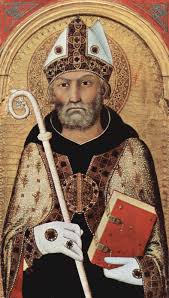
The thirteenth century was for Europe a time of remarkable ascent: Gothic cathedrals rose up, their harmony in stone born without cranes, by sheer strain of spirit alone; the first universities north of the Alps were opening; the very habit of rigorous reasoning was taking shape. It was in this age, among the first generation of the new learned monasticism, that there appeared a figure whom his contemporaries revered as scarcely less than an all-encompassing master of knowledge — a bishop, preacher, and teacher whose name became synonymous with learning. He was called "the Great" even in his lifetime, and not for any title, but for the breadth of a mind that seemed to embrace the whole of creation at once.
His curiosity knew no bounds. In those years science and "white magic" seemed almost the same undertaking: one could study the transformation of one substance into another, observe how metal turns to vapor — and in the very same breath seek the philosopher's stone. Albert the Great studied the little eight-legged red spider with the same delight with which he traced the transformations of matter. And in this he saw no sin: to examine the world with reason is to study divine creation, and that creation lies open to anyone possessed of a mind — to Christian and pagan alike. In this passion for experience there already showed a first step toward the future positive science.
But his principal contribution was of another kind. He was, perhaps, the first among the great thinkers to draw a precise boundary between philosophy and theology. Philosophy, he said, studies things "in themselves" — the eternal order of the world, the relations among things, including God, whose existence is derived by logical argument, as the ancients did. Theology, however, takes the same things "in their good" — not as they are in themselves, but as God conceived them, wherein lies their calling and meaning. This cannot be grasped by reason alone — here a gift from above is required.
Hence his five distinctions. Philosophy examines everything, from the humblest insect to God, by the light of reason; theology stands above reason — it is lumen infusum, an infused inner light that illumines apart from argument. Philosophy proceeds from below upward, from the created world to the Creator; theology, from above downward. Reason knows that God is, but what He is — only faith knows. And finally: philosophy is the theoretical construction of arguments, while the highest knowledge of God is closer to intuitive experience. Yet he insisted: everything that can be traversed by reason must be traversed by reason, or else reason will wither.
He was the teacher of Thomas Aquinas — that silent pupil whom his fellow students nicknamed the "Dumb Ox" for his reluctance to argue. Having heard his brief remarks, the master foretold that this silent one would one day bellow so loudly that the whole world would hear him. In the very structure of his own thought there already lay the reliance on reason that his pupil would go on to develop: Aristotle explored the lower world of science, while Augustine disclosed the higher reason and wisdom — and the teacher could join both in a single breath.
His significance lies in this: that he legitimized the investigation of nature by reason as an occupation pleasing to God and worthy of pursuit, not contrary to faith but merely different in its object. He cleared the ground both for the future science that studies the inner connections of the world, and for theology, which speaks of meaning and design. This bridge, thrown between experience and revelation, his pupil would turn into a well-ordered edifice — but the first stone was laid by the teacher, for whom to study a little spider and to meditate on God were one and the same act of love for truth.