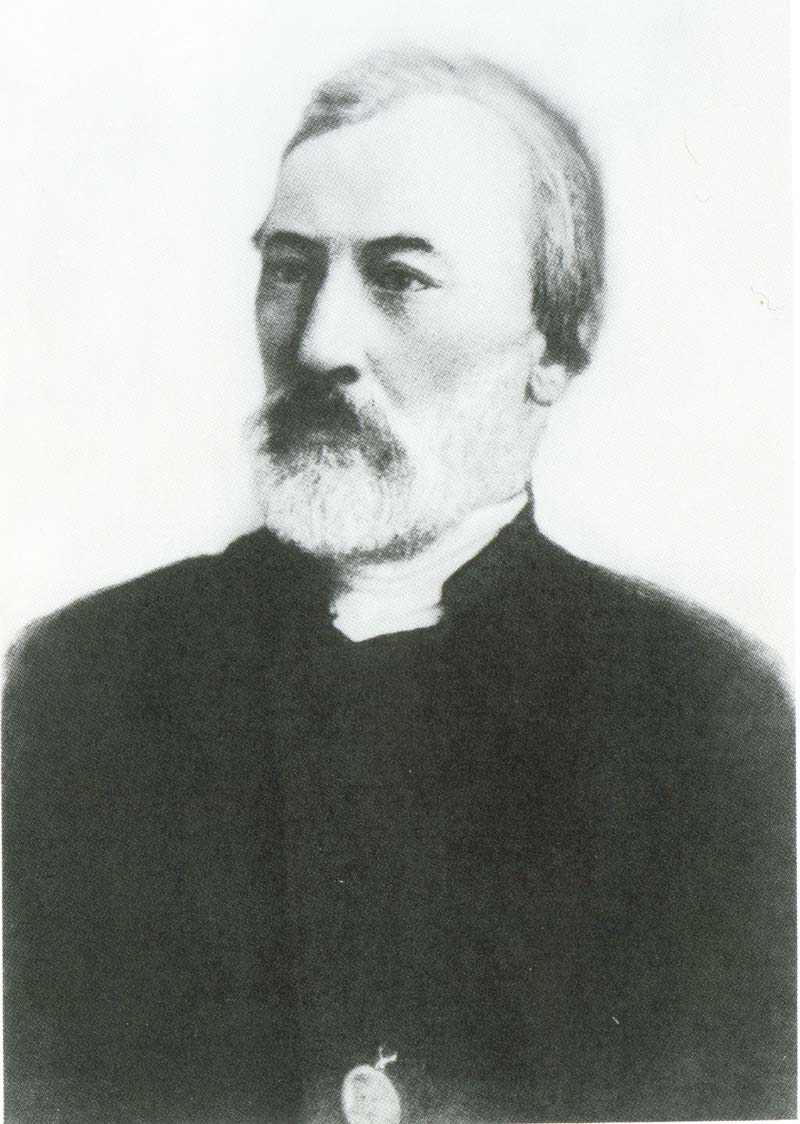
Konstantin Leontiev is one of the loneliest and most fearless of Russian minds, a thinker often called the Russian double of Friedrich Nietzsche. And the resemblance is no accident: both felt, with equal sharpness, the coming of a new, leveling age, and both refused to accept it as progress. But Leontiev arrived at his diagnosis on his own, out of his own contemplation of history and culture.
At the foundation of his view lies a law by which everything in the world lives — peoples, cultures, civilizations. First comes primary simplicity, youth and undividedness. Then the highest point, flourishing complexity: the season when life attains fullness, a wealth of forms, vivid diversity, and inner tension. And finally, decline — secondary simplification through mingling, when everything is smoothed over, blended together, loses its outlines, and fades away.
The world of his own day Leontiev saw precisely at this descending stage. Everywhere — bourgeois life, mediocrity, the erasing of distinctions; nowhere any flowering. Equality, which the age proclaimed as its summit, was to him a sign of exhaustion and decay — the triumph of the average man, who had lost the will to height and beauty.
Hence his open, defiant aestheticism. Leontiev made the measure of life not utility or well-being but beauty — force, variety, the flourishing fullness of being. A civilization that strives only for comfort and equality seemed to him beautiful and empty at once: it buys peace at the price of extinction. In this he was sharp and merciless toward his century, as few of his contemporaries were.
And yet his path ended not in proud solitude but in humility. In his last years Leontiev took monastic vows at the Optina Hermitage, becoming a spiritual son of the elders there. The aesthete and preacher of force ended his life as a monk — and this lends his fate a particular depth, setting it apart from the tragedy of Nietzsche, with whom he is so often paired.
Leontiev's significance lies in his aesthetic view of history, where beauty becomes the measure of vital force, and the fading of distinctions a sign of the end. Beside the religious searchings of Vladimir Solovyov and the later thought of Nikolai Berdyaev, his voice sounds like an anxious warning: a culture is alive as long as it holds complexity and flowering, and dies the moment it consents to a gray equilibrium.