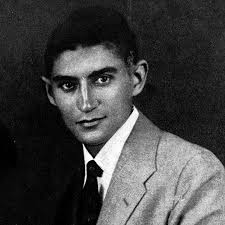
Franz Kafka published almost nothing in his lifetime and asked his friend to burn his manuscripts after his death. Max Brod disobeyed. It remains one of the most consequential acts of disobedience in the history of literature.
Kafka was born in 1883 in Prague, into a Jewish family. He spoke German in a Czech city, was a Jew in an antisemitic milieu, and was a writer while earning his living as a lawyer for an insurance company. Each of these existences was at once his essence and his cage.
His father was domineering and loud; Kafka was quiet and crushed. He wrote him a letter of a hundred pages explaining how the man had broken him. The letter never reached its addressee — his mother intercepted it. But that despair became The Metamorphosis, The Trial, The Castle: stories of people guilty of no one knows what, judged by no one knows whom, and unable to get out.
He died in 1924 of tuberculosis of the larynx — toward the end he could not eat. He was forty-one. The Trial appeared posthumously in 1925. Twentieth-century readers recognized in it something familiar — and the word "Kafkaesque" entered every language.