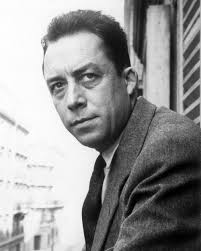
Albert Camus won the Nobel Prize at forty-four and died in a car crash three years later. In the pocket of his coat was an unused railway ticket: at the last moment he had changed his mind and gotten into a friend's car.
He was born in 1913 in Algeria, into a poor family. His father was killed at the Marne before Albert was a year old; his mother, half-deaf and nearly mute, worked as a cleaning woman. A primary-school teacher, Louis Germain, secured the boy a scholarship — without it he would never have finished the lycée. Half a century later Camus dedicated his Nobel address to him.
The Stranger (1942): a man kills on a beach and cannot explain why. The Myth of Sisyphus (1942): one must imagine Sisyphus happy. The Plague (1947): how to act when evil is simply a disease, without meaning and without justice.
He quarreled with Sartre over communism — and lost the argument in his lifetime. Then he turned out to have been right.