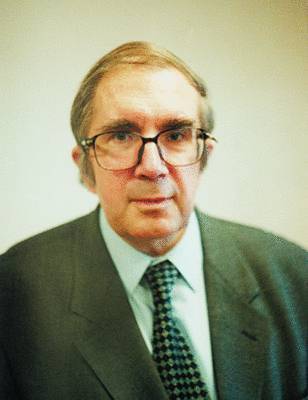
In the late-Soviet years his lectures drew crowds like concerts. Sergei Sergeyevich Averintsev (born 1937) could speak of Byzantine hymn-writers and Syriac poets in such a way that his listeners felt the subject was not dusty antiquity but the fate of the word — and therefore of themselves. A philologist, a scholar of culture, a philosopher and an academician, he almost single-handedly opened for the Russian reader a vast, forgotten continent — the literature of the age when Antiquity was dying and the Middle Ages were being born.
A graduate of the philology faculty of Moscow University, who worked for more than twenty years at the Institute of World Literature, Averintsev chose as his life's theme the moment least comfortable for a historian — the transition from Antiquity to the Middle Ages. An epoch long regarded as decline, a time of barbarism and the corruption of taste. In it he saw not disintegration but the birth of a new language of culture. His central book, The Poetics of Early Byzantine Literature (1977), still reads today as a revelation: beneath the outward "ornateness" of late-antique texts he heard a deep inner logic.
The heart of his method was what he called the poetics of the displaced word. When the accustomed social and spiritual order collapses, the word too is shifted from its place: it changes weight, gathers new meanings, begins to shimmer. Poetics for Averintsev was not decoration nor a play of devices but a response to a social upheaval, a sensitive seismograph of the age. From the way a phrase of an early Byzantine rhetorician or a hymn-writer's song was built, he could read a whole way of feeling the world — the fear and the hope of people whose ground was slipping from beneath their feet.
Averintsev gave special attention to the meeting of the two beginnings on which all European culture rests — the Biblical and the Hellenic. The Greek word strives toward clear form, toward measure and completeness; the Biblical word toward covenant, promise, a voice addressed to man personally. Early Byzantine literature was the very crucible in which these two elements were fused. Here his philology imperceptibly became a theology of culture, for it was precisely in this age that the Fathers he loved were writing — such as Gregory the Theologian, poet and seer of mysteries in one.
Behind all this stood a large, essentially moral thought about the word and meaning. Averintsev was convinced that the word is responsible: it preserves memory, holds the connection of the ages, keeps meaning from scattering. By returning to the Russian reader Byzantium, the Latin and the Syriac past, translating hymns and commenting on parables, he restored a broken thread — and thereby argued against an age inclined to forgetfulness. Not for nothing did he write both subtle essays on the myths of the world's peoples and studies of Byzantine culture: everywhere he sought how meaning is embodied in the word and outlives the centuries.
Averintsev's significance lies in this restored dignity of transitional, "dark" ages, and in the very image of the scholar as a keeper of meaning. He showed that philology can be a form of spiritual labor, and the attentive reading of an ancient text a school of responsibility before the word. His reflections on the Logos of early Byzantium continued an ancient Russian theme, reaching back to the teaching on the Word in Sergei Trubetskoy: that at the foundation of the world and of culture lies a rational meaning which man is given not to invent but to hear and to keep.