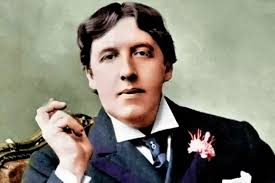
His real name was Igor Vasilyevich Lotaryov (1887–1941). He took the pen name "Severyanin" — "the Northerner" — from the place of his childhood: the family lived in the north, and his father was a military man. He began as a self-published poet — between 1904 and 1912 he issued around eighty slim little pamphlets, in print runs of one or two hundred copies. Almost no one read them, until in 1910 Leo Tolstoy said in an interview that Severyanin's verses were evidence of the decay of taste. Tolstoy meant to condemn. What resulted was advertising.
The movement Severyanin founded was called Ego-Futurism. Its 1911 manifesto proclaimed the "I" the centre of the world and of poetry: not the people, not history, not Russia — the I. "I am the genius Igor-Severyanin" is the opening line of one of his poems. It sounded audacious in an age when everyone was proclaiming the collective. Readers did not know whether to laugh or to admire. More often it came out as both at once.
"The Thunder-Seething Cup" (1913) — his first full collection — went through ten editions in a few months. A record for Russian poetry of the time. Severyanin declaimed his verses in a chant, almost like an aria — and the hall responded at once. His evenings drew people who normally never attend poetry readings: fashionable women, officers, students. A vote held in February 1913 gave him the crown of "King of Poets" — ahead of Mayakovsky (second) and Balmont (third).
In the autumn of 1917 he went on tour to Estonia. The revolution happened while he was there. In 1918 Estonia proclaimed its independence and closed the border. Severyanin found himself cut off — and he stayed. Not out of political conviction, not out of protest: he simply did not make it back in time. He settled in the fishing village of Toila on the shore of the Gulf of Finland. He fished, wrote, and performed in small towns — now without the applause of the capital.
In the 1920s he still published — in émigré journals and within Estonia. He translated Estonian poetry into Russian. But "The Thunder-Seething Cup" remained his summit, and everyone understood this, including himself. In the 1930s the verses came harder, the money ran out, the fame dissolved. Estonia was a small country, and its Russian-speaking audience could not sustain a "king".
In 1940 Soviet troops entered Estonia. In 1941, German troops. Severyanin died in December 1941 in occupied Tallinn. He was fifty-four. On his grave is an inscription from one of his own poems: "How lovely, how fresh will be the roses / My country casts into my coffin."
The paradox of Severyanin is that he was not an émigré in the ordinary sense. He did not flee, did not choose freedom over the homeland. History simply overtook him — by chance. The "King of Poets" turned into a quiet fisherman on a foreign shore not by will but by the coincidence of circumstances. It is precisely this that makes his fate especially Russian: not tragedy but mismatch.