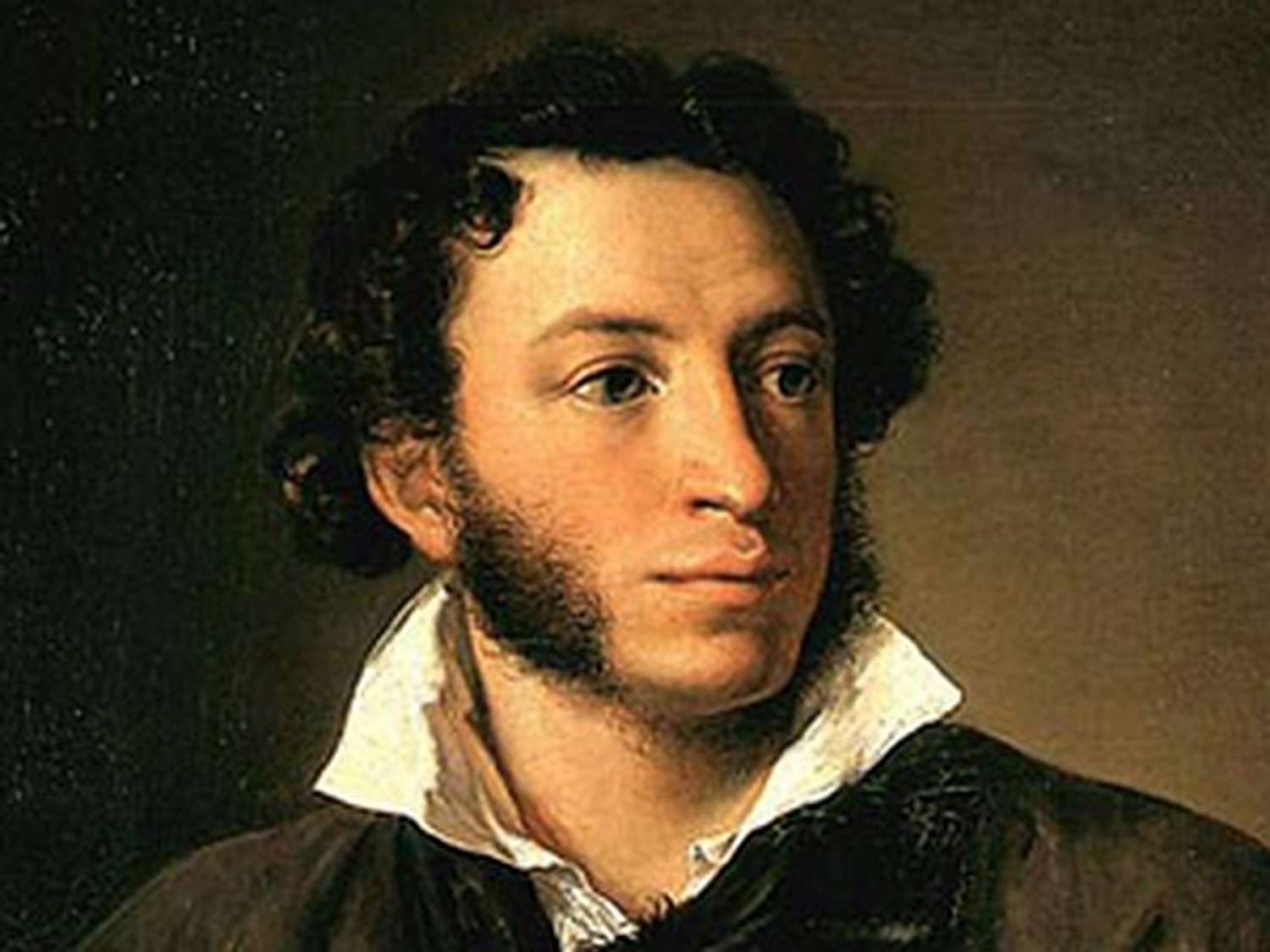
Alexander Pushkin is a name pronounced in Russia not as the name of a man but as the name of a phenomenon: "the sun of Russian poetry," "our everything." Behind the monument, though, stands a living person — impetuous, endlessly falling in love, insolent, and mortally wounded in a duel at thirty-seven over rumors touching his wife's honor.
He was born in Moscow in 1799, into a noble family with African roots: his great-grandfather had come from Ethiopia and was a personal godson of Peter the Great. The Lyceum at Tsarskoye Selo gave him lifelong friends and the reputation of a prodigy. He had written verse since childhood; by twenty he was famous.
The authorities feared him. His freedom-loving poems — "Liberty," "To Chaadaev," "The Village" — circulated in manuscript copies. Alexander I exiled him to the south, then to Mikhailovskoye, where Pushkin wrote Eugene Onegin and Boris Godunov, read through the nights, fell in love, and was bored.
Nicholas I made him a court poet — a shrewd move: keep him close, keep him watched. Pushkin felt the cage. In "The Circassian Girl," "The Prisoner," "The Bronze Horseman," he said what could not be said outright. In 1837 came the duel with d'Anthès, and two days of agony. Russia mourned him as a national catastrophe.