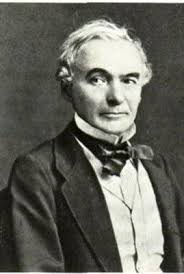
At twenty-two, Prosper Mérimée published The Theatre of Clara Gazul — a collection of plays supposedly written by a Spanish actress. The book came with a preface giving Gazul's biography and her portrait. The portrait was Mérimée himself in a woman's dress. The plays turned out to be bolder than anything a young French author could have printed under his own name: sensuality, anti-clericalism, violence — all the things a fledgling reputation usually steers clear of.
La Guzla (1827) went further. It was a collection of "translations" from the Illyrian — songs of imaginary Balkan bards with detailed ethnographic notes. Alexander Pushkin read them, was delighted, and translated several into Russian; they entered his Songs of the Western Slavs. Then Mérimée wrote him a letter of confession: there had been no bards, the whole thing was invented in Paris over a few weeks. Pushkin replied that the translations were good all the same — and kept them.
From 1833, for nearly thirty years, Mérimée held the post of Inspector General of Historical Monuments of France. That meant constant travel through the provinces: inspecting ruins, filing reports, doing battle with town councils ready to demolish a medieval church for the sake of a new market. Thanks to his efforts and his work with the architect Viollet-le-Duc, Vézelay, the Sainte-Chapelle and Carcassonne were surveyed, described and partly saved. It was an entirely different life — itinerant, paperbound, without literary glamour. And it occupied him as much as his prose did.
Mérimée's prose is a rarity in French nineteenth-century literature: short, precise texts without rhetoric. Mateo Falcone (1829) is a Corsican story about a father who shoots his son for an act of betrayal. Mérimée neither explains nor condemns — he simply tells, and that is exactly what makes the story unbearable. Carmen (1845) is the novella from which Bizet made his opera, after Mérimée's death. There is not a wasted word in it: the story is told through a narrator who hears it from José — a double filter that makes Carmen more real than if she had been described directly.
Mérimée learned Russian in order to read Pushkin in the original — one of the very few French writers of the nineteenth century who did. He translated Pushkin, Gogol, Turgenev. He and Ivan Turgenev were friends; Turgenev was one of the few Russians whom the French literary world accepted as an equal — and it was partly Mérimée who opened those doors for him.
In 1870 France was crushed at Sedan. The Second Empire collapsed in a matter of days. Mérimée died at Cannes in September of that year — by the testimony of his contemporaries, he did not survive the news of the catastrophe. He was sixty-seven.
He left no novels — only plays and novellas. Mateo Falcone, Carmen, Colomba, The Venus of Ille — in a few dozen short texts he fitted what other authors need thousands of pages for. Mérimée offered no explanations — only situations.