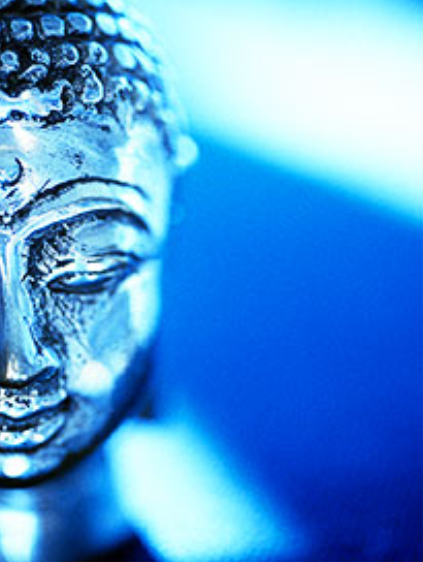
Siddhartha Gautama (c. 563–483 BC) was the son of a king of the Shakya clan who, at twenty-nine, went beyond the palace walls and saw old age, sickness, and death. It overturned everything. Six years of asceticism yielded no answer. So he sat down beneath the Bodhi tree and resolved not to rise until he understood. Toward dawn came the awakening. He became the Buddha.
His discovery was the Four Noble Truths. First: life is suffering — dukkha, dissatisfaction. Second: the cause of suffering is desire and attachment. Third: from suffering one can be freed. Fourth: there is a path — the Eightfold Path of right action, right speech, right thought.
What sets him apart from every theology is that the Buddha does not speak of God. His teaching is not a faith but a practice — psychology without metaphysics. That makes him strikingly modern: Buddhist meditation is now studied by neuroscientists. He lived in the same "Axial Age" as Socrates, Lao Tzu, and Confucius — the sixth and fifth centuries BC, when humanity, at different points of the earth at once, began asking questions about itself.