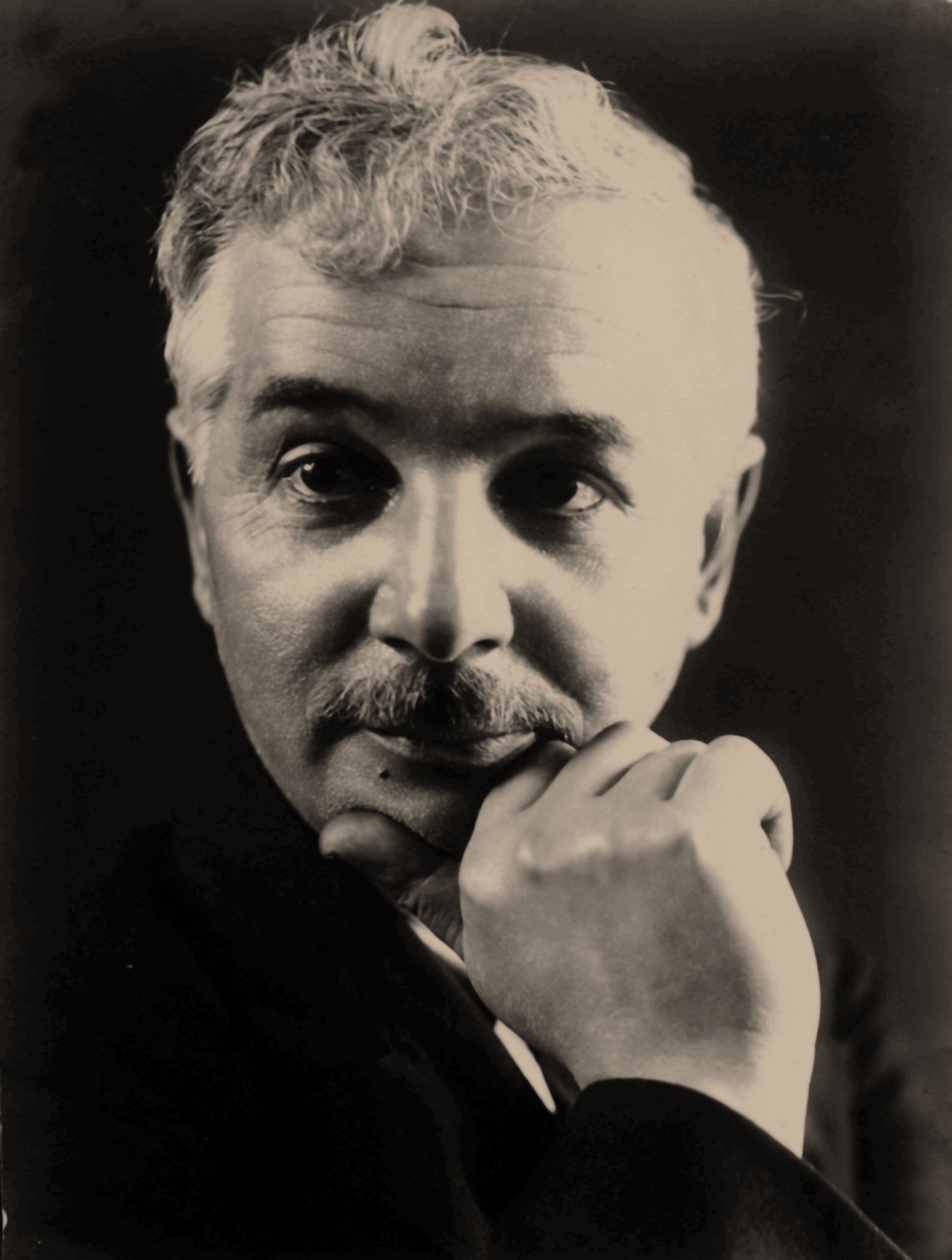
Alexander Glikberg was born in 1880 in Odessa into a Jewish family and was baptized into Orthodoxy. As a boy he ran away from home — his father was harsh — and spent several years wandering, until a newspaper item about a homeless boy caught the attention of a stranger, who took him into his home in Zhitomir and gave him money for an education. Years of petty clerical work and first literary attempts ended in a pen name: "Sasha Chorny" ("Black") — by one account, this was what his family had called him as a child, to distinguish him from his fair-haired brother.
In 1908 he began contributing to the St. Petersburg magazine Satirikon, and within a few months became its leading voice. His verse was sharp, precise and funny — a combination that is rare. He mocked officials, the smug bourgeois, literary posturers, right and left with equal disrespect. The collection Satires (1910) sold out instantly. Critics compared him to Nekrasov — the poet of civic protest; Chorny would probably have objected: he was a poet of contempt for vulgarity, not for power as such.
What made his satires alive? Not gloating but recognition. His characters are people neither evil nor good, but simply small: absorbed in their own comfort, blind to beauty and to another's pain. The official, the lady in a hat, the intellectual with progressive views — these are not caricatures but portraits, painted by a man who might have found himself in their place. In this self-irony lies his particular quality: he laughed from within, not from above.
After the revolution of 1917 Chorny left. First to Vilna, then Berlin, then Rome, and finally Paris, where he settled in 1924. Emigration broke many of his contemporaries or forced them to write for the drawer. Chorny responded unexpectedly: he began writing for children. The Diary of Fox Mickey (1927) — a diary kept by Mickey the fox terrier, observing people from a dog's-eye height — is still one of the finest examples of the children's literature of the Russian emigration. It has the same precision of gaze as the satires — but without the bile.
In emigration children's books provided a living — and allowed him to speak of things that could not be said otherwise: of faithfulness, the warmth of home, the right of the small person to a world of his own. Timothy the cat, Mickey the fox — the heroes of his books — live in an ordinary apartment and ask grown-ups awkward questions. In the Russia of those years this would have been called "sentimental"; in emigration it sounded like nostalgia. Chorny himself called it simply: work.
On 5 July 1932, in the south of France, where he spent his last years, a neighbor's farm caught fire. Chorny helped put it out. When the flames were beaten down, he returned home — and died of a heart attack. He was fifty-two. He is buried in the Russian cemetery of Sainte-Geneviève-des-Bois near Paris — among others who left for good, not knowing it was for good. His verse from Satirikon continues to be reprinted in Russia: it has not dated, because its themes have not dated.