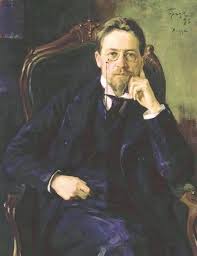
Anton Chekhov wrote four plays that changed world theater and several hundred stories, a good half of them now world classics — and he did it all in twenty years of working life, while dying of tuberculosis.
He was born in Taganrog in 1860. His grandfather had been a serf, his father a small merchant. When the father went bankrupt, the family fled to Moscow, leaving Anton behind on his own to finish school. He supported himself by tutoring and wrote comic sketches for the magazines: it was a way of feeding the family.
Medicine and literature ran in parallel. "Medicine is my lawful wife, literature my mistress," he said. The early stories are funny, light, often sad. Then come "A Dreary Story," "Ward No. 6," "The Black Monk": the darkness deepens.
"The Seagull," "Uncle Vanya," "Three Sisters," "The Cherry Orchard" — plays without villains or heroes, in which people simply cannot get through to one another. Stanislavsky staged them at the Moscow Art Theatre, at first not understanding how. Then he understood. Chekhov died in 1904 in Badenweiler — he rose, drank a glass of champagne, lay down, and died.