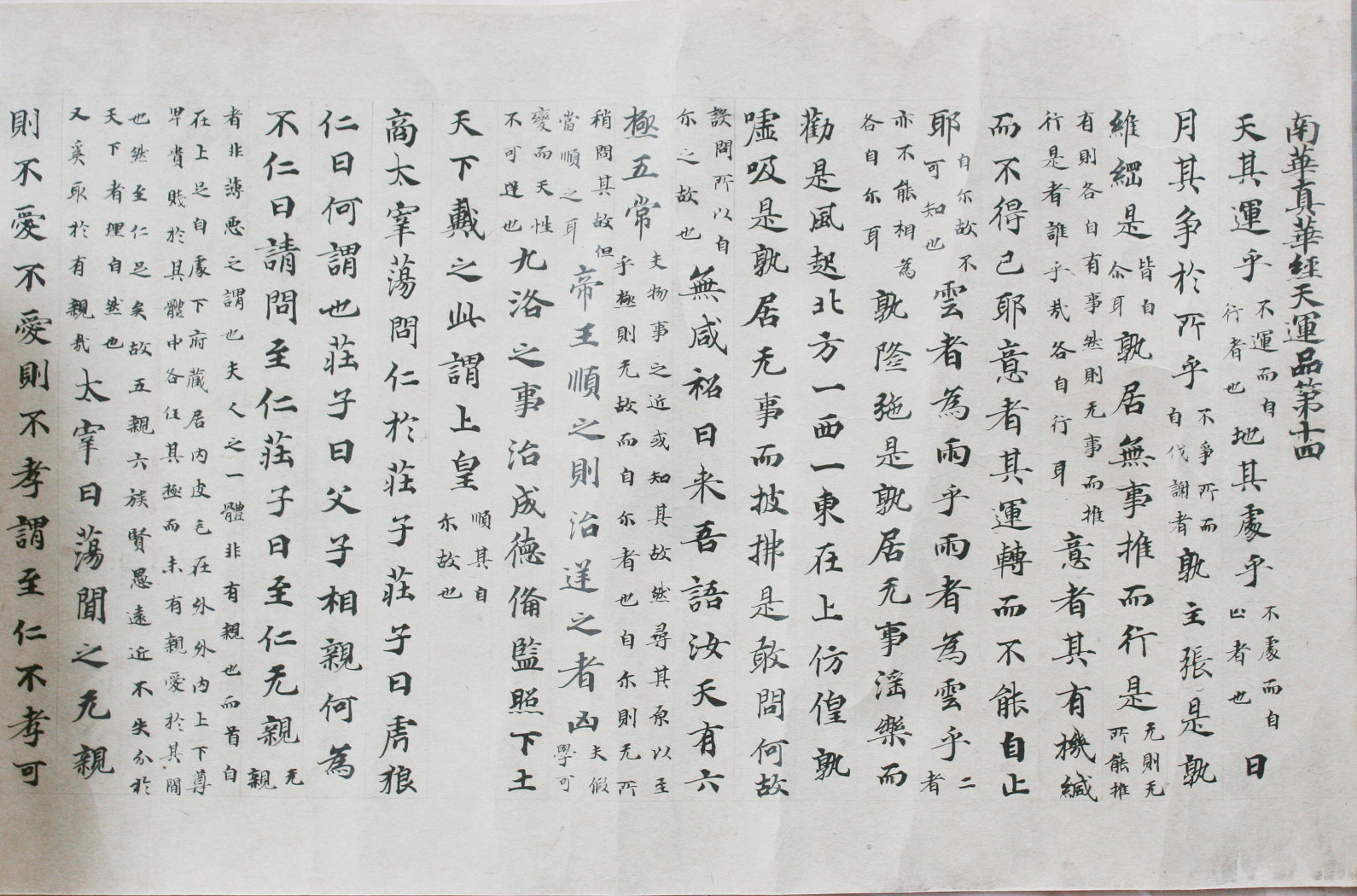
Zhuangzi (c. 369–286 BC) was the chief interpreter of Lao Tzu and one of the most original thinkers in history. He built no systems — he told stories. The most famous of them: once I dreamed I was a butterfly, flitting carefree from flower to flower. When I woke, I could not tell — am I a man who dreamed he was a butterfly, or a butterfly now dreaming it is a man? This is no poetic game: it is a question about the nature of reality and the identity of the self, one that Chinese philosophy posed two thousand years before Descartes.
Zhuangzi laughed at Confucius — at ritual, hierarchy, moral obligation. The true sage does not know he is a sage. True beauty does not know it is beautiful. His cook carved an ox so perfectly that the knife never grew dull: he moved in accord with the animal's nature, never against it. That is wu wei in action.