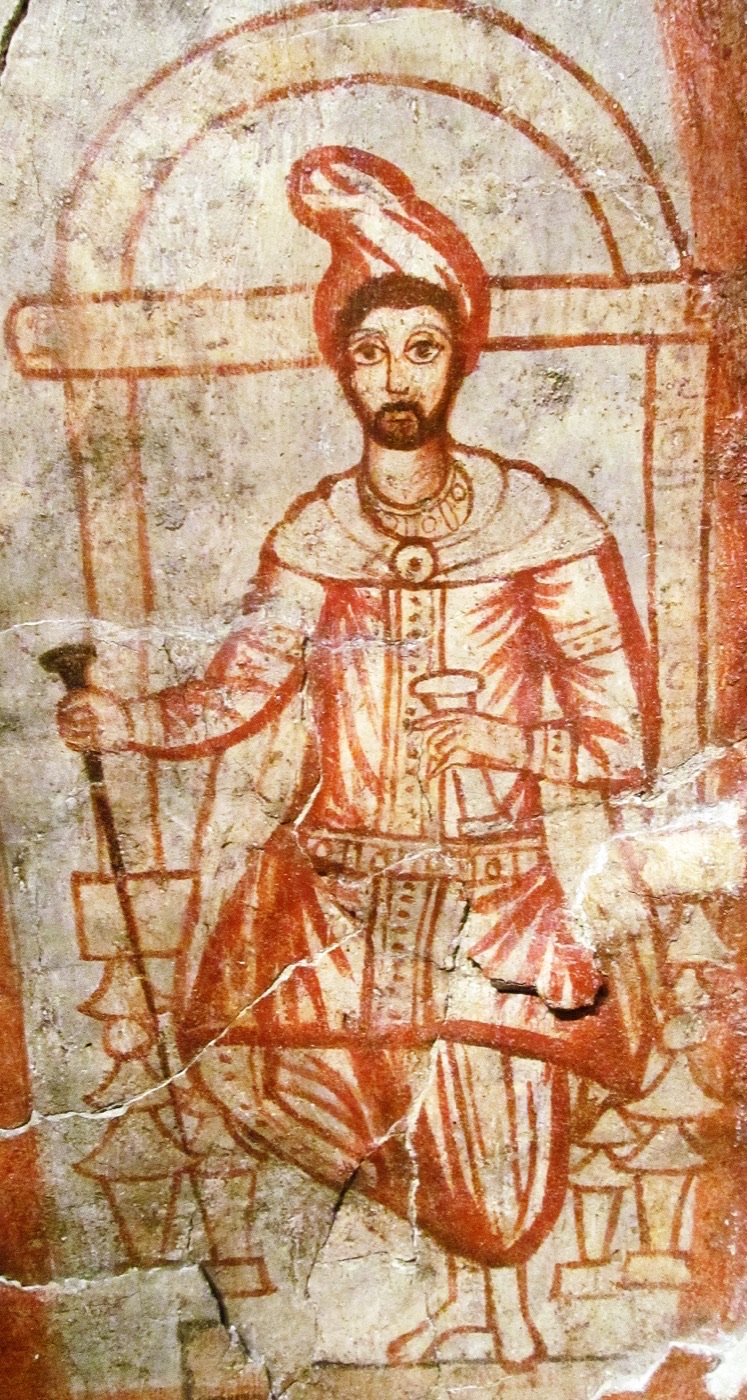
Begin with the problem of dating. When Zarathustra lived is one of the most tangled questions in Oriental studies. Zoroastrian tradition places him 258 years before Alexander — roughly 628–551 BC. Yet linguistic analysis of the Gathas, the oldest stratum of the Avesta, shows their language to be more archaic than the Achaemenid inscriptions of the sixth and fifth centuries, and close to the Vedic Sanskrit of the Rigveda. Most Iranists — Mary Boyce, Gherardo Gnoli, Almut Hintze — accordingly assign Zarathustra to the years between 1500 and 1000 BC.
The teaching of the Gathas. These seventeen hymns in Old Avestan are the only source that can be attributed to Zarathustra himself. The elaborate mythology of later Zoroastrianism is absent from them. The doctrine rests on an opposition: Asha — truth, cosmic order — against Druj, the lie, chaos. Its ethical code is a triad: humata, good thoughts; hukhta, good words; hvarshta, good deeds. The human being is free to choose between Asha and Druj — a fundamental moral autonomy without parallel in the religions of the ancient Near East of that period.
Cosmic dualism. Later Zoroastrianism developed the teaching into a full dualistic cosmology. Ahura Mazda is the creator god, source of light and order; Angra Mainyu (Ahriman) is the destroyer, who chose evil by his own free will. Two twin spirits made the primal choice: one elected Asha, the other Druj. World history is the arena of their struggle, and it has a beginning and an end. At the end of time — the Frashokereti — good will triumph definitively. This optimistic dualism differs from the Gnostic kind, in which matter is evil by nature.
The influence on the Abrahamic religions. The crucial point of contact is the Babylonian captivity (586–538 BC) and the life of the Jews under Achaemenid rule. Before the exile, Jewish texts contain virtually no developed angelology or demonology, and no notion of the resurrection of the dead; after it, all of this appears. The specific parallels: first, resurrection and the Last Judgment — Daniel 12:2 reproduces Zoroastrian eschatology almost verbatim; second, Satan as personified evil, structurally identical to Ahriman; third, guardian angels, paralleling the Zoroastrian fravashis; fourth, the hierarchy of angels — the Amesha Spentas served as the model for the archangels; fifth, messianism — the Zoroastrian Saoshyant precedes the idea of the Second Coming. There are no direct textual borrowings, but the chronology and the structural resemblance are too systematic to be coincidence, as Mary Boyce argued.
Karl Jaspers and the Axial Age. Jaspers placed Zarathustra within the Axial Age (800–200 BC) — the period in which China, India, Iran, Israel, and Greece simultaneously broke through to reflective thought, to personal responsibility before the transcendent. Zarathustra was one of the initiators of that breakthrough: the first to confront the human being with a moral choice of cosmic scale.
Nietzsche and Zarathustra. In Ecce Homo Nietzsche explained his choice of name: the historical Zarathustra was the first to make the moral distinction between good and evil the foundation of a worldview — and therefore he, of all figures, must be the one to abolish it. The self-overcoming of morality through truthfulness, the self-overcoming of the moralist into his opposite — into me — that, Nietzsche wrote, is what the name Zarathustra means in his mouth. A gesture of deep irony: the prophet who created moral dualism proclaims, in Nietzsche's book, its collapse.