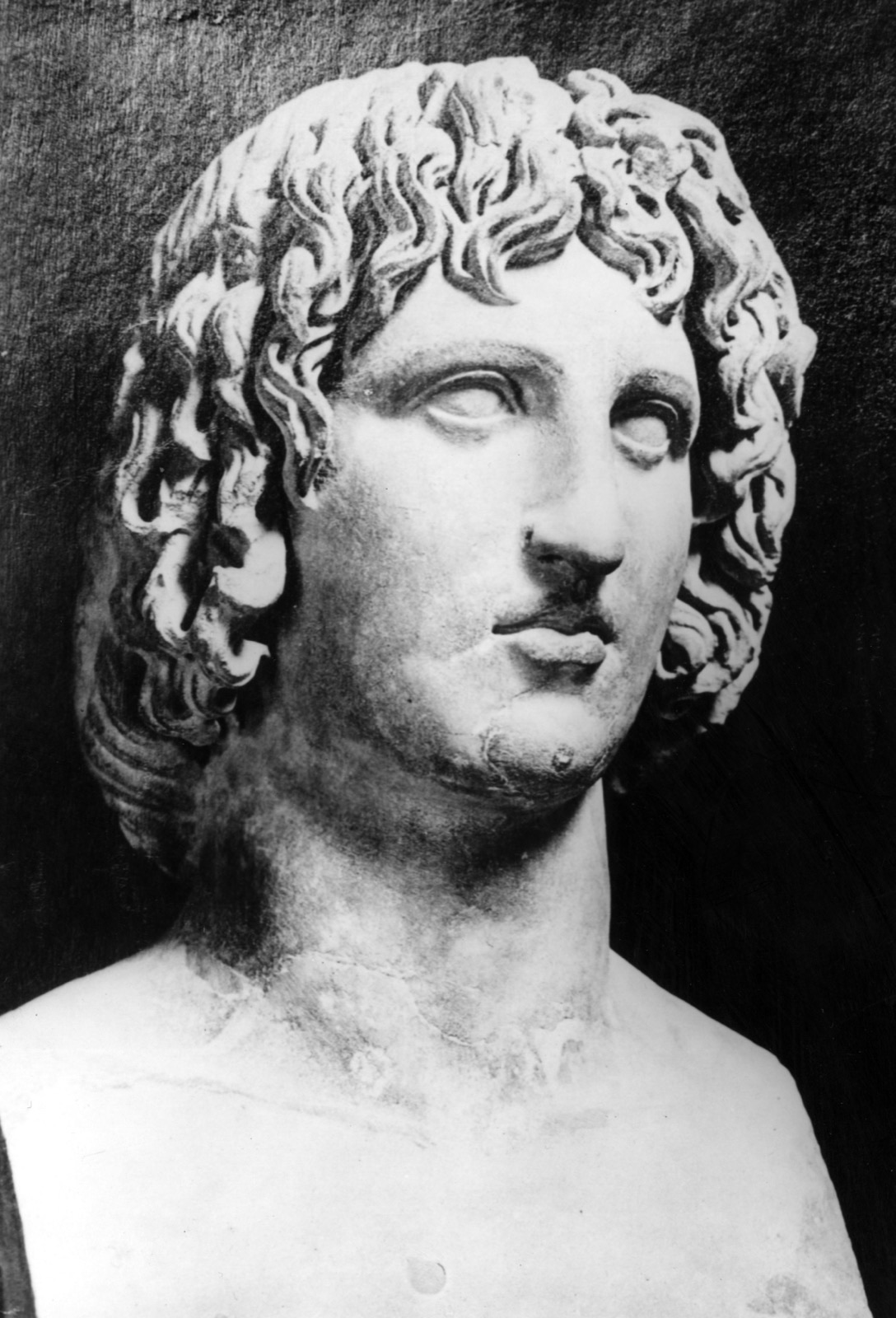
Publius Vergilius Maro was born on 15 October 70 BC near the city of Mantua. Legend has it that his mother dreamed she would bear a son destined for fame. His father owned a flourishing ceramics workshop, and the family wanted for nothing, so the boy received a good education. He attended the grammar school at Cremona and put on the toga of manhood at fifteen. Lucretius died in the year Virgil came of age, and many saw in the young poet his heir.
Later he moved to Mediolanum — the present-day Milan — and lived in Rome and Naples. He studied rhetoric, philosophy, grammar, mathematics and medicine; only oratory eluded him. At one of the schools he met Octavian Augustus, and despite the great difference in age the two remained friends for life.
Lucretius's poem "On the Nature of Things" shaped Virgil's course decisively. Before reading it he had contemplated a career in public service; afterwards he resolved to make himself a poet. In 45 BC he bought an estate near Naples, where he went on writing to the end of his days.
His first mature work, the "Bucolics," was completed in 37 BC — pastorals of shepherd life modelled on the Greek "Idylls" of Theocritus. The next, the "Georgics," was written at the bidding of one of the politicians of the day; its governing idea is that man finds his highest happiness in hard labour on the land.
Virgil's most famous poem is the "Aeneid," in which he tells of the Trojan War. He died on 21 September 19 BC at Brundisium, on the road to Rome.