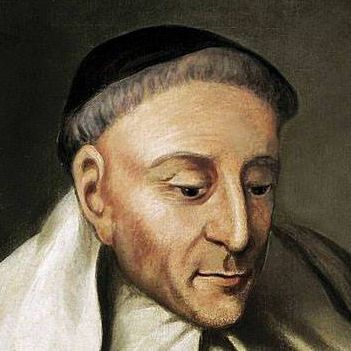
The real name of Tirso de Molina was Gabriel Téllez. He was born around 1580 in Madrid, took vows in the Order of Our Lady of Mercy (the Mercedarians), and spent most of his life between the monastic cell and the theatrical stage. This combination struck his contemporaries as strange — the theater of the Spanish Golden Age was a public and none-too-innocent enterprise. But it was precisely this that produced an author who understood the nature of evil from within two worlds at once.
"The Trickster of Seville, or the Stone Guest" appeared in print in 1630. Don Juan de Tenorio is a Sevillian nobleman who seduces women, kills their kinsmen, and when reproached for his ungodliness replies: "¡Qué largo me lo fiáis!" — which means "There's plenty of time left." In the finale he kills the old Commander, later rashly invites his stone statue to supper — and the statue comes. The handclasp of the dead man drags Don Juan down into hell, without confession and without forgiveness.
It is important to understand: Tirso's Don Juan is neither a romantic nor a victim of circumstance. Later culture would soften his image: Mozart and Da Ponte would make of him a charming libertino in the opera "Don Giovanni" (1787), Byron an ironic observer, Pushkin in "The Stone Guest" almost a poet. But in Tirso's play he is exactly what he is: a man to whom freedom is granted in full — and who systematically chooses destruction. Not out of weakness, but out of the conviction that he will have time to stop later.
The theological essence of the play lies in that "later." Catholic doctrine did not deny the possibility of repentance at the last minute, but Tirso showed that it is precisely into this trap that free will falls. Don Juan is neither an atheist nor a fool: he understands that Heaven and Hell exist. His sin is not unbelief but calculation. When the statue of the Commander clasps his hand, it clasps the hand of a man who always said, "I'll have time."
Over thirty years of work Tirso, by his own count, wrote about four hundred plays. Some eighty have come down to us. Among them are "Don Gil of the Green Breeches" (1615), where the disguises of the characters reach a mathematical complexity; and "Prudence in Woman," a historical chronicle about the regent Doña María de Molina, written against convention: an intelligent ruler as a model rather than an exception. His entire dramaturgy stands on a single question: how does free will behave under the pressure of temptation?
The figure of Don Juan proved to be a machine for generating meanings. Molière made of him a rationalist who believes in nothing but mathematics (1665); Mozart, an irresistible seducer whom the orchestra favors; Pushkin, a poet who discovers real love at the moment of his death; José Zorrilla in 1844 gave him the traits of a romantic hero and let him be saved through love. In all the versions — except the first — Don Juan grew more human. Tirso did not conceive of him that way.
The monk Téllez died in 1648 in Almazán, never knowing that he had created one of the most enduring characters in world literature. His Don Juan posed a question that four centuries have been unable to close: if free will exists and a man knows he is doing evil — what holds him back from stopping? The play's answer is simple to the point of cruelty: nothing. Only the boundary that one day arrives of its own accord.