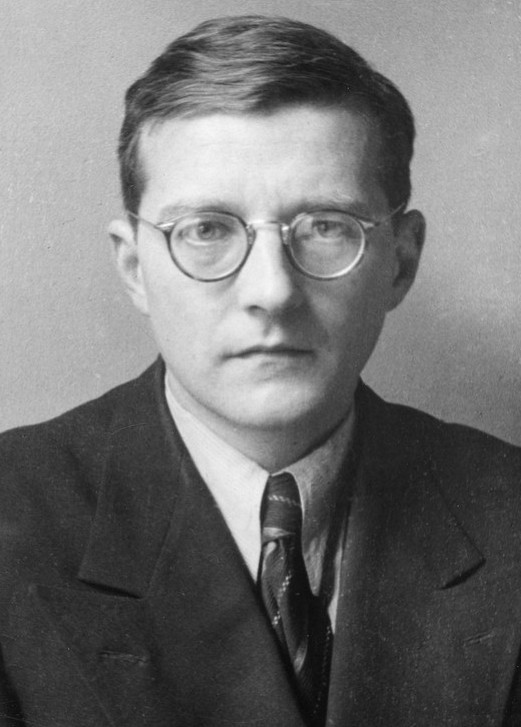
Dmitri Shostakovich lived under constant threat. Twice he was officially savaged: in 1936 Pravda ran “Muddle Instead of Music” about his opera, and for several years afterward he waited to be arrested; in 1948 came another rout, another season of fear. He wrote for the drawer, spoke at meetings, signed whatever was put in front of him — and all the while composed music that outlived it all.
He was born in Petersburg in 1906. A piano prodigy, he wrote his First Symphony at nineteen, and it was performed around the world. Then came experiment, the avant-garde, success — and the blow.
The Fifth Symphony of 1937 was written in the wake of the rout. Soviet criticism called it “an artist’s creative reply to just criticism.” What Shostakovich actually meant by it is still argued over. The music is triumphant and hollow at once, like a forced smile.
Quartets, symphonies, piano preludes — each work carries something that could not be said in words. He died in 1975, leaving fifteen symphonies and fifteen quartets: a complete anthology of fear, endurance, and bitter irony.