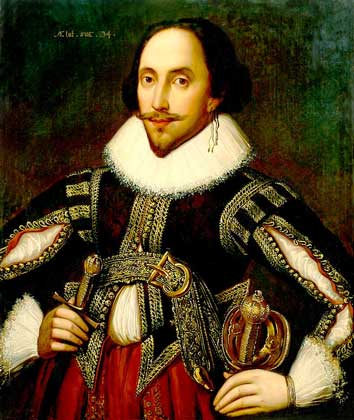
We do not know what he looked like. The portraits taken to be of him are, in all likelihood, not him. We do not know exactly what he wrote alone and what in collaboration. We do not know whether he was ever happy. Of his life a handful of official records survive: baptism, marriage, the births of his children, the purchase of a house, death. And that is all.
But his characters we know better than we know living people.
Hamlet — the man who thinks instead of acting, and suffers for it. Iago — evil without a cause, hatred as its own end. Lear — an old man who gave away all he had and found himself alone. Ophelia, Juliet, Macbeth, Falstaff — each has become an archetype that lives in us whether we like it or not.
Shakespeare was born in 1564 in Stratford-upon-Avon. His father went bankrupt when William was about sixteen. At eighteen he married Anne Hathaway, eight years his senior and already pregnant. Then he left for London — and vanished from family life for nearly twenty years. At the Globe he was at once actor, playwright and part-owner.
His plays were written fast, for a particular stage and particular actors. He gave no thought to eternity. Eternity gave thought to him.
Why is he so exact? Because he does not moralize. Hamlet is neither good nor bad — he is trapped between what he knows and what he must do. Iago never explains his hatred — which makes it the more terrifying. Shakespeare shows people as they are, not as they ought to be. That is a rarity in any age.
In 1613 he returned to Stratford. He wrote a will leaving his wife the "second-best bed." In 1616 he died. The first collected edition of his plays appeared seven years after his death — his fellow actors gathered the manuscripts.