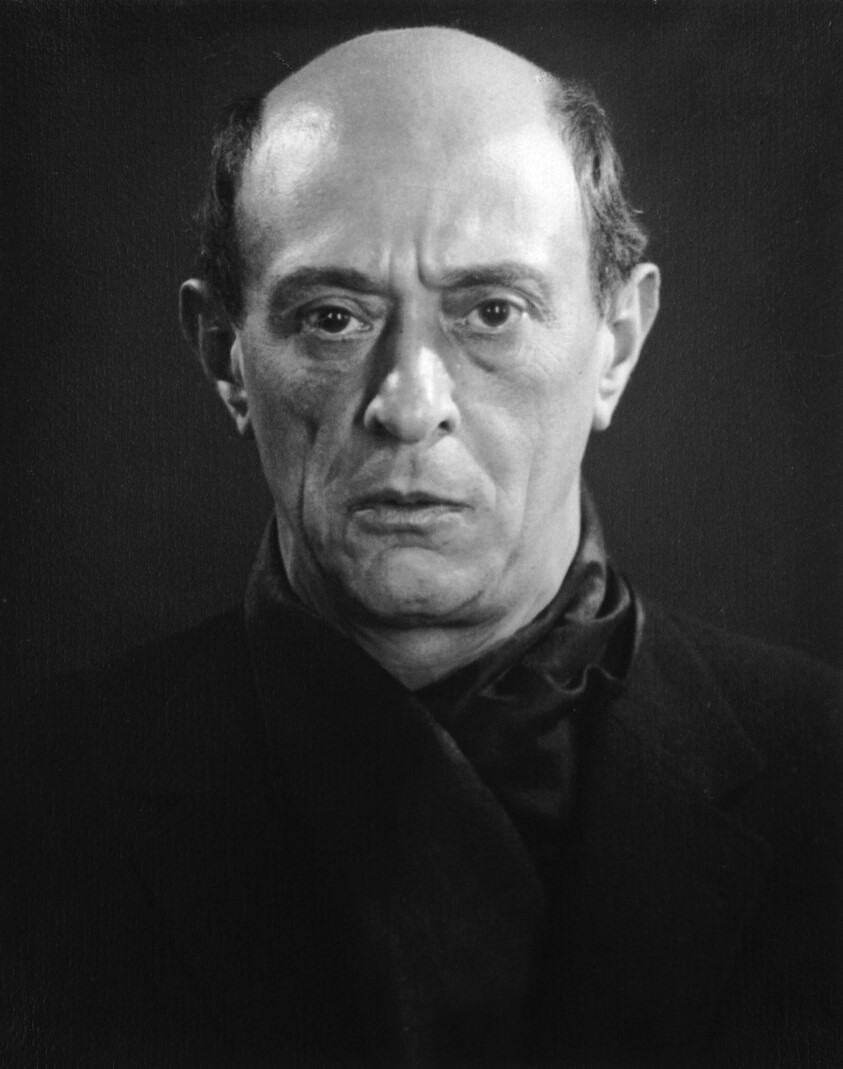
Arnold Schoenberg destroyed tonality — and was never forgiven for it. Before him, all Western music rested on a system five hundred years old: C major, A minor, tonic, dominant. Schoenberg announced that there were no privileged notes anymore.
He was born in Vienna in 1874 and taught himself — from books, from scores. The early works are in the vein of late Wagner, opulent and chromatic. "Transfigured Night," of 1899, is still tonal, but already at the brink.
In 1908 came the leap: the "Three Piano Pieces," without a tonal center. Audiences hissed; critics raged. With Alban Berg and Anton Webern he formed the Second Viennese School, and he kept going forward.
In 1923 came dodecaphony — the twelve-tone system, in which all notes are equal and none is chief. It was more than a technique; it was a philosophy: order without hierarchy.
In 1933 he fled the Nazis to America, where he taught at UCLA. He died in Los Angeles in 1951. He is said to have feared the number thirteen — triskaidekaphobia. Born on the 13th, at seventy-six (7 + 6 = 13) he braced for something bad. He died on Friday, the thirteenth of July.