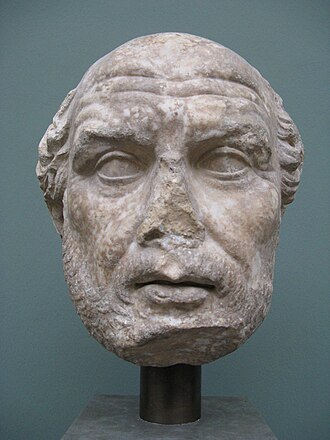
Phidias, master of sculpture and architecture, was among the most celebrated artists of ancient Greece. He lived in the fifth century BC and was born in Athens, the city that had become the center of Greek culture and art. His age saw the flowering of classical art, and Phidias was one of its most brilliant figures — a contemporary of Pericles and Sophocles, his work bound up with the cultural and political life of the city.
He is known above all for his colossal and beautiful statues, which astonish and delight to this day. The Athena Parthenos, made for the Parthenon in Athens, stood more than twelve meters high, sheathed in gold and ivory. His other masterpiece, the statue of Zeus at Olympia, was counted among the Seven Wonders of the World. Both display the perfection and beauty characteristic of everything Phidias made; he also had a hand in the decoration of the Parthenon itself, one of the most famous buildings of ancient Greece.
His works were not merely beautiful; they meant something. They embodied the ideals of beauty and perfection at the heart of ancient Greek culture — gods and goddesses, but also ideal human figures carrying the values and ideals of their time. Phidias was a master at conveying emotion and movement in sculpture, and his work still inspires artists and art historians. His contribution to culture was immense: his works fixed the ideal of beauty for millennia.
For all his fame and recognition, his life was not an easy one. He met with troubles and criticism, especially in his last years. One of the paradoxes of the man was the meeting of artistic perfection with human frailty: known for his pride and stubbornness, he sometimes fell out with patrons and colleagues. Yet despite these difficulties his art went on developing and refining itself.
Phidias matters today because his works still inspire and enthrall people the world over. His art testifies to the enduring power of beauty and perfection, and his contribution to culture is felt still. His statues and buildings belong to our common heritage, studied and admired by art historians and historians alike; his ideals of beauty and perfection continue to shape art and architecture, and his works remain among the most famous and iconic in the history of art.